
VIN & Title Records: A Complete Walkthrough
From first registration to resale, this guide covers every stage of the public record trail that follows a vehicle's VIN.
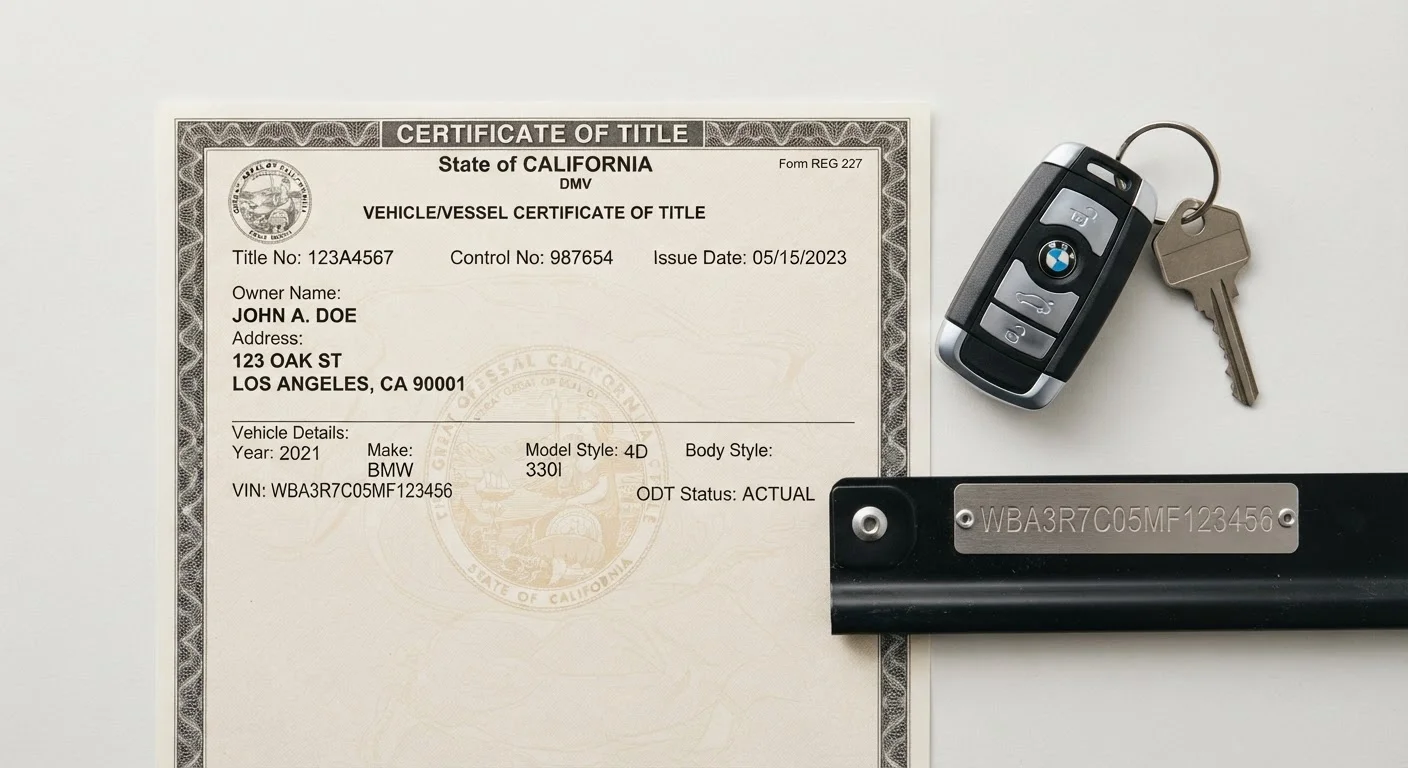
Photo: searchopenrecords editorial
—— In This Article
Key Takeaways
- Every US vehicle is assigned a unique 17-character VIN that links all title and registration records.
- State DMVs create and maintain title records; federal databases supplement but do not replace them.
- Each ownership transfer generates a new public record attached to the same VIN.
- Title brands such as Salvage or Rebuilt follow the vehicle permanently and cannot be erased.
- Gaps in a vehicle's record trail are themselves meaningful — they may indicate undisclosed history.
What a VIN Is and Why It Anchors the Title Record
A Vehicle Identification Number (VIN) is a standardized 17-character alphanumeric code assigned to every motor vehicle manufactured for sale in the United States. Since 1981, the National Highway Traffic Safety Administration (NHTSA) has required all manufacturers to follow a uniform VIN structure, meaning every character encodes specific information: country of manufacture, maker, vehicle type, model year, plant, and a sequential production number.
Because the VIN is physically stamped on the vehicle — typically on the dashboard near the windshield and on the door jamb — and recorded in every official document from the window sticker forward, it becomes the permanent identifier that links a car to its entire public record trail. Think of the VIN as the vehicle's Social Security number: it stays constant while ownership, registration state, and condition all change around it.
For a deeper grounding in VIN structure before exploring title records, see our complete reference to VIN lookup.
How a Title Is Created: First Registration
A vehicle title is a legal document issued by a state DMV that certifies who owns a specific vehicle. The process begins the moment a new vehicle is sold. The dealership or manufacturer submits a Manufacturer's Certificate of Origin (MCO) — the document that proves the vehicle came off a production line — to the buyer's state DMV. The DMV validates the VIN, records the owner's information, and issues a title in the owner's name.
For used vehicles imported from another state, the process involves surrendering the previous state's title and applying for a new one. The VIN remains unchanged; only the issuing state and owner information update.
Start with the VIN Before Any Paperwork
Before reviewing any documents a seller provides, look up the VIN independently through an NMVTIS-authorized source. This gives you an unbiased baseline record to compare against what the seller presents. Discrepancies between independent records and seller-provided documents are the most common early sign of title fraud or undisclosed damage.
This initial registration creates the first entry in what becomes a layered public record. From this point forward, every lien, transfer, and brand annotation is appended to the record associated with that VIN.
What a Title Document Actually Contains
A physical or electronic title document carries more information than most people realize. Standard fields across US states typically include:
- VIN — the primary identifier linking the document to the vehicle
- Year, Make, Model, and Body Style — manufacturer-reported specifications
- Odometer Reading — the mileage recorded at the time of transfer, required by federal law under the Truth in Mileage Act
- Owner Name and Address — the legal titleholder
- Lienholder Information — any lender with a financial claim on the vehicle
- Title Brand — any official designation such as Salvage, Rebuilt, Flood, or Odometer Rollback
- Issue Date and Title Number — administrative identifiers for the issuing state
For a field-by-field breakdown of how to read these entries, our title document reading guide walks through each one in plain language.
Ownership Transfers and the Public Record They Create
Every time a vehicle changes hands, the seller signs the back of the title (or completes an equivalent electronic form), and the buyer submits that document to the DMV to obtain a new title in their name. This process creates a discrete public record at the state level, stamped with the odometer reading at the time of sale.
A clean ownership chain shows a logical sequence of owners, consistent mileage progression, and no gaps. Gaps — periods where registration lapsed or titles were issued in states with no record-sharing agreement — are not always sinister, but they warrant additional investigation. The guide to tracing ownership transfers explains exactly how to follow this chain using available public data.
When reviewing an ownership transfer record, always cross-reference the odometer reading at each transfer with the vehicle's age and reported use — a low-mileage reading on an older vehicle after a period of no registration activity deserves close scrutiny.
Odometer fraud costs US consumers an estimated hundreds of millions of dollars annually, and mileage inconsistencies across title records are one of the most reliable early indicators.
Request a lien release document in writing before completing a private-party purchase, even if the seller says the loan is paid off — the title is not legally clear until the lienholder formally removes their interest with the state DMV.
A lien that was paid but never formally released can prevent the new owner from registering the vehicle and may require legal action to resolve after the sale.
Understanding the full public record trail behind a vehicle title — including how liens and registrations connect — helps buyers interpret ownership history more accurately.
Title Brands: Flags That Follow the VIN
A title brand is a permanent annotation added to a title when a vehicle has experienced a specific type of significant event. Common brands under US state and federal frameworks include:
- Salvage
- Assigned when an insurer declares the vehicle a total loss, typically because repair costs exceed a threshold percentage of the vehicle's value.
- Rebuilt / Restored
- Assigned after a salvage vehicle passes a state inspection confirming it has been repaired to roadworthy condition.
- Flood
- Indicates the vehicle sustained water damage, often reported through insurance claims.
- Odometer Rollback
- Indicates a known or suspected discrepancy between the recorded mileage and actual mileage.
- Lemon Law Buyback
- Indicates the manufacturer repurchased the vehicle under a state lemon law after unresolved defects.
Critically, brands travel with the VIN — not with the title document. A rebuilt vehicle that is retitled in a different state must carry its brand forward. Title washing — the fraudulent practice of retitling a branded vehicle in a state with less stringent brand-transfer rules — is illegal, though imperfectly prevented by current interstate data-sharing gaps.
Where VIN and Title Data Is Stored
Title records are primarily maintained by individual state DMVs. There is no single federal title database; instead, interstate data sharing occurs through programs such as the NHTSA's National Motor Vehicle Title Information System (NMVTIS), which aggregates title and brand data from participating states, insurers, and salvage yards.
NMVTIS was established under the Anti Car Theft Act and requires junkyards, salvage yards, and insurance carriers to report certain vehicle dispositions. However, participation and reporting timelines vary, which means NMVTIS data — while valuable — may not capture every event immediately or completely.
Commercial vehicle history aggregators draw from NMVTIS, state DMV feeds, and additional proprietary sources (insurance claims, auction records) to build the reports consumers use. For a detailed account of how these sources differ and affect report completeness, see state title records vs. federal databases. An overview of what those compiled reports reveal is available through our vehicle history reports hub.
How to Use This Trail as a Buyer or Seller
Armed with an understanding of the VIN-title record system, both buyers and sellers can take concrete steps to protect themselves.
For Buyers
- Verify the VIN on the physical vehicle matches the title document and any history report — discrepancies can indicate fraud or a replacement part.
- Check the odometer reading sequence across all recorded transfers; a drop in mileage is a red flag.
- Confirm the title is free of liens before completing a purchase; a lienholder listed on the title has a legal claim to the vehicle.
- Look up the VIN through NMVTIS-authorized providers to check for brand history, even if the seller presents a clean title.
For Sellers
- Gather all previous title documents if available; a complete paper trail increases buyer confidence.
- Disclose any known damage, repairs, or insurance claims honestly — concealing material facts about a vehicle's condition can create legal liability.
- Ensure any outstanding lien is released before transferring the title; the lienholder must sign off before ownership can legally change.
The VIN-title trail is a public record system built for exactly this purpose: to make vehicle histories transparent and verifiable. Using it thoroughly — rather than relying on a seller's word alone — is the most reliable way to make an informed decision.
This article is for general informational purposes only and does not constitute legal or financial advice. For questions about title disputes, lien releases, or vehicle fraud, consult a qualified attorney or your state DMV.

Vin Search Editorial Team
VIN Search Editorial Team is the collective byline for our editorial team and contributor network. Articles published under this byline or an editorial pen name are researched, written, and reviewed according to our editorial standards for clarity, consistency, and independence before publication.
View author profile