
Court Records Explained: What They Are and Why They're Public
Understand what court records contain, why most are public by law, and how the public access system is designed to work.
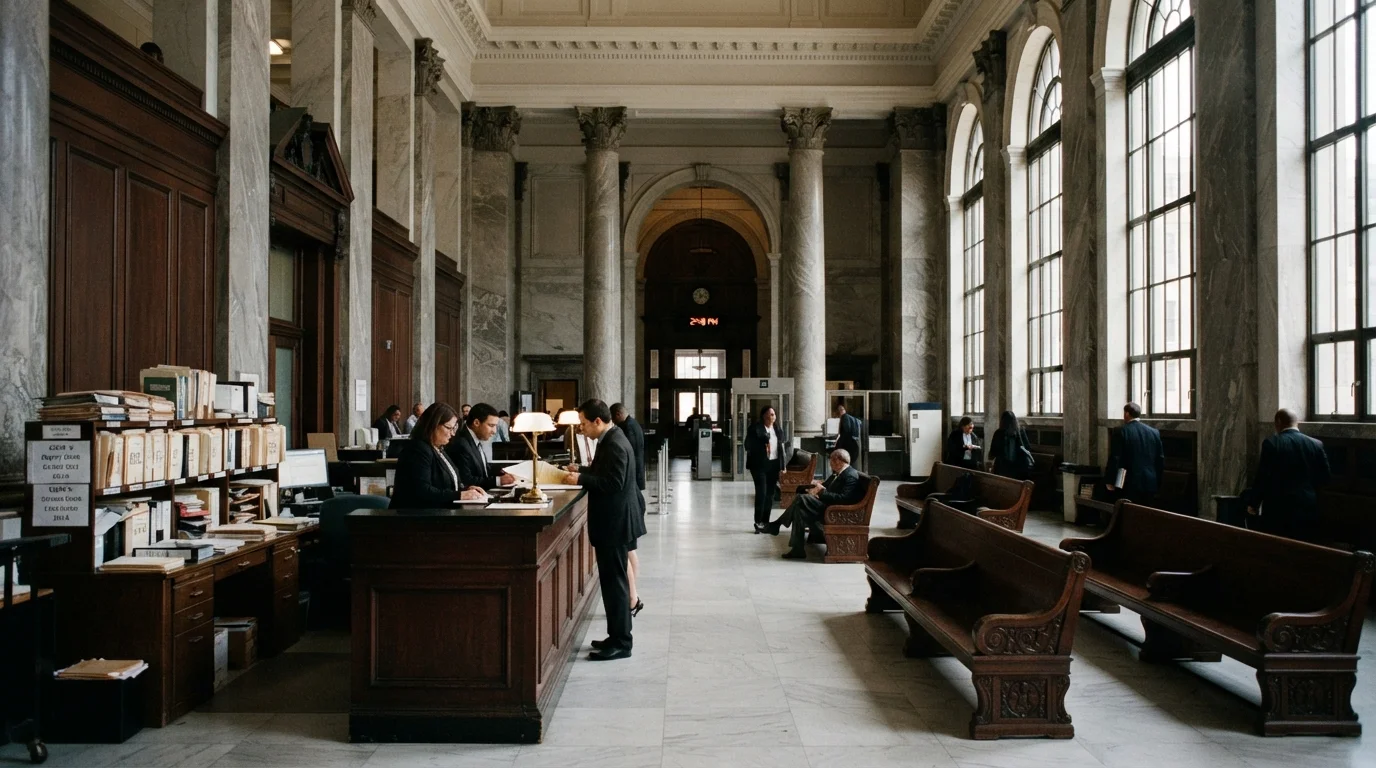
Photo: searchopenrecords editorial
—— In This Article
Key Takeaways
- Court records document every stage of a legal proceeding, from initial filing through final judgment.
- Public access to court records is rooted in the First Amendment and the common-law tradition of open courts.
- Both federal and state courts maintain searchable online dockets, though coverage and cost vary widely.
- Certain records — such as those involving juveniles or sealed settlements — are routinely restricted from public view.
- Understanding what a record contains helps you interpret it accurately rather than draw incorrect conclusions.
What Court Records Actually Contain
A court record is not a single document — it is a case file that accumulates over the life of a legal proceeding. From the moment a complaint, indictment, or petition is filed, the court begins generating an official record. That record typically includes:
- Docket entries: A chronological log of every filing and court action in the case.
- Pleadings: The initial complaint or indictment, and the defendant's response.
- Motions and orders: Requests made by attorneys and the judge's rulings on them.
- Transcripts: Written records of oral arguments, hearings, and trial testimony.
- Judgments and sentences: The court's final decision and, in criminal cases, the imposed penalty.
The specific documents present vary by case type. A civil lawsuit generates different records than a criminal prosecution or a probate matter. For a deeper look at each document type, see types of court records and what each reveals. If you encounter unfamiliar legal terminology, the court record glossary provides plain-language definitions.
Why Court Records Are Public by Law
The presumption of public access to court proceedings and records has deep roots in both English common law and U.S. constitutional tradition. Courts in the United States have recognized that open proceedings serve several functions that benefit the public:
- Accountability: Public scrutiny discourages judicial misconduct and ensures judges apply the law consistently.
- Deterrence: Knowing that outcomes are publicly documented reinforces the legal consequences of wrongdoing.
- Informed citizenship: Journalists, researchers, and ordinary citizens can monitor how laws are interpreted and enforced.
The U.S. Supreme Court has affirmed a qualified First Amendment right to access criminal trials and related records. At the state level, open-records and sunshine laws extend similar principles to state court systems, though the precise scope differs by jurisdiction.
“Openness in court proceedings has long been recognized as an important aspect of the rule of law. When the public can observe the workings of justice, it builds confidence that the system operates fairly and according to established rules.”
— U.S. Courts (uscourts.gov), Official public education resource of the federal judiciary
It is worth noting that public access is a presumption, not an absolute right. Courts balance openness against competing interests — privacy, safety, and fair trial rights — which is why certain categories of records can be restricted. For more on the underlying legal framework, the How Records Work hub explains U.S. public records systems broadly.
How to Find Court Records in Practice
The route to finding court records depends on whether the case was heard in a federal or state court, and how digitized that court's records are.
Federal Courts
The federal judiciary's PACER (Public Access to Court Electronic Records) system provides online access to dockets and documents from U.S. District Courts, Bankruptcy Courts, and Courts of Appeals. Registration is free; document retrieval carries a per-page fee, with a quarterly waiver for low-volume users.
State Courts
Each state administers its own court system independently. Many states offer online docket search portals — some free, some fee-based — through their state judicial branch websites. Coverage varies: rural counties in some states still rely on in-person visits to the clerk's office. Some public records are freely available online through official portals, while others require a written request or an in-person visit.
Third-Party Aggregators
Private databases compile court data from multiple jurisdictions and can be useful for broad searches, but they may lag behind official records or omit recent expungements. Always verify significant findings against the originating court's official docket. When conducting any court record search, responsible search practices and an awareness of legal limits matter as much as the search mechanics themselves.
Interpreting What You Find
Locating a court record is only the first step — reading it accurately is equally important. A few principles help prevent common misinterpretations:
- An arrest record is not a conviction. An arrest indicates that law enforcement had probable cause to detain someone; it does not establish guilt. Many charges are reduced, dismissed, or result in acquittal.
- Case status matters. A case listed as "pending" or "active" has no final resolution. Drawing conclusions from an unresolved docket entry is premature.
- Charges vs. counts vs. convictions are distinct. A defendant may be charged with multiple counts but convicted of fewer — or none. The final judgment entry, not the initial charging document, reflects the outcome.
- Context of the court matters. A civil judgment for unpaid debt is structurally different from a criminal conviction, even if both appear in a court record search.
Court records that appear in background check reports carry the same need for careful interpretation. The types of records surfaced in background checks hub explains how court data fits into that broader context. Separately, understanding the boundary between public records and private data helps clarify what a court record can and cannot tell you about a person.
This article is for general informational purposes only and does not constitute legal advice. Consult a qualified attorney for guidance specific to your situation.
Frequently Asked Questions

Background Checks Editorial Team
Background Checks Editorial Team is the collective byline for our editorial team and contributor network. Articles published under this byline or an editorial pen name are researched, written, and reviewed according to our editorial standards for clarity, consistency, and independence before publication.
View author profile