
Types of Court Records and What Each One Reveals
From arrest records to judgments to appellate opinions — a guide to the distinct document types found within court case files.
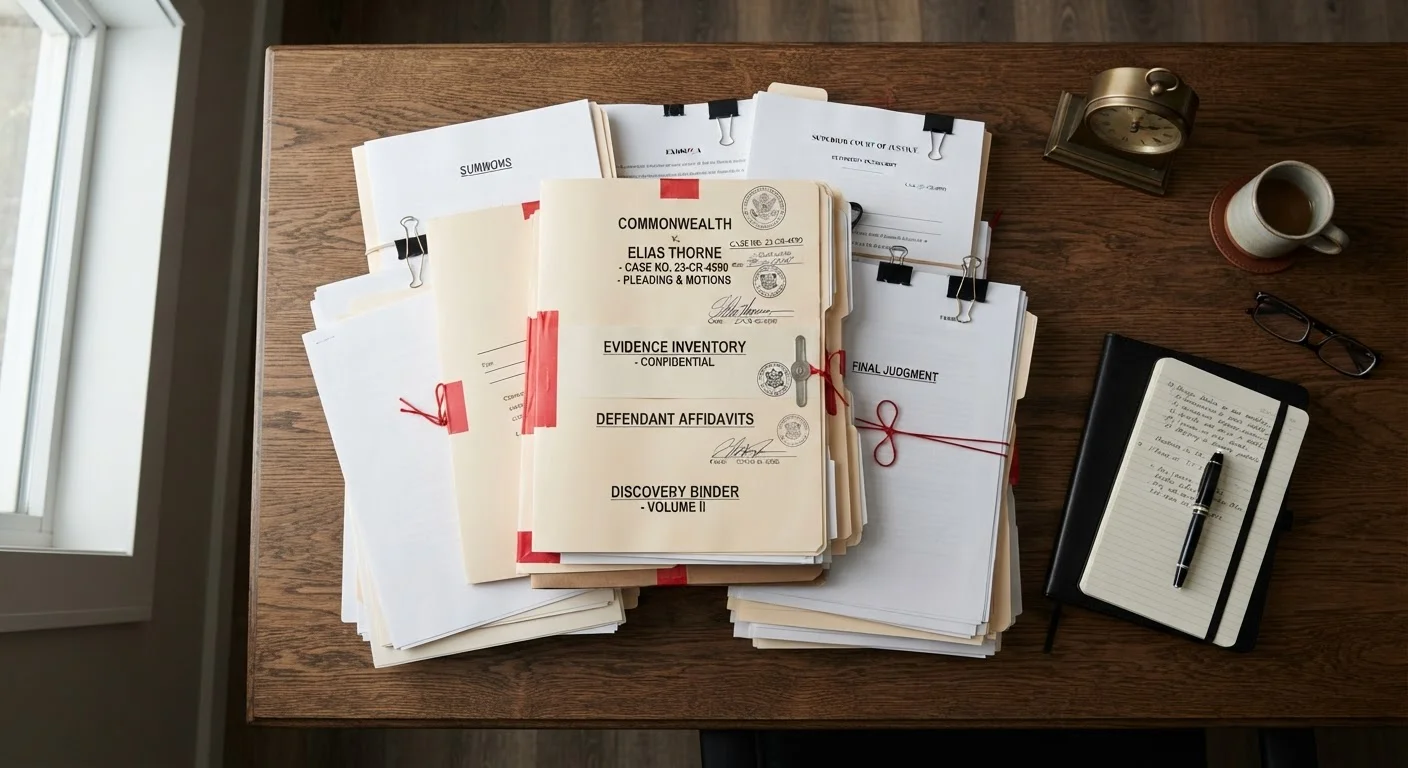
Photo: searchopenrecords editorial
—— In This Article
Key Takeaways
- Court records are not a single document — they are a collection of distinct file types with different functions.
- Each document type reveals different information: charges, findings, orders, or final outcomes.
- Criminal and civil cases produce largely different record types, held in separate court systems.
- Sealed, expunged, or restricted records may not appear in public searches even when a case exists.
- Understanding document types helps you accurately interpret what a background check report reflects.
Why Document Type Matters in a Court Search
When people search for court records, they often expect a single, tidy summary of a case. In practice, a court case file is a collection of distinct documents — each generated at a different stage of proceedings and each revealing something different about what happened. Knowing which document type you're looking at determines how accurately you can interpret what it means.
A charging document, for example, reflects an allegation — not a conviction. A judgment reflects a legal determination. A docket entry is simply a procedural log. Conflating these can lead to serious misreading of a person's legal history. This distinction matters especially when court data flows into background check reports, a process explained in detail in our guide on how court record information flows into background check reports.
The seven record types below represent the core documents you're likely to encounter across both criminal and civil court systems. For a broader orientation to the two systems, see our overview of civil court records vs. criminal court records.
Charging Documents (Complaints, Indictments, and Informations)
A charging document is how a criminal case formally begins. Depending on the court and offense level, it may take the form of a complaint (typically used for misdemeanors or to initiate an arrest), an information (filed directly by a prosecutor), or an indictment (issued by a grand jury for felony charges).
What it reveals: the specific charge or charges alleged, the statute cited, and the date of the alleged offense. What it does not reveal: guilt, conviction, or outcome. Charging documents are frequently misread as proof of wrongdoing when they represent only the prosecution's opening position.
A charging document records an allegation, not a finding of guilt — context is everything.
Docket Sheets
The docket sheet is the procedural index of a case — a chronological log of every filing, hearing, ruling, and administrative event. Courts generate docket entries automatically as activity occurs, making the docket the most comprehensive single-view snapshot of a case's history.
What it reveals: dates of hearings, motions filed by either party, continuances, plea entries, and the current status of a case. Docket sheets use dense legal shorthand; our plain-language docket reading guide breaks down the most common terms. A docket alone does not reproduce the contents of underlying documents — it only lists them.
The docket sheet is a case's procedural index — comprehensive but not a substitute for underlying documents.
Arrest Records
Arrest records are generated by law enforcement agencies, not courts, but they frequently appear in court case files and public databases. They document the fact that a person was taken into custody, the stated charge at the time of arrest, and often booking details such as date, location, and bail status.
What it reveals: that an arrest occurred and under what alleged charge. What it does not reveal: whether charges were filed, whether a case went to trial, or the outcome. Arrests without subsequent convictions are particularly sensitive and may be subject to state-specific sealing or expungement rules. The types of records that appear in background checks hub covers how arrest data is handled in screening contexts.
An arrest record documents custody — not guilt, not conviction, and not case outcome.
Plea Agreements and Disposition Records
When a criminal case resolves without trial, the outcome is typically captured in a plea agreement — a negotiated document in which the defendant agrees to plead guilty or no contest, often in exchange for reduced charges or sentencing recommendations. The formal resolution is then recorded in a disposition record.
What it reveals: the charge to which the defendant pleaded, any agreed-upon sentencing terms, and the date of resolution. Disposition records are among the most important documents for background check purposes because they capture final outcomes. Plea agreements may be partially or fully sealed in some jurisdictions.
Disposition records capture final case outcomes and carry significant weight in background screening.
Judgments and Court Orders
Judgments are formal written decisions — the court's official ruling on a matter. In criminal cases, a judgment typically records the conviction and sentence. In civil cases, a judgment may order one party to pay damages, fulfill a contract, or transfer property. Court orders, which can be issued at any stage, direct specific actions and carry legal enforcement weight.
What it reveals: the legal outcome the court imposed, the parties bound by it, and the date it was entered. Civil judgments — including money judgments and liens — can appear in background check reports and affect financial assessments. For more on how civil records differ from criminal findings, see our article on civil court records and background checks.
A judgment is the court's official determination — the authoritative record of legal outcome for any case.
Motions and Supporting Filings
Throughout litigation, both parties submit motions — formal written requests asking the court to take a specific action. Common examples include motions to suppress evidence, motions to dismiss, and motions for summary judgment. Each motion is typically accompanied by a brief (legal argument) and may generate a written ruling.
What it reveals: the legal strategies each party pursued, disputed facts or evidence, and intermediate rulings that shaped the case. Motions can be highly informative for understanding why a case resolved as it did, but they represent arguments — not established facts. Their availability varies by court and jurisdiction; some federal courts provide full motion text via PACER, while many state courts only list motions on the docket without full text access.
Motions document each party's legal arguments and often explain why a case resolved the way it did.
Appellate Opinions and Orders
When a party challenges a trial court's decision, the case moves to an appellate court. Appellate courts issue written opinions — detailed rulings that analyze the legal questions raised on appeal. These opinions are generally public, often published, and in many jurisdictions are searchable through state court websites or services like Google Scholar.
What it reveals: the appellate court's legal reasoning, whether the lower court's decision was affirmed, reversed, or remanded (sent back for further proceedings), and the legal precedent established. Appellate opinions do not retry facts — they review legal process. For background check purposes, it's worth noting that an overturned conviction at the appellate level may not automatically update records held by third-party data aggregators, which underscores the importance of reviewing primary source documents when accuracy matters. The legal framework behind U.S. public records systems explains how these information gaps arise.
An overturned conviction at appeal may not automatically correct records held by third-party data aggregators.
Putting It All Together
Reading court records accurately means treating each document as one piece of a larger procedural picture. A charging document without a corresponding judgment tells you a case was initiated — not how it ended. A docket with dozens of entries may reflect a contested trial or simply routine administrative scheduling.
Always Verify Against Primary Sources
Background check reports and public records aggregators may lag behind courthouse systems by weeks or months. If accuracy is critical — for legal, employment, or personal purposes — retrieve the original document directly from the court clerk's office or the court's official online portal. Primary source documents are the most authoritative version of any court record.
If you're new to navigating these systems, our ground-up guide to court records searching covers how to locate filings by jurisdiction. For help decoding legal shorthand within any of these document types, the court record glossary is a useful reference. Understanding what each document type reveals — and what it deliberately does not — is the foundation of responsible, accurate public records research.
This article is for general informational purposes only and does not constitute legal advice. For questions about your own records or legal rights, consult a licensed attorney.

Background Checks Editorial Team
Background Checks Editorial Team is the collective byline for our editorial team and contributor network. Articles published under this byline or an editorial pen name are researched, written, and reviewed according to our editorial standards for clarity, consistency, and independence before publication.
View author profile