
FCRA Basics: The Law That Governs How Background Checks Must Be Run
The Fair Credit Reporting Act sets strict rules on who can run a check, how results can be used, and what rights subjects retain.
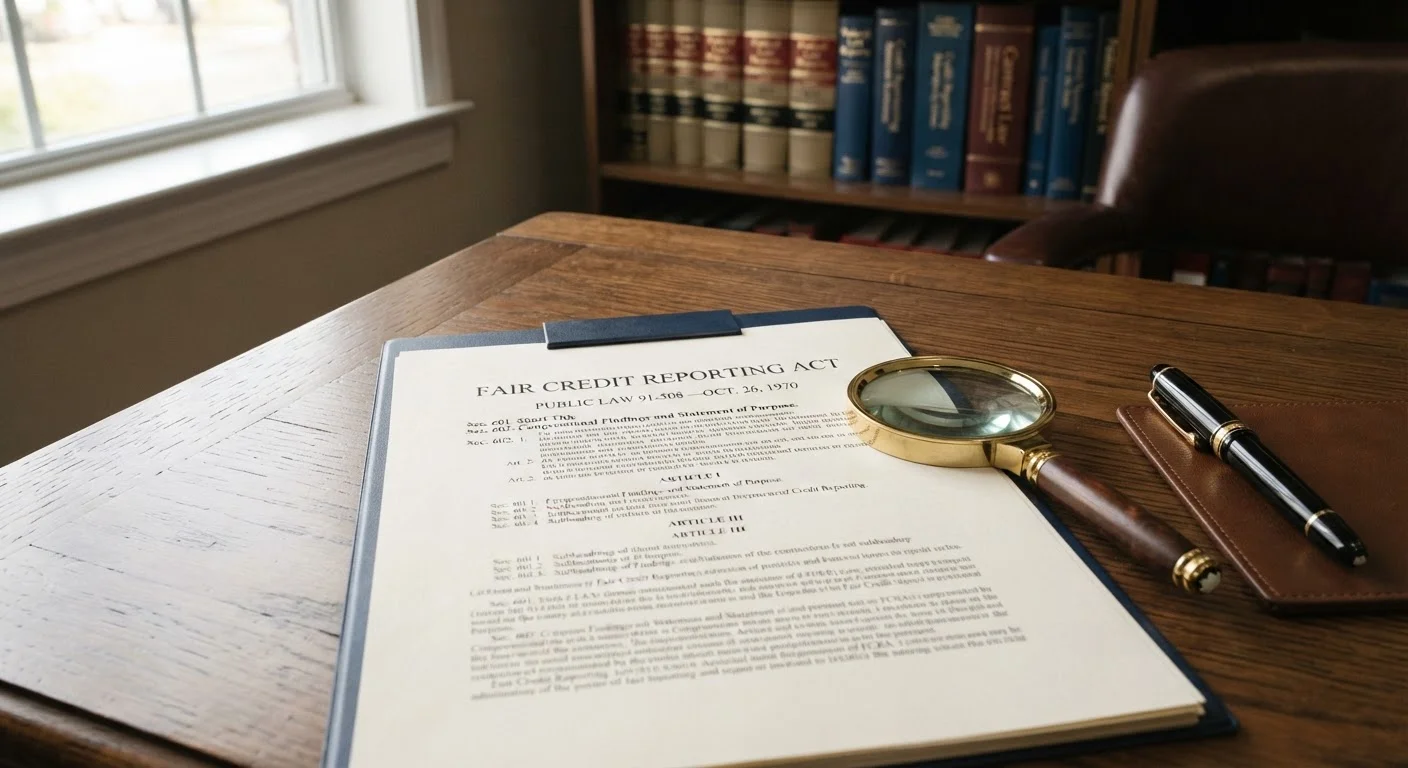
Photo: searchopenrecords editorial
—— In This Article
Key Takeaways
- The FCRA has regulated consumer reporting agencies and background checks since 1970.
- Only parties with a legally recognized 'permissible purpose' may request a background check report.
- Employers and landlords must follow specific adverse action procedures before rejecting applicants.
- Subjects have the right to access their own reports and dispute inaccurate information.
- Most negative information can only be reported for seven years; bankruptcies for ten.
- State laws may provide consumer protections that exceed the FCRA's federal minimums.
What the FCRA Is and Why It Exists
The Fair Credit Reporting Act (FCRA) is a federal statute, enacted in 1970 and administered by the Federal Trade Commission (FTC) and Consumer Financial Protection Bureau (CFPB), that governs how consumer reports — including background checks — are collected, shared, and used. Before the FCRA, information about individuals could circulate between businesses with almost no accountability. Errors went unchallenged; subjects had no right to see what was being said about them.
The law created a framework with three core goals: ensure accuracy in consumer reports, protect consumer privacy, and give individuals meaningful rights when their information is used to make decisions about them. Understanding the FCRA means understanding the rules of the entire background check ecosystem — not just for employers, but for landlords, lenders, and anyone else who relies on a formal consumer report.
Consumer Report
Any written, oral, or electronic communication by a CRA bearing on a person's creditworthiness, character, or personal characteristics that is used as a factor in an eligibility decision.
Consumer Reporting Agency (CRA)
A business that regularly assembles or evaluates consumer information and furnishes consumer reports to third parties. Background check companies and credit bureaus are common examples.
Permissible Purpose
A legally recognized reason — such as employment screening or credit underwriting — that allows a party to request a consumer report under the FCRA.
Adverse Action
A decision that negatively affects a consumer — such as denying a job, housing, or credit — that was influenced by information in a consumer report, triggering required FCRA notifications.
Furnisher
An entity that provides data about consumers to a CRA, such as a lender reporting payment history or a court reporting case outcomes.
Dispute
A formal request by a consumer asking a CRA to investigate and correct information in their file that the consumer believes is inaccurate or incomplete.
Who the FCRA Covers: CRAs, Users, and Furnishers
The FCRA structures responsibility across three distinct parties:
- Consumer Reporting Agencies (CRAs) — Companies that assemble and sell consumer reports. They bear primary compliance obligations, including accuracy standards and dispute resolution duties. See what a CRA actually does with your data for a closer look at their role.
- Users — Employers, landlords, insurers, and others who request and act on consumer reports. They must have a permissible purpose and follow adverse action procedures.
- Furnishers — Banks, courts, debt collectors, and others who supply raw data to CRAs. They must provide accurate information and respond properly to dispute notices.
Each party carries distinct legal duties. A failure at any point in this chain can create liability and give the affected consumer grounds to seek correction or, in some cases, legal remedies.
Permissible Purpose: The Gateway Rule
No one may request a consumer report unless they have a permissible purpose recognized by the FCRA. The statute lists specific qualifying circumstances, including:
- Evaluating a job application or employment decision
- Reviewing a rental or tenancy application
- Underwriting insurance
- Extending credit
- Court orders or legitimate business needs with a direct connection to the consumer
Curiosity, general surveillance, or competitive intelligence do not qualify. Requesting a report without a permissible purpose violates the FCRA and can expose the requester to civil liability. For employment specifically, the law also requires a standalone written disclosure and the applicant's written consent before a report is ordered — a step that cannot be waived or buried in an application form.
Different types of background check reports surface different records depending on the purpose and scope. How criminal, credit, and employment checks are structured explains what each report type typically includes.
Adverse Action: What Must Happen Before a Decision Is Made
When a consumer report contributes to an unfavorable decision — a rejected job offer, a denied apartment, a declined loan — the FCRA triggers a specific adverse action process. For employment, this process has two mandatory steps:
- Pre-adverse action notice: Before making the final decision, the employer must provide the applicant with a copy of the report and a summary of their FCRA rights, allowing a reasonable window to identify and dispute errors.
- Final adverse action notice: If the employer proceeds, they must send a notice identifying the CRA, informing the applicant that the CRA did not make the decision and cannot explain it, and providing the applicant's right to a free copy of the report and to dispute its accuracy.
These steps exist precisely because background reports sometimes contain errors. The pre-adverse action window is the consumer's opportunity to correct the record before it costs them an opportunity. Your legal rights when a background check is run on you covers this process in detail.
Your Rights as the Subject of a Background Check
The FCRA grants consumers several concrete rights regardless of the context in which a report is used:
- Right to disclosure: You may request your own consumer file from any CRA. Nationwide CRAs must provide one free report per year upon request.
- Right to dispute: If you believe information is inaccurate or incomplete, you may file a dispute with the CRA. The agency generally has 30 days to investigate and must correct or delete information that cannot be verified.
- Right to know: You must be told when a report has been used against you in a credit, insurance, employment, or rental decision.
- Right to seek remedies: Willful or negligent FCRA violations may entitle consumers to actual damages, statutory damages, and attorney's fees under federal law.
It is worth noting that state laws can — and often do — expand on these minimums. State-level protections that go further than the FCRA describes where local rules offer additional consumer safeguards.
Limits on What Can Be Reported
The FCRA imposes reporting period limits on most negative consumer information. In general:
- Civil suits, civil judgments, arrest records, and most other adverse items: seven years
- Bankruptcies: ten years
- Criminal convictions: no federal time limit (though some states impose their own)
These limits do not apply when a report is used for certain high-stakes decisions — such as hiring for a position with an annual salary above a statutory threshold — so the practical effect varies by context.
The FCRA also requires that only information meeting accuracy and relevancy standards be included. CRAs may not report records that have been expunged or sealed under applicable law, though the reliability of these filters in practice varies. For a broader look at what records commonly surface — and which ones carry privacy protections — see what records appear in a background check and where privacy limits apply in public records.
This article is for general informational purposes only and does not constitute legal advice. Readers with questions about their specific rights or circumstances should consult a qualified attorney.
Frequently Asked Questions

Background Checks Editorial Team
Background Checks Editorial Team is the collective byline for our editorial team and contributor network. Articles published under this byline or an editorial pen name are researched, written, and reviewed according to our editorial standards for clarity, consistency, and independence before publication.
View author profile