
Privacy Trade-Offs When You Submit a DNA Sample for Family Research
Sharing your DNA affects more than just you. A balanced look at the privacy considerations involved in consumer genealogy testing.
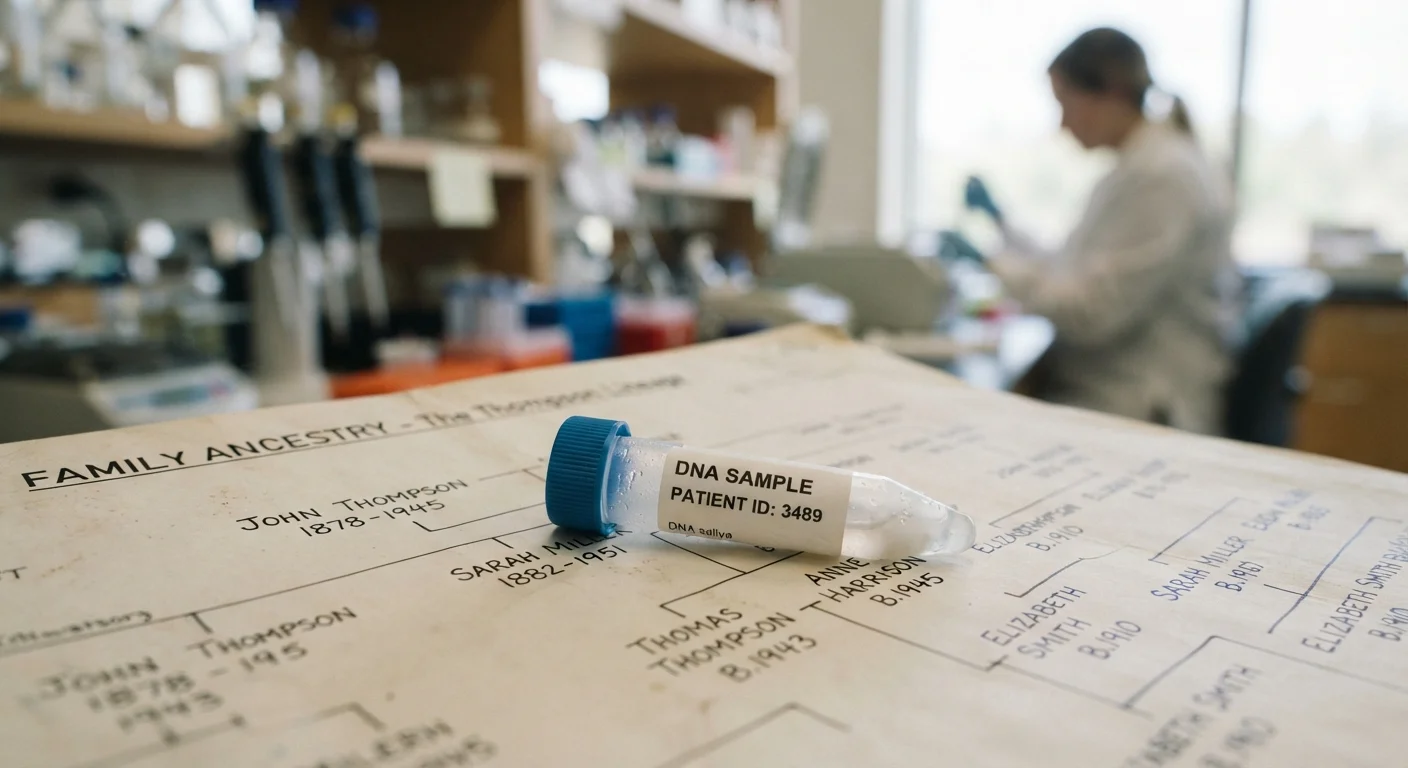
Photo: searchopenrecords editorial
—— In This Article
Key Takeaways
- Your DNA data is inherited, meaning relatives who never consented share your genetic privacy exposure.
- Consumer DNA databases have been accessed by law enforcement through legal processes in some jurisdictions.
- Ethnicity estimates are probabilistic, not definitive — context from traditional records still matters.
- Database size directly affects match quality; smaller databases return fewer useful cousin matches.
- You can often download your raw data and delete your profile, but deletion policies vary by company.
Breaks through brick walls in paper records
When vital records are missing, destroyed, or never existed, DNA matches can confirm biological relationships that documents cannot. This is particularly valuable for pre-civil registration research and adoption cases.
Identifies unknown biological relatives
Shared centimorgans (the unit used to measure DNA overlap) allow researchers to estimate relationship ranges with living or recently deceased relatives, opening communication channels that traditional records cannot.
Provides broad ethnic heritage context
Ethnicity estimates — while probabilistic, not definitive — can suggest migration patterns and regional origins that help focus document searches in the right archives.
Confirms or challenges existing tree hypotheses
A DNA match that contradicts a documented lineage is a signal to re-examine the paper record, often revealing transcription errors, misattributed parentage, or surname adoption.
Results are reusable across multiple platforms
Most services allow you to download raw data and upload it to other databases, multiplying the number of potential matches without submitting a new sample each time.
Relatives share your privacy exposure without consenting
Because DNA is inherited, submitting your sample exposes the genetic profile of parents, siblings, and cousins who may never have agreed to be in a commercial database. This is not a hypothetical risk — researchers have demonstrated that distant relatives can be identified from partial matches.
Law enforcement access is documented and legal
In the United States, law enforcement agencies have obtained genetic genealogy data through court orders and, in some cases, through direct searches of publicly accessible matching profiles. While policies vary by company, no service can guarantee immunity from valid legal process.
Data breaches are a known industry risk
Several consumer DNA companies have experienced data security incidents. Unlike financial data, genetic data cannot be reissued once exposed, making a breach a permanent rather than a correctable event.
Ethnicity estimates carry wide margins of uncertainty
Reference populations used to calculate ethnicity percentages differ between companies and change as databases grow, meaning the same DNA can produce different results on different platforms. These are statistical approximations, not verified ancestry.
Commercial use of your data may extend beyond genealogy
Some companies partner with pharmaceutical or health research organizations, using aggregated genetic data for studies. Opt-out mechanisms exist, but they require active engagement with settings that are not always prominently displayed.
Unexpected discoveries can cause emotional harm
DNA results sometimes reveal misattributed parentage, previously unknown half-siblings, or adoptions that were kept private. These discoveries can affect living family members who were not involved in the decision to test.
What You Actually Hand Over When You Submit a Sample
A saliva swab sent to a consumer genealogy lab contains far more than clues about your ethnic background. Your DNA encodes predispositions to certain health conditions, physical traits, and biological relationships — information that is, by nature, permanent and shared with every biological relative you have. Unlike a password, it cannot be changed if it is exposed.
Most major testing services store your raw genetic data on servers, often indefinitely unless you request deletion. That data is then used to populate matching databases that other customers search. The size and composition of a company's database directly shapes how useful your results will be — a point explored in more depth in our guide to how DNA testing fits into traditional genealogy research.
Before submitting, review the company's privacy policy — specifically the sections covering third-party data sharing, law enforcement access, and what happens to your sample after analysis. Policies differ meaningfully between providers.
The Genuine Research Advantages
Despite the privacy considerations, DNA testing has delivered results that no paper record could replicate — particularly for researchers facing adoption cases, surname changes, or records destroyed by war or disaster.
Breaks through brick walls in paper records
When vital records are missing, destroyed, or never existed, DNA matches can confirm biological relationships that documents cannot. This is particularly valuable for pre-civil registration research and adoption cases.
Identifies unknown biological relatives
Shared centimorgans (the unit used to measure DNA overlap) allow researchers to estimate relationship ranges with living or recently deceased relatives, opening communication channels that traditional records cannot.
Provides broad ethnic heritage context
Ethnicity estimates — while probabilistic, not definitive — can suggest migration patterns and regional origins that help focus document searches in the right archives.
Confirms or challenges existing tree hypotheses
A DNA match that contradicts a documented lineage is a signal to re-examine the paper record, often revealing transcription errors, misattributed parentage, or surname adoption.
Results are reusable across multiple platforms
Most services allow you to download raw data and upload it to other databases, multiplying the number of potential matches without submitting a new sample each time.
Matching with previously unknown cousins has allowed many researchers to identify biological parents, locate living relatives, and confirm hypotheses built from census and vital records. For a fuller picture of what these tools can and cannot do, see what genealogy DNA tests cannot tell you.
The Privacy Costs You Should Weigh
The benefits above come with documented trade-offs that deserve honest examination before you swab.
Relatives share your privacy exposure without consenting
Because DNA is inherited, submitting your sample exposes the genetic profile of parents, siblings, and cousins who may never have agreed to be in a commercial database. This is not a hypothetical risk — researchers have demonstrated that distant relatives can be identified from partial matches.
Law enforcement access is documented and legal
In the United States, law enforcement agencies have obtained genetic genealogy data through court orders and, in some cases, through direct searches of publicly accessible matching profiles. While policies vary by company, no service can guarantee immunity from valid legal process.
Data breaches are a known industry risk
Several consumer DNA companies have experienced data security incidents. Unlike financial data, genetic data cannot be reissued once exposed, making a breach a permanent rather than a correctable event.
Ethnicity estimates carry wide margins of uncertainty
Reference populations used to calculate ethnicity percentages differ between companies and change as databases grow, meaning the same DNA can produce different results on different platforms. These are statistical approximations, not verified ancestry.
Commercial use of your data may extend beyond genealogy
Some companies partner with pharmaceutical or health research organizations, using aggregated genetic data for studies. Opt-out mechanisms exist, but they require active engagement with settings that are not always prominently displayed.
Unexpected discoveries can cause emotional harm
DNA results sometimes reveal misattributed parentage, previously unknown half-siblings, or adoptions that were kept private. These discoveries can affect living family members who were not involved in the decision to test.
Deletion Requests Do Not Always Mean Full Erasure
Most services allow you to delete your profile and request destruction of your physical sample — but policies on how long processed genetic data is retained in anonymized or aggregated form vary. Before submitting, check whether the company distinguishes between deleting your account, deleting your raw data file, and destroying the physical sample. These may be three separate processes requiring separate requests.
For researchers committed to traditional document-based methods, it is worth reading our piece on the honest trade-offs of building a family tree through public records alone. Each approach involves its own set of limitations.
Practical Steps to Reduce Your Exposure
If you decide the research value outweighs the risks, several measures can reduce — though not eliminate — your privacy exposure.
- Read the full privacy policy before submitting, not just the summary. Look specifically for clauses about law enforcement requests and commercial research partnerships.
- Opt out of research programs where the option exists. Many services offer a separate consent step for using your data in aggregate health or population studies.
- Download your raw data once you have your results, then evaluate whether you want it stored long-term in the company's database.
- Use a pseudonym or initials in your public profile if the platform allows it, to limit your identifiability in match lists.
- Discuss the decision with close relatives before testing, since their genetic information is implicated by your sample.
These steps are covered as part of a broader workflow in our end-to-end guide to modern family history research. You can also find broader context on where privacy protections apply in public records through the Privacy & Limits hub.
This article is for general informational purposes only. It does not constitute legal advice. If you have specific concerns about genetic privacy or data rights in your jurisdiction, consult a qualified legal professional.

Genealogy Search Editorial Team
Genealogy Search Editorial Team is the collective byline for our editorial team and contributor network. Articles published under this byline or an editorial pen name are researched, written, and reviewed according to our editorial standards for clarity, consistency, and independence before publication.
View author profile