
Historical Public Records Explained: What They Are and Why They Matter for Family Research
Understand what historical public records are, which types exist, and why they're essential tools for tracing your family's story.
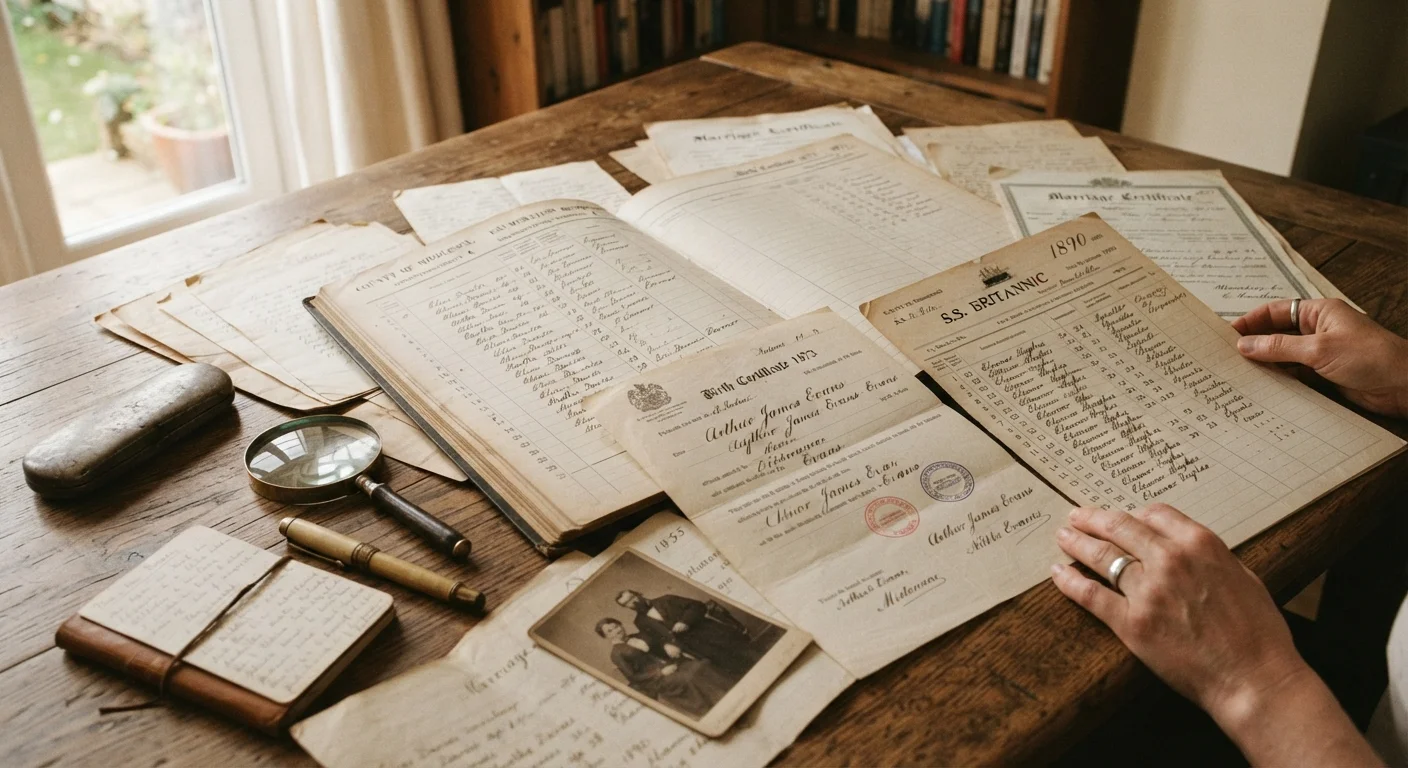
Photo: searchopenrecords editorial
—— In This Article
Key Takeaways
- Historical public records include government, religious, and civic documents spanning centuries of American life.
- These records provide verifiable evidence of births, deaths, marriages, migrations, and land ownership.
- Record availability varies by era, location, and whether digitization has occurred.
- Name variations and missing records are common obstacles researchers must anticipate.
- Multiple overlapping record types often compensate when a single source is incomplete or lost.
What Historical Public Records Actually Are
The phrase "historical public records" covers a broad category of documents, so it helps to be precise. At their core, these are records created or collected by an authoritative body — a county clerk, a federal census bureau, a church parish, a probate court — that have been preserved long enough to be considered historical and are legally or practically accessible to researchers.
What separates a historical public record from a private family document is provenance: it was produced as part of an official process, not as a personal memento. A grandmother's diary is a primary source, but it is not a public record. A death certificate filed with a state vital records office is both a primary source and a public record, meaning anyone may request access to it under appropriate rules.
To understand the legal framework behind how these records are created, maintained, and released, see our overview of how US public records systems work. For genealogy specifically, tracing family roots using public records is where the practical application begins.
The Major Categories Researchers Rely On
Historical public records fall into several broad families, each capturing a different slice of an ancestor's life:
- Vital records — birth, marriage, and death certificates. These became standardized at the state level largely between 1880 and 1920, meaning earlier events require substitute sources.
- Census records — federal population schedules taken every ten years since 1790. Each decade's form asks slightly different questions, meaning the 1880 census lists relationships within households while earlier schedules may only name the head of household.
- Land and property records — deeds, grants, and tax lists. These often predate vital registration and can place an ancestor in a specific county decades before a birth certificate existed.
- Probate records — wills and estate inventories. These documents name heirs, identify family relationships, and list possessions, providing rich social context.
- Military records — service files, pension applications, and draft registrations. Pension files in particular can contain biographical detail that rivals a modern identity document.
- Immigration and naturalization records — passenger lists, declarations of intent, and citizenship papers. For families who arrived after 1890, these records often identify the exact town of origin abroad.
For a deeper reference on each document type and what it reveals, see the historical record types every family researcher should know.
1790
First federal census year in the US
The US Census Bureau has conducted a population count every ten years since 1790, creating a continuous chain of household records for genealogical research.
~4,000
County-level archive repositories in the US
The National Archives and Records Administration estimates thousands of county courthouses and state repositories hold original historical records not yet digitized.
1880–1920
Era of US vital records standardization
Most US states did not require systematic birth and death registration until the late 19th to early 20th century, creating a documentation gap for earlier generations.
Why These Records Matter for Family Research
Family history research depends on evidence, not tradition. Oral stories passed through generations are valuable starting points, but they shift with each retelling. A deed recorded in 1843 does not change. This is the core reason historical public records matter: they provide fixed, verifiable anchors in a family's timeline.
Beyond simple verification, records reveal context. A Civil War pension file might show that a great-great-grandfather was wounded at a specific battle, struggled financially in later life, and was survived by a widow who continued drawing benefits into the 1920s. That single file transforms a name on a family tree into a life with texture and consequence.
Records also resolve contradictions. When two branches of a family claim different origins for the same ancestor, land deed chains, census trails, and probate inventories can adjudicate the dispute with documentary precision. For comparison with modern public records used in genealogy, this guide to public records for family tree research explains how contemporary document types complement historical ones.
Common Challenges and How to Navigate Them
Even experienced researchers encounter obstacles that require strategy rather than simply searching harder.
Name Variations
Spelling was not standardized in earlier centuries, and immigrant names were frequently anglicized, phonetically respelled, or shortened by clerks who wrote what they heard. A researcher looking for "Czerwinski" may need to search for "Sherman," "Shervinski," or a dozen other phonetic approximations. Soundex coding — a phonetic indexing system used by many archives — helps, but manual browsing of original records is often necessary.
Digitization Gaps
The existence of an online index does not mean the underlying record is digitized. Many indexes were created from microfilm projects decades before scanning technology existed, and the original documents remain in physical repositories. Always verify whether a full image or only a transcription is available.
Record Loss
Fire and flood have destroyed courthouse records across the country. South Carolina, Virginia, and Georgia lost substantial county-level collections during the Civil War. The 1890 federal census was almost entirely destroyed by fire in 1921. Knowing these gaps in advance helps researchers pivot to substitute sources rather than concluding the record never existed.
Use Multiple Records to Confirm One Fact
Experienced genealogists rarely rely on a single document to establish a key date or relationship. Aim to corroborate each finding with at least two independent sources. If a birth year from a census entry conflicts with one from a death certificate, look for a third record — a marriage license, a military registration, a church baptism — to determine which is more likely accurate. Records created closer to the event in question are generally more reliable.
Getting Started With a Records-Based Approach
The most effective genealogical method works from the known to the unknown — documenting living family members first, then extending backward one generation at a time, verifying each step with records before proceeding. This prevents compounding errors, where an incorrect assumption in generation two cascades into a completely fabricated family tree by generation six.
Begin by collecting what you already have: birth certificates, marriage licenses, obituaries, old letters, photographs with dates on the back. Each document points toward the next. An obituary names survivors and a hometown; a hometown points to a county courthouse; a county courthouse holds probate and deed records that may extend the line another generation.
When you encounter a record you cannot interpret — an archaic legal term in a will, a Latin abbreviation in a church register — consult the finding aids published by the repository that holds the record, or reference the standards published by the Board for Certification of Genealogists, which maintains guidelines for evaluating and citing evidence. For context on how court records are structured and made public, that framework applies broadly to understanding how any official record system operates.
Historical public records are not a shortcut to a finished family tree. They are the raw material from which an accurate one is built — slowly, carefully, and with attention to what each document actually says versus what a researcher hopes it says.
Frequently Asked Questions

Genealogy Search Editorial Team
Genealogy Search Editorial Team is the collective byline for our editorial team and contributor network. Articles published under this byline or an editorial pen name are researched, written, and reviewed according to our editorial standards for clarity, consistency, and independence before publication.
View author profile