
Starting Your Genealogy Journey with Historical Archives
New to genealogy? Learn which historical archives hold the most useful records and how to approach your first research session with confidence.
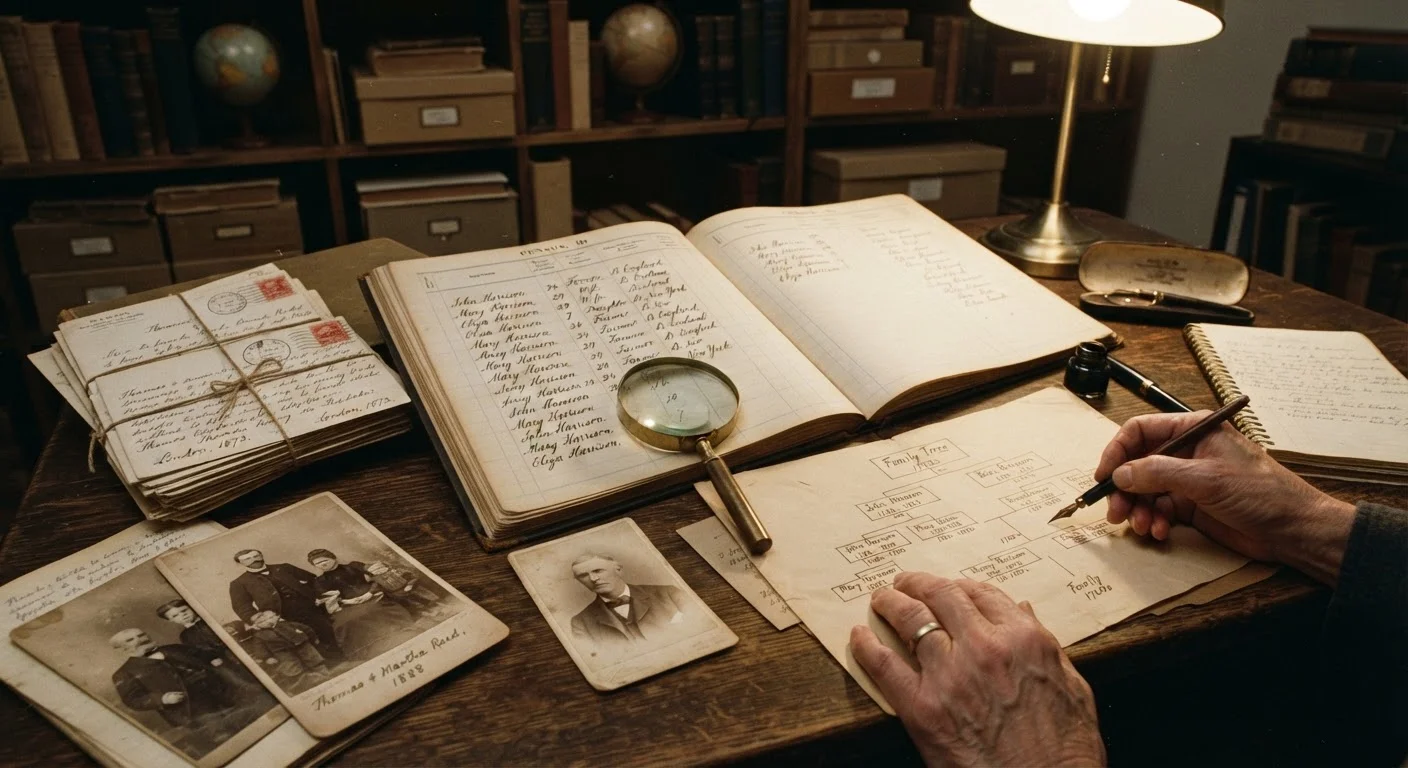
Photo: searchopenrecords editorial
—— In This Article
Key Takeaways
- Historical archives hold census, vital, military, land, and immigration records useful for tracing ancestry.
- Preparation — knowing names, dates, and places before you search — dramatically improves session efficiency.
- National and state archives serve different purposes; knowing which to check first saves significant time.
- Record errors, name variations, and digitization gaps are common; always cross-reference multiple sources.
- Many major genealogical record sets are freely accessible through government and library portals.
What Historical Archives Actually Contain
An archive is not simply a storage room — it is a structured repository of documents created by governments, churches, courts, and communities as part of ordinary civic life. For genealogists, this is enormously valuable: those documents recorded births, marriages, deaths, property transactions, military service, and immigration status across generations.
At the federal level, the National Archives and Records Administration (NARA) holds records created by U.S. government agencies, including decennial census schedules, military service and pension files, passenger arrival lists, and naturalization records. State archives maintain vital records (birth, death, and marriage certificates), probate files, land deeds, and state-level court documents. County courthouses, historical societies, and church repositories add another layer, often holding records that predate state registration systems.
Understanding this layered structure is the first step. Records aren't housed in one place — they are distributed across institutions based on who created them and why. Learning the difference between national and state archives helps you decide where to begin without wasting research time.
Primary source
A record created at or near the time of an event by someone with firsthand knowledge — for example, a birth certificate filed by a midwife. These are generally more reliable than later summaries.
Index
A searchable list of names and key details extracted from original records. Indexes speed up searching but can contain transcription errors, so always verify against the original image.
Vital records
Official government documents recording births, marriages, and deaths. In the U.S., these are registered at the state level, though availability and access rules vary by state.
Digitization
The process of scanning physical documents and making them available online. Many historical records are partially digitized, meaning older or more obscure materials may only exist in paper form.
Probate record
A court document created when someone's estate is settled after death, often including a will, an inventory of property, and lists of heirs — valuable for confirming family relationships.
Soundex
A phonetic indexing system used in older U.S. census indexes that groups surnames by how they sound rather than how they are spelled, helping researchers find records despite spelling variations.
The Most Useful Record Types for New Researchers
Not all record types are equally accessible or equally informative for beginners. Census records are typically the most productive starting point: U.S. federal censuses from 1790 through 1950 (with a 72-year privacy restriction on the most recent releases) are largely digitized and indexed, capturing household members' names, ages, birthplaces, and relationships.
Vital records — birth, marriage, and death certificates — provide precise dates and place names that anchor further research. Because civil registration didn't begin uniformly across states until the late 19th and early 20th centuries, earlier vital events may only be captured in church registers or county court records.
Military records deserve special mention. Draft registration cards, service records, and pension files frequently contain physical descriptions, addresses, and next-of-kin information unavailable elsewhere. Immigration records — including passenger manifests and naturalization papers — are critical for tracing ancestors who arrived from other countries and often reveal the specific town or region of origin.
If a relative died within living memory, obituary research is a practical complement, often naming siblings, children, and home communities that lead directly to the next generation of records.
Where to Start: National, State, and Local Repositories
For most U.S. researchers, the logical progression is: federal archives first for census and military records, state archives next for vital records, then county and local sources for granular detail. FamilySearch.org provides free indexed access to a substantial share of these holdings and is a sensible first stop before committing to subscription platforms.
State archives vary considerably in their digitization progress. Some states have made century-old vital records freely searchable online; others require written requests or in-person visits. The state library or historical society in each state often maintains complementary collections and can direct you to lesser-known local repositories.
Public libraries — especially those with dedicated genealogy rooms — frequently provide free access to subscription databases during library hours, including large digitized newspaper archives that contain obituaries, social notices, and court announcements. Check your local library's digital resources before subscribing independently.
For a broader picture of what's freely available versus behind paywalls globally, see our overview of digitized archives worldwide.
How to Approach Your First Research Session
Arriving at an archive — physical or digital — without a plan leads to scattered, unproductive sessions. Before you open a single database, write down everything you already know: full names (including maiden names), approximate birth and death years, and the states or counties where ancestors lived. This preparation is not optional; it is what makes searches precise.
Our archive research preparation checklist walks through every detail to gather beforehand. Once you have that foundation, begin with a single, specific question — for example, "Where was my great-grandmother born?" — rather than an open-ended sweep. Work from the most recent records backward, since records about people who lived more recently are generally more complete and easier to verify.
Document everything you find, including dead ends. Noting which records you searched and what they did or did not contain prevents you from repeating the same searches and helps you spot patterns across sources. A simple research log — even a spreadsheet — is sufficient for beginners.
Start with What You Know, Not What You Hope to Find
New researchers often make the mistake of beginning with a distant ancestor rather than working backward from themselves. Start with your parents and grandparents — gather their birth years, marriage dates, and home states first. Each confirmed generation gives you the specific names and locations needed to search the next one back accurately.
Reading Records Critically: What Can Go Wrong
Historical records are primary sources, but they are not infallible. They were created by human beings working quickly, often recording information secondhand. An age on a census might be estimated by a neighbor who answered the door. A surname on an immigration manifest might reflect how a port official heard an unfamiliar name, not how the family spelled it. A death certificate lists cause of death as reported by an attending physician using the diagnostic language of the era.
Name variation is the single most common obstacle new researchers encounter. Spelling was not standardized before the 20th century, and immigrant families frequently adapted names to fit the phonetics and conventions of English. Always search for phonetic variants and browse surrounding pages in indexed records — the record you need may be mis-indexed under an unexpected spelling.
Digitization gaps are equally important to understand. Not every record has been scanned, and not every scanned record has been accurately indexed. When a search returns no results, that is not proof the record doesn't exist — it may simply not be online yet. Contacting the repository directly, or visiting in person, often surfaces records that digital searches miss.
For a broader roadmap that puts all of these skills in context, the first-time genealogy researcher's roadmap provides a step-by-step framework from initial preparation through verified conclusions.
Frequently Asked Questions

Genealogy Search Editorial Team
Genealogy Search Editorial Team is the collective byline for our editorial team and contributor network. Articles published under this byline or an editorial pen name are researched, written, and reviewed according to our editorial standards for clarity, consistency, and independence before publication.
View author profile