
The Paper Trail You Should Gather Before Touching Any Database
Before logging into any archive, collect these personal and family documents. This checklist helps you research more efficiently and avoid dead ends.
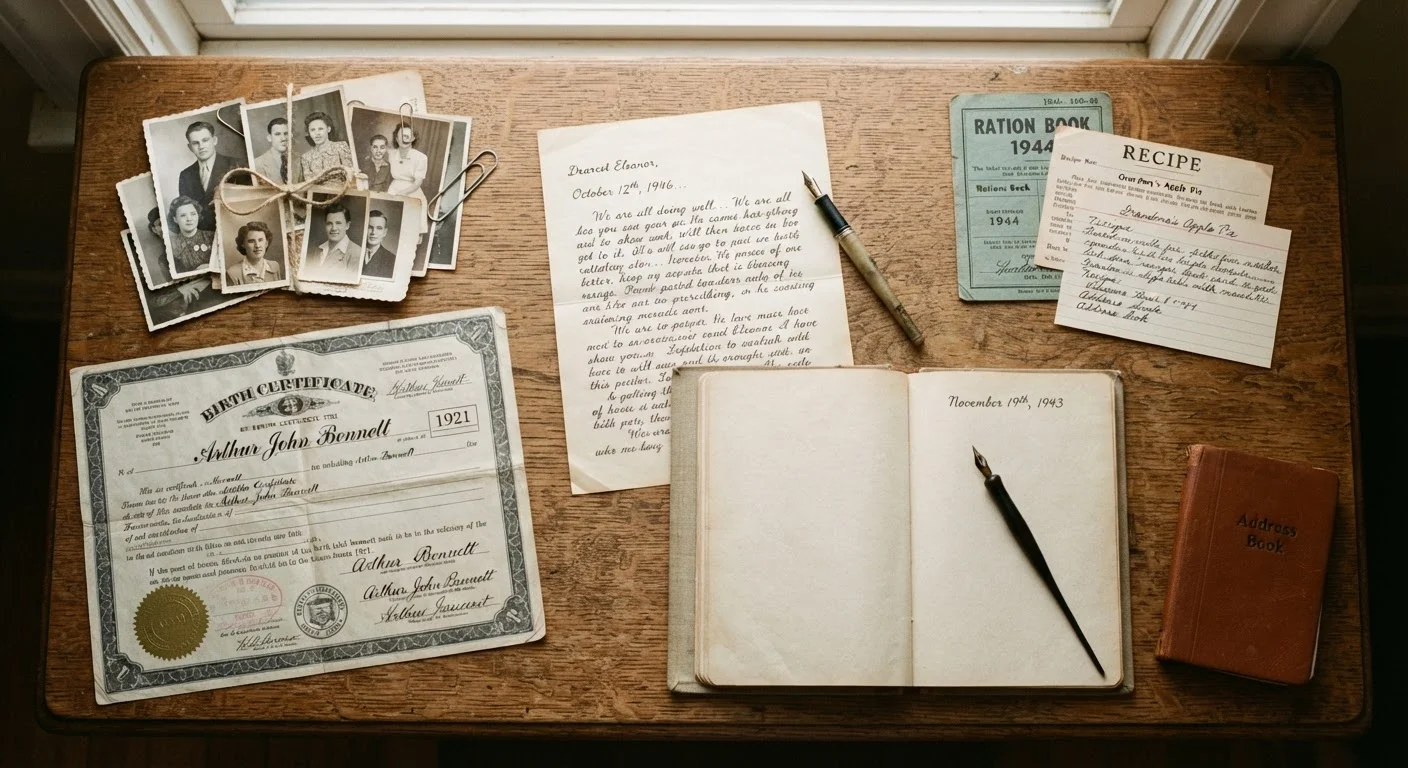
Photo: searchopenrecords editorial
—— In This Article
Key Takeaways
- Physical documents in your home are the most reliable starting point for any genealogy search.
- Gathering key names, dates, and places before searching prevents wasted sessions in databases.
- Spelling variations and nickname usage in old records can derail searches without prior awareness.
- Living relatives hold details that no database or archive can replicate.
- Organizing your paper trail once protects your research from duplication and contradiction.
Why Paper Comes Before Pixels
Every experienced genealogist knows a fundamental truth: the best database query begins not at a keyboard, but in a shoebox, a filing cabinet, or a cedar chest. Before you log in to any archive or public records platform, the documents already in your possession will shape every search you run. They contain the exact spellings, dates, and place names that will make or break a match.
Skipping this step is the single most common reason beginners reach dead ends quickly. A misremembered birth year, an Anglicized family surname, or an unknown maiden name can send you down entirely the wrong branch. This checklist helps you gather, review, and organize what you already have — so that when you do open a database, you arrive with precision rather than guesswork.
Once your paper trail is in order, you'll be ready to take the next step. Our guide on starting your genealogy journey with historical archives walks you through which repositories to prioritize and how to approach your first session confidently.
Personal Identity Documents
Vital Records for Immediate Family
Military and Government Records
Photographs and Personal Correspondence
Property, Legal, and Financial Records
Religious and Community Records
Knowledge From Living Relatives
What to Do With What You Find
Once you've collected documents from the categories above, resist the urge to immediately open a search engine. Instead, spend a few minutes creating a simple reference sheet — even a handwritten one — that captures the confirmed names, dates, and locations for each person you plan to research. Note every spelling variation you encounter, including nicknames (e.g., Maggie for Margaret, Bud for a given first name) and any surname changes at immigration or marriage.
Flag the gaps deliberately. If you have a grandfather's death certificate but no birth record, write that down as an open question. Those gaps become your research objectives — and they'll help you stay focused when you're inside a database rather than chasing tangential records.
Don't underestimate obituaries as a bridge document. They frequently name surviving relatives, birth towns, church affiliations, and former residences that don't appear elsewhere. The Obituaries & Family History hub explains how to use these records as a foundation for broader genealogical research.
After completing this checklist, consider pairing it with the strategies in our research workflow guide for historical archive searches to keep your sessions organized and your findings well-documented from the start.
Original Documents Are Irreplaceable — Handle With Care
Before sorting through fragile paper records, wash and dry your hands thoroughly, and work on a clean, flat surface. Never use adhesive tape on original documents, and avoid storing them in plastic bags that trap moisture. If a document is already damaged, scan it before handling it further — scanning requires less physical contact than repeated reading.

Genealogy Search Editorial Team
Genealogy Search Editorial Team is the collective byline for our editorial team and contributor network. Articles published under this byline or an editorial pen name are researched, written, and reviewed according to our editorial standards for clarity, consistency, and independence before publication.
View author profile