
Building a Family Narrative: Turning Raw Obituary Data Into a Coherent History
Collecting names and dates is only the beginning. Learn how to weave obituary findings with other records into a readable, well-sourced family history.
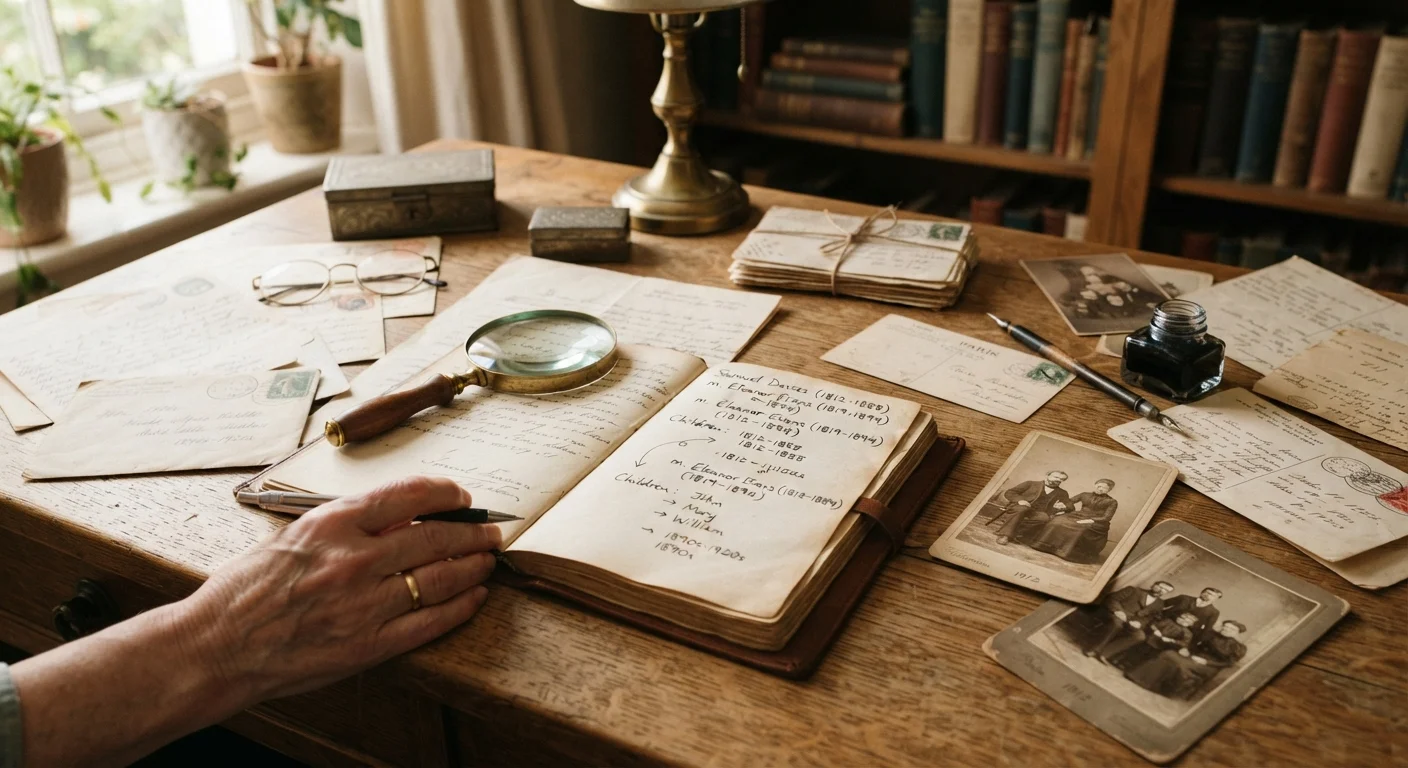
Photo: searchopenrecords editorial
—— In This Article
Key Takeaways
- Obituaries are starting points, not endpoints — they must be corroborated with census, vital, and court records.
- Organizing data chronologically before writing reveals gaps and contradictions that raw notes obscure.
- Citing every source within your narrative protects accuracy and helps future researchers verify your findings.
- Emotional context drawn from obituary language can humanize a family history without sacrificing factual rigor.
- Collaboration with living relatives often fills gaps that no public document can.
From Data Points to Story: Why the Leap Matters
Many family researchers reach a point where they have accumulated folders of names, dates, and photocopied records — yet still feel they don't know their ancestors. That gap between data and understanding is exactly where narrative craft becomes essential. Obituaries, in particular, sit at a rich intersection: they are simultaneously public records, personal tributes, and compressed biographies. Learning to treat them as story material — rather than mere evidence — is what elevates genealogy into family history.
Before drafting a single sentence of narrative, it helps to understand what obituaries can and cannot reliably confirm. For a grounded introduction to extracting genealogical details, see our practical field guide to reading obituaries. That foundation makes the narrative-building process far more defensible.
Best Practices for Shaping a Coherent Family Narrative
The practices below address the most common challenges researchers face when moving from raw obituary data to a written family history. Apply them in roughly sequential order, but expect to loop back as new records surface.
Organize all obituary findings chronologically before writing a single narrative sentence.
Chronological ordering surfaces contradictions — mismatched birth years, impossible sibling age gaps, relocated families — that are invisible when records sit in unordered folders. Identifying these conflicts early prevents them from becoming embedded errors in your final narrative.
Cite every source in-line as you draft, not after the fact.
Memory of where a detail came from degrades quickly once you are deep in a writing project. Inline citation — even informal notes like '(Akron Beacon Journal, March 14, 1937)' — keeps your draft honest and dramatically simplifies later verification by others.
Distinguish between what a record states and what it implies.
Obituaries are written by grieving families or newspaper staff, not archivists. They reflect what survivors wanted remembered, which may omit divorces, estrangements, or cause of death. Conflating the record's language with biographical fact introduces bias your readers cannot detect.
Use obituary language as a window into era and community, not just biography.
The vocabulary, religious references, and social roles named in an obituary reflect the norms of their time and place. Reading them contextually enriches your narrative with cultural history and explains why certain details were emphasized or omitted.
Document unresolved questions as explicitly as confirmed facts.
Future researchers — including your own descendants — will benefit more from an honest record of what remains unknown than from a tidy narrative that papers over gaps. Unsolved puzzles also invite collaboration from relatives or archivists who may hold missing pieces.
Integrating Other Public Records to Fill the Gaps
No single obituary can carry a family history alone. Census schedules reveal household compositions that obituaries omit. Death certificates confirm causes of death that survivors may have softened in a published notice. Marriage and probate records show property, disputes, and relationships that polished tributes rarely mention.
The discipline of cross-referencing obituary details with other public records is what separates a speculative narrative from a well-sourced one. When records conflict — and they will — note the discrepancy transparently in your text rather than silently choosing one version over another. Readers and future researchers deserve to see your reasoning.
For a structured approach to sequencing what you find, the companion article on building a family timeline using obituary records offers a reliable organizing framework.
Writing with Empathy Without Sacrificing Accuracy
A family history written purely as a list of verified facts can be accurate and still unreadable. The language of obituaries — however formulaic — often preserves traces of personality, community standing, and cultural context. Phrases like "devoted to her garden" or "known throughout the county" carry social history worth preserving, provided you flag them as characterizations from a source rather than independently verified traits.
Attribute emotional color to its origin: "Her 1952 obituary in the Decatur Herald described her as..." rather than asserting it as biographical fact. This keeps your narrative honest while honoring the human behind the record. If you are still assembling the foundational details needed before you begin, our checklist on key details to gather before searching for an obituary ensures you start with the right raw material.
Finally, share drafts with living relatives early. Their corrections and additions — oral history, family photographs, letters — frequently resolve contradictions that no archive can. The goal is a history worthy of the people it describes and trustworthy enough to pass forward.

Obituary Search Editorial Team
Obituary Search Editorial Team is the collective byline for our editorial team and contributor network. Articles published under this byline or an editorial pen name are researched, written, and reviewed according to our editorial standards for clarity, consistency, and independence before publication.
View author profile