
Reading Between the Lines: How Obituary Language Reflects Family Structure
Phrases like 'survived by' or 'preceded in death by' carry structured meaning. Learn how to interpret obituary conventions to map family relationships accurately.
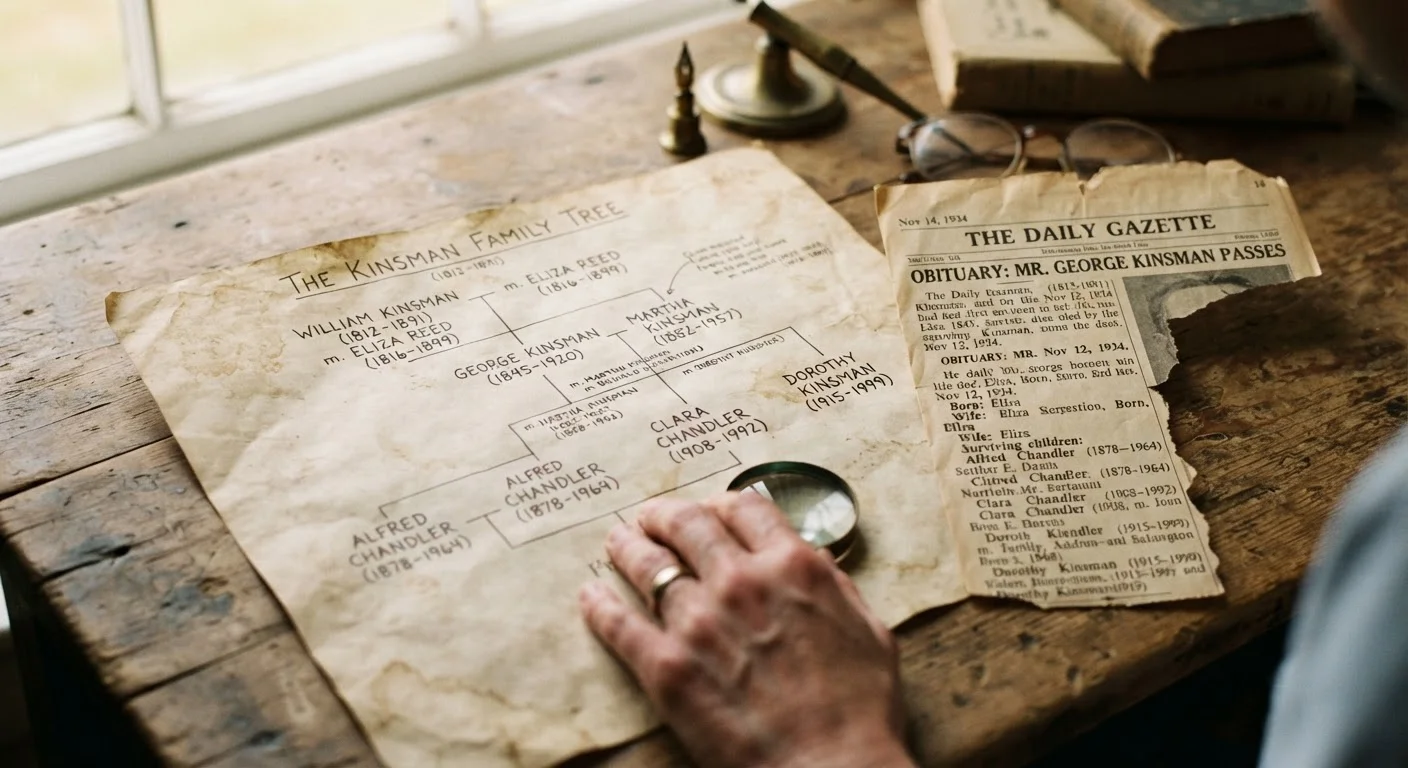
Photo: searchopenrecords editorial
—— In This Article
Key Takeaways
- "Survived by" identifies relatives who were living at the time of the deceased's death.
- "Preceded in death by" names family members who died before the subject of the obituary.
- The order in which relatives are listed often follows generational and relational hierarchy.
- Omissions in an obituary can signal estrangement, adoption, or blended family complexity.
- Cross-referencing obituary language with death certificates strengthens genealogical accuracy.
Why Obituary Conventions Exist — and Why They Matter
An obituary is not simply a farewell. It is, in practice, a compressed public record of a person's family structure at a specific moment in time. The standardized phrases used throughout American obituary writing developed over generations precisely because they needed to communicate relationship information clearly and efficiently to readers who often didn't know the deceased personally.
For anyone researching family history, these conventions are invaluable — but only if you can read them accurately. The same phrases that feel like gentle formalities to a grieving reader carry structural, genealogical weight for a researcher. For a deeper look at how all the parts of an obituary work together, see The Anatomy of an Obituary.
Decoding the Core Phrases
Two phrases anchor nearly every American obituary's family section, and understanding them precisely makes everything else easier to interpret.
"Survived by"
This phrase opens the list of living relatives at the time of death. Names are typically presented in generational order: spouse first, then children (often with their own spouses listed parenthetically), then grandchildren, then siblings. This ordering is conventional, not arbitrary — it reflects the relational proximity to the deceased and can help you reconstruct a generational map quickly.
"Preceded in death by"
This phrase names relatives who died before the subject. It most commonly includes parents, siblings, a predeceased spouse, or occasionally a child. For genealogists, this is a rich vein: names listed here can anchor searches into earlier death records, census entries, or their own obituaries. The full guide to relationship terms in obituaries explores how these phrases work in greater depth.
Record Names Exactly as Printed
When extracting names from an obituary's survivors or "preceded in death" list, copy them exactly as they appear — including spelling variations, nicknames in quotation marks, and maiden names in parentheses. These details are often clues to alternate spellings in other records. A name rendered as "Margarethe" rather than "Margaret" may be the key to finding immigration or naturalization documents.
Beyond these two anchoring phrases, pay attention to qualifiers. "Loving," "devoted," and "cherished" are emotional descriptors that don't alter genealogical meaning. However, terms like "former spouse" or "estranged" — when they appear, which is rare — do signal legal or relational complexity worth noting.
What the Order and Naming Patterns Reveal
Experienced researchers learn to notice not just who is named, but how. A woman listed as "companion" rather than "wife" suggests an unmarried partnership — potentially significant if you're tracing inheritance or legal next-of-kin records. Children listed under a different surname from the deceased may indicate a previous marriage, divorce, or adoption. Grandchildren listed by number rather than name ("seven grandchildren") often appear in older obituaries and signal that the writer prioritized brevity — but also that individual names may be traceable through later records.
Cultural and religious background also shapes how obituaries are written. Catholic, Jewish, and secular obituaries, for example, differ in emphasis and structure in ways that affect how family members are presented. The article on religious and cultural variations in obituary writing is a helpful companion resource here.
~80%
Obituaries naming at least one survivor
Genealogical researchers commonly note that the vast majority of published obituaries include at least one named survivor, making them a reliable first-pass source for identifying living relatives at time of death.
3–4
Generations typically represented in one obituary
A standard American obituary frequently spans three to four generations — the deceased's parents, siblings, children, and grandchildren — compressing substantial family history into a single document.
1880s
Era when standardized obituary phrases emerged widely
Historians of American journalism trace the widespread adoption of formalized obituary conventions, including phrases like 'survived by,' to the expansion of daily newspaper publishing in the late 19th century.
Omissions as Evidence
Perhaps counterintuitively, what an obituary leaves out can be just as informative as what it includes. A deceased person known from census records to have had three children — but where only two appear in the survivors list — may point to estrangement, a child who predeceased the parent but is not named, or a child the family chose not to acknowledge publicly. None of these conclusions should be drawn without corroboration, but the discrepancy itself is worth investigating.
Obituaries are composed by people under emotional stress, often in collaboration with funeral home staff, and they reflect the decisions — conscious or not — of whoever provided the information. They are primary sources, but imperfect ones. Cross-referencing with death certificates, census records, and vital records is essential. Our companion article on what death certificates reveal about ancestors explains how to pair these records effectively.
For a practical walkthrough of recording and verifying everything an obituary offers, see Reading an Obituary for Genealogy.
Frequently Asked Questions

Obituary Search Editorial Team
Obituary Search Editorial Team is the collective byline for our editorial team and contributor network. Articles published under this byline or an editorial pen name are researched, written, and reviewed according to our editorial standards for clarity, consistency, and independence before publication.
View author profile