
Why Obituary Details Sometimes Contradict Other Family Records
Dates, names, and survivor lists in obituaries can conflict with official records. Learn why these discrepancies occur and how to resolve them in your research.
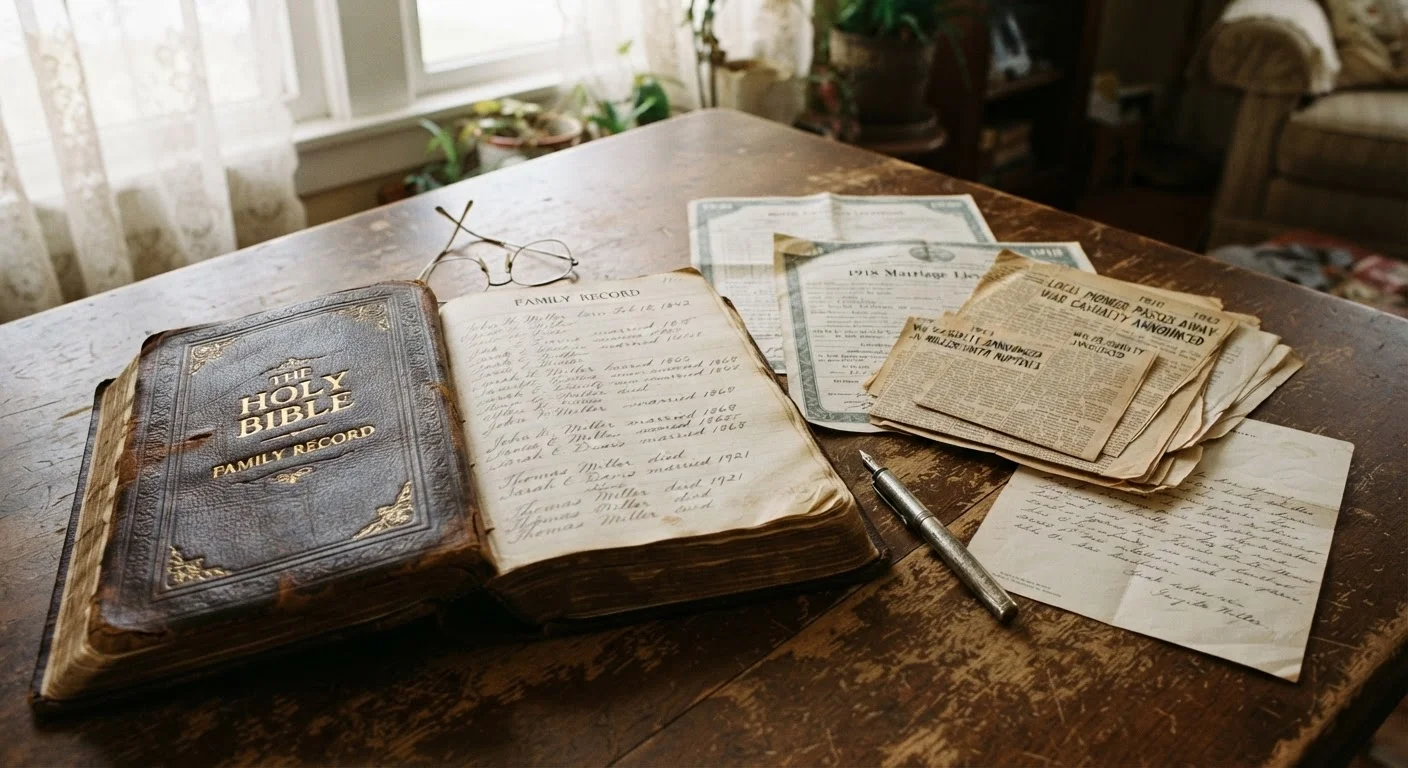
Photo: searchopenrecords editorial
—— In This Article
Key Takeaways
- Obituaries are written under emotional stress and time pressure, making errors common.
- Family members may not have access to official documents when supplying information to funeral homes.
- Discrepancies between obituaries and vital records don't invalidate either source — they require triangulation.
- Cross-referencing multiple record types is the most reliable way to resolve contradictions.
- Understanding why conflicts occur helps researchers evaluate each source on its own merits.
Why Obituaries and Official Records Don't Always Agree
If you've ever compared an obituary to a birth certificate, a death certificate, or census records, you may have encountered a puzzling mismatch — a different birth year, a name spelled differently, a survivor listed who predeceased the person, or a hometown that doesn't match. These contradictions can be disorienting, especially when you're grieving or trying to build an accurate family history.
The key thing to understand is that obituaries are family-composed narratives, not government-certified documents. They are written quickly, often by people under considerable emotional strain, and they draw from memory, family lore, and sometimes incomplete paperwork. Official records like death certificates, Social Security records, and vital registration documents are compiled by public institutions with formal verification processes. Both can contain errors — but they contain different kinds of errors, for different reasons.
Understanding where those errors originate is the first step toward resolving them. See our guide to spotting obituary inaccuracies for a deeper look at the warning signs researchers should watch for.
Common Mistakes Researchers Make When Facing Contradictions
When discrepancies surface, researchers often respond in ways that can actually compound the confusion rather than resolve it. Recognizing these missteps makes your research more reliable and less frustrating.
Treating the obituary as the authoritative record and dismissing conflicting official documents.
Why it happens: Obituaries feel personal and intentional — someone wrote them specifically about this person — so researchers often trust them over impersonal government forms.
Assuming a discrepancy means fraud, falsification, or a family secret.
Why it happens: Contradictions can feel significant, especially when they involve names or dates, leading researchers to construct dramatic explanations.
Stopping research once a single contradiction is found, concluding the records are unreliable.
Why it happens: Discovering that sources disagree can feel discouraging, and some researchers interpret inconsistency as a sign that no reliable answer exists.
Ignoring the informant's identity when evaluating a record's reliability.
Why it happens: Researchers focus on the data fields in a document and overlook the metadata — particularly who supplied the information and how they would have known it.
Conflating a legal name with a used name and treating any difference as an error.
Why it happens: Many people lived their entire lives under nicknames, middle names, or anglicized versions of foreign-language names — none of which appeared on their legal documents.
For a broader look at how this problem extends beyond obituaries, why public records search results sometimes contradict each other explains how different databases and record systems diverge over time.
How to Resolve Conflicts Between Obituaries and Other Records
Contradictions between sources aren't dead ends — they're invitations to dig deeper. The goal isn't to declare one record right and another wrong, but to understand why each source says what it says.
Start by identifying the type of discrepancy. Date errors (birth years off by one or two) are often transposition mistakes or family memory gaps. Name differences may reflect nicknames, name changes after marriage or immigration, or anglicized spellings. Survivor list inconsistencies often reflect estrangements, blended family complexity, or simply rushed composition.
Once you've characterized the discrepancy, reach for corroborating documents. Death certificates, issued by state vital records offices, carry legal weight and often list birthplace, parents' names, and informant details. Social Security Death Index records, census entries, and military service files can each shed light on a different era of someone's life. Cross-referencing obituary details with other public records walks through exactly how to build that multi-source picture methodically.
It's also worth noting who supplied the information in each document. The death certificate's informant field often reveals whether a spouse, child, or funeral home director provided the data — each with different levels of firsthand knowledge. An obituary written by a grandchild may differ from one shaped by the deceased's spouse, and both may diverge from what a sibling remembers. None of these perspectives is dishonest; they reflect the limits of human memory and the complexity of family life.
For guidance on how oral tradition and documented records diverge more broadly, why family stories don't always match the records offers useful context for genealogists working across both written and remembered history.

Obituary Search Editorial Team
Obituary Search Editorial Team is the collective byline for our editorial team and contributor network. Articles published under this byline or an editorial pen name are researched, written, and reviewed according to our editorial standards for clarity, consistency, and independence before publication.
View author profile