
Why Obituaries Sometimes Get the Facts Wrong — and How to Spot It
Grief, deadline pressure, and family dynamics can introduce errors into obituaries. Learn the warning signs and verification strategies.
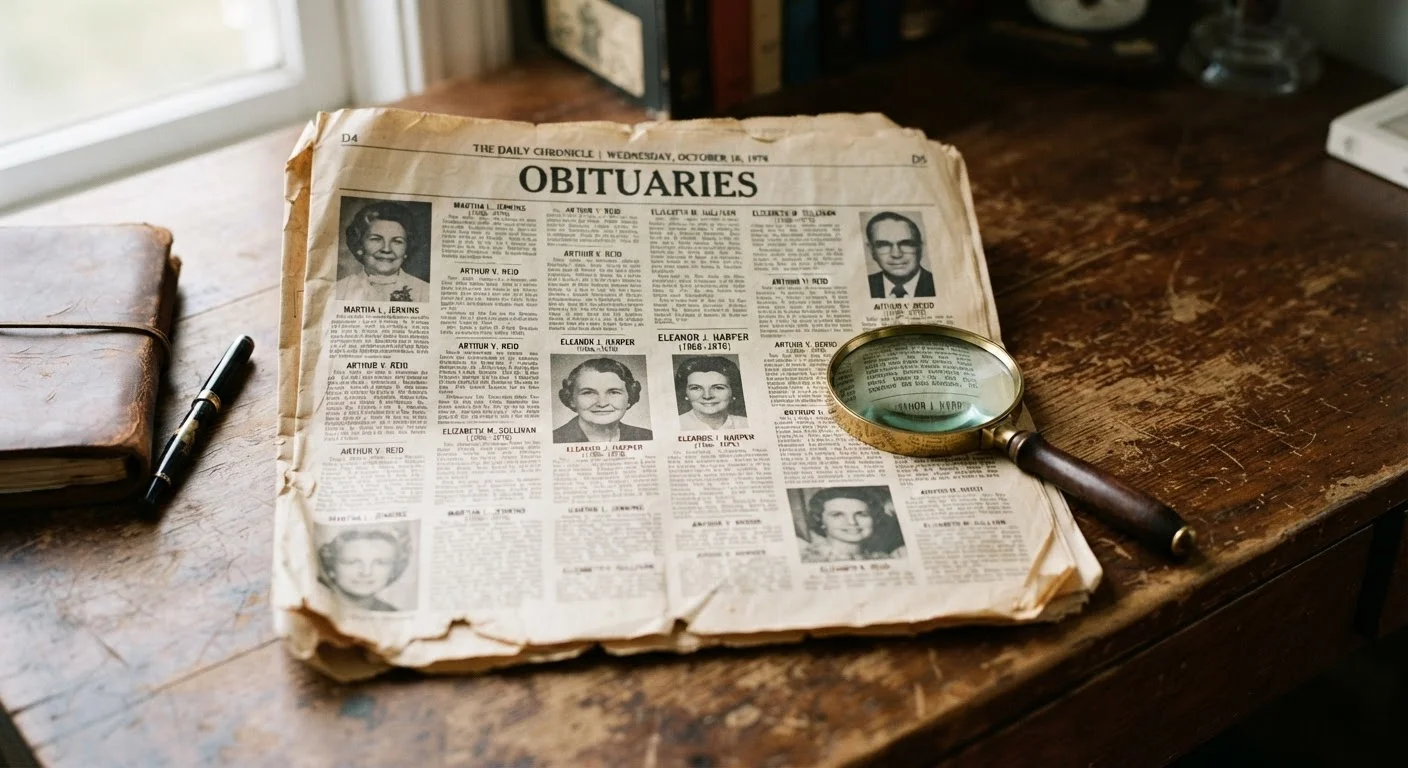
Photo: searchopenrecords editorial
—— In This Article
Key Takeaways
- Obituaries are not official records; families write them, often under significant emotional and time pressure.
- Errors in dates, spellings, and survivor lists are common and can mislead genealogical research.
- Cross-referencing obituaries with vital records, census data, and other sources is essential for accuracy.
- Understanding why errors occur helps researchers interpret discrepancies without dismissing the obituary entirely.
Why Obituaries Are Not the Same as Official Records
When we search for information about a loved one or an ancestor, an obituary often feels like the definitive account — a formal statement of a life. But obituaries occupy a different category than the vital records that government agencies maintain. They are, in most cases, written by grieving family members, submitted to a funeral home or newspaper within days of a death, and published with minimal editorial review.
That context matters enormously. As explored in our article on common misconceptions about what obituaries must include, there is no legal requirement for an obituary to be accurate, complete, or even published at all. Understanding that distinction — between a personal tribute and a verified public record — is the first step toward reading obituaries critically. For a fuller picture of what these documents typically do and do not contain, see what an obituary actually records and what it leaves out.
Common Errors and How to Spot Them
Errors in obituaries tend to cluster in predictable places: dates, name spellings, survivor lists, and geographic details. Recognizing these patterns makes it easier to approach an obituary as one source among many rather than the final word.
Accepting birth or death dates in an obituary as definitively correct without verification.
Why it happens: Family members writing the obituary often rely on memory rather than consulting official documents, and deadline pressure from funeral homes or newspapers leaves little time to double-check.
Treating a misspelled surname or first name as the correct historical spelling of that name.
Why it happens: Obituaries are frequently typed quickly by grieving relatives or newspaper staff unfamiliar with the family's name, leading to phonetic guesses or simple typos that go uncorrected.
Assuming the survivor list is complete and that unnamed relatives do not exist.
Why it happens: Estrangements, family politics, or simple oversight lead to some relatives being omitted — sometimes deliberately, sometimes because the writer simply did not know of them. As noted in our guide on obituary omissions, absence is not always an oversight.
Conflating the deceased's place of birth with their place of residence or the location where they died.
Why it happens: Obituary writers often compress a person's geographic history into a single phrase, and unfamiliar place names — especially for immigrants or those who moved frequently — may be combined or confused.
Taking an obituary's account of a person's occupation, military service, or achievements as verified fact.
Why it happens: Families sometimes embellish or misremember professional histories, and there is generally no editorial fact-checking process for obituary submissions at most publications.
For a broader look at how these discrepancies play out during family research, why obituary details sometimes contradict other family records offers practical guidance on reconciling conflicting information across source types.
How to Verify What an Obituary Claims
The most reliable approach is triangulation — using at least two or three independent sources to confirm any single fact. Vital records (birth certificates, death certificates, marriage licenses) are issued by government agencies and held to a different standard of accuracy than newspaper submissions. Census records, Social Security Administration files, and military service records can help establish dates, places, and family relationships that an obituary may have gotten wrong.
~50%
Obituaries with at least one factual error
Genealogical researchers and archivists frequently note that roughly half of obituaries examined contain at least one verifiable inaccuracy, most often in dates or name spellings.
3–5 days
Typical obituary submission window after death
Most funeral homes and newspapers expect obituary copy within three to five days of death, leaving limited time for families to verify historical details.
When obituaries are hard to locate in the first place, why obituaries are harder to find than you'd expect explains the gaps and alternative sources worth consulting. And if you encounter patterns of error that seem to recur across historical documents more broadly, why genealogists misread historical records addresses the wider challenge of interpreting imperfect primary sources.
Obituaries Are Tributes, Not Legal Documents
No government agency verifies the contents of a published obituary before or after publication. Errors — even significant ones involving dates, names, or survivor relationships — can remain in the permanent record uncorrected. Always treat an obituary as a valuable but unverified source, and cross-check its claims against certified vital records before drawing research conclusions.
Treating an obituary as a starting point rather than a conclusion — and following its leads into more authoritative records — is the most responsible approach to any research grounded in these documents.

Obituary Search Editorial Team
Obituary Search Editorial Team is the collective byline for our editorial team and contributor network. Articles published under this byline or an editorial pen name are researched, written, and reviewed according to our editorial standards for clarity, consistency, and independence before publication.
View author profile