
Interpreting Timestamps and Update Frequencies on Public Record Databases
A record listed as 'current' may be months old. Understanding how databases sync with source agencies is essential for accurate interpretation.
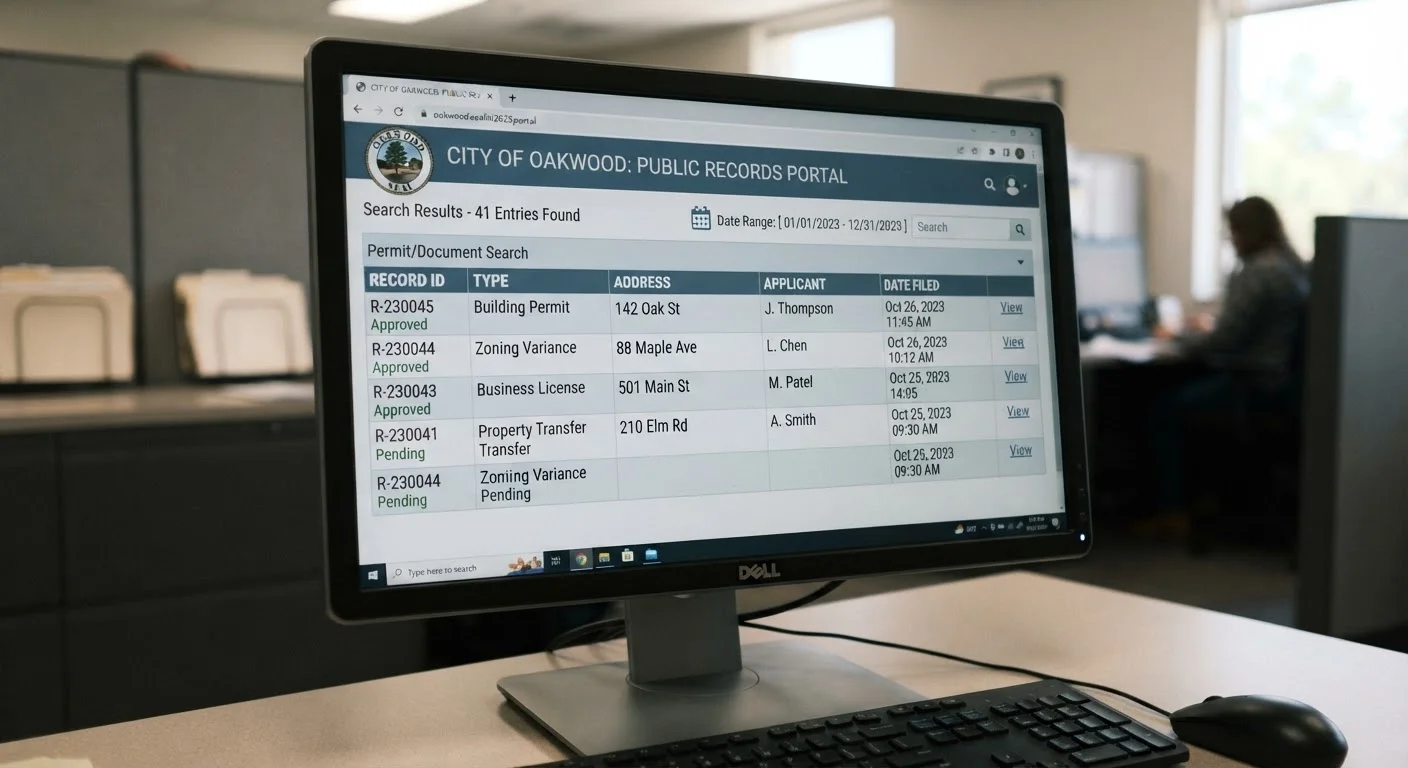
Photo: searchopenrecords editorial
—— In This Article
Key Takeaways
- A 'last updated' timestamp on a record reflects the database's sync cycle, not necessarily when the original government record changed.
- Third-party aggregators may lag weeks or months behind the originating agency.
- The same record can show different timestamps across different databases.
- Always verify time-sensitive records directly with the source agency.
- Understanding data provenance helps you assess how much weight to give any single result.
Why Timestamps Are Not What They Appear to Be
When you pull up a public record online and see a date labeled 'last updated' or 'record date,' it's natural to assume you're looking at fresh, authoritative data. In practice, that assumption can mislead you. As explained in our article on how public records are created, stored, and maintained, government records pass through multiple hands before they reach any third-party interface — and each handoff introduces potential delay.
The timestamp you see on a commercial or aggregator database almost always reflects the database's own sync date — the moment the platform last pulled data from its upstream source. The underlying government record may have been filed, amended, or closed at a completely different time. That gap is the core issue readers need to understand before drawing conclusions from any search result.
Aggregator vs. Agency Portal: A Key Distinction
Third-party aggregator sites compile records from many jurisdictions into one searchable interface — a genuine convenience. However, they are always downstream from the originating agency. A government agency's own online portal will reflect that agency's records more promptly than any aggregator. For decisions with legal or financial weight, the agency portal or a direct records request is the more authoritative starting point.
How the Data Pipeline Creates Lag
Public records flow through a multi-stage pipeline. A court clerk enters a judgment; that entry sits in the court's own system. At some point — daily, weekly, or monthly, depending on the jurisdiction and any data-sharing agreement — that court system sends a data file to a state repository or directly to a private data aggregator. The aggregator then processes, deduplicates, and indexes the records before making them searchable.
Each stage adds time. A judgment entered on a Monday may not appear in a third-party database until the following month's batch transfer is processed. This is why search results sometimes contradict each other — one platform may have ingested a more recent batch than another, producing different displayed information for the same person or entity.
Varies widely
Aggregator update frequency by jurisdiction
Update schedules range from daily feeds in some states to quarterly batch transfers in others, depending on agency data-sharing agreements.
30–90 days
Typical lag for court record aggregators
Industry practitioners commonly observe one-to-three month delays between court filings and third-party database indexing, though this varies by state and provider.
Reading Database Timestamps Accurately
To interpret a timestamp correctly, ask two questions: What event does this date describe? and Where in the pipeline did that date originate? Databases use several types of dates, and conflating them is a common mistake:
- Record filed date: When the government agency officially recorded the document.
- Database ingestion date: When the aggregator first captured the record in its system.
- Last sync date: When the aggregator most recently refreshed this record from its source.
- Displayed timestamp: What the user interface shows — which may be any of the above, or none of them clearly labeled.
Reputable platforms will distinguish these dates in their documentation or data methodology pages. If a site lumps them together or provides no explanation, that is itself a signal worth noting — see our guidance on signs that an online records source may not be trustworthy.
Practical Steps for Time-Sensitive Record Verification
Understanding update lag isn't just academic — it has real consequences. An address listed as current may be two moves out of date. A court record marked 'open' may have been resolved months ago. This matters for background checks, address lookups, and genealogy research alike. Our article on why address lookup results are sometimes wrong details how stale timestamps contribute directly to inaccurate results.
When accuracy is essential, apply these practices:
- Go to the source agency first for any record that affects a decision. County clerk portals, state court systems, and motor vehicle department databases carry the most current data.
- Compare two or more databases and note whether their timestamps align. Large discrepancies suggest one platform hasn't synced recently.
- Check the site's methodology page for stated update frequency. This is a basic transparency indicator.
- Note jurisdictional variability. Some states provide near-real-time data feeds; others update quarterly. The update schedule is a property of the agency, not just the aggregator.
For historical research contexts, where records are unlikely to change, timestamp lag matters less — but consistency of provenance still does, as discussed in our piece on navigating inconsistency in old records.
Frequently Asked Questions

Public Records 101 Editorial Team
Public Records 101 Editorial Team is the collective byline for our editorial team and contributor network. Articles published under this byline or an editorial pen name are researched, written, and reviewed according to our editorial standards for clarity, consistency, and independence before publication.
View author profile