
How Unclaimed Property Laws Vary Across U.S. States
Dormancy periods, reportable asset types, and claim procedures differ significantly from state to state. Learn what varies and why it matters for your search.
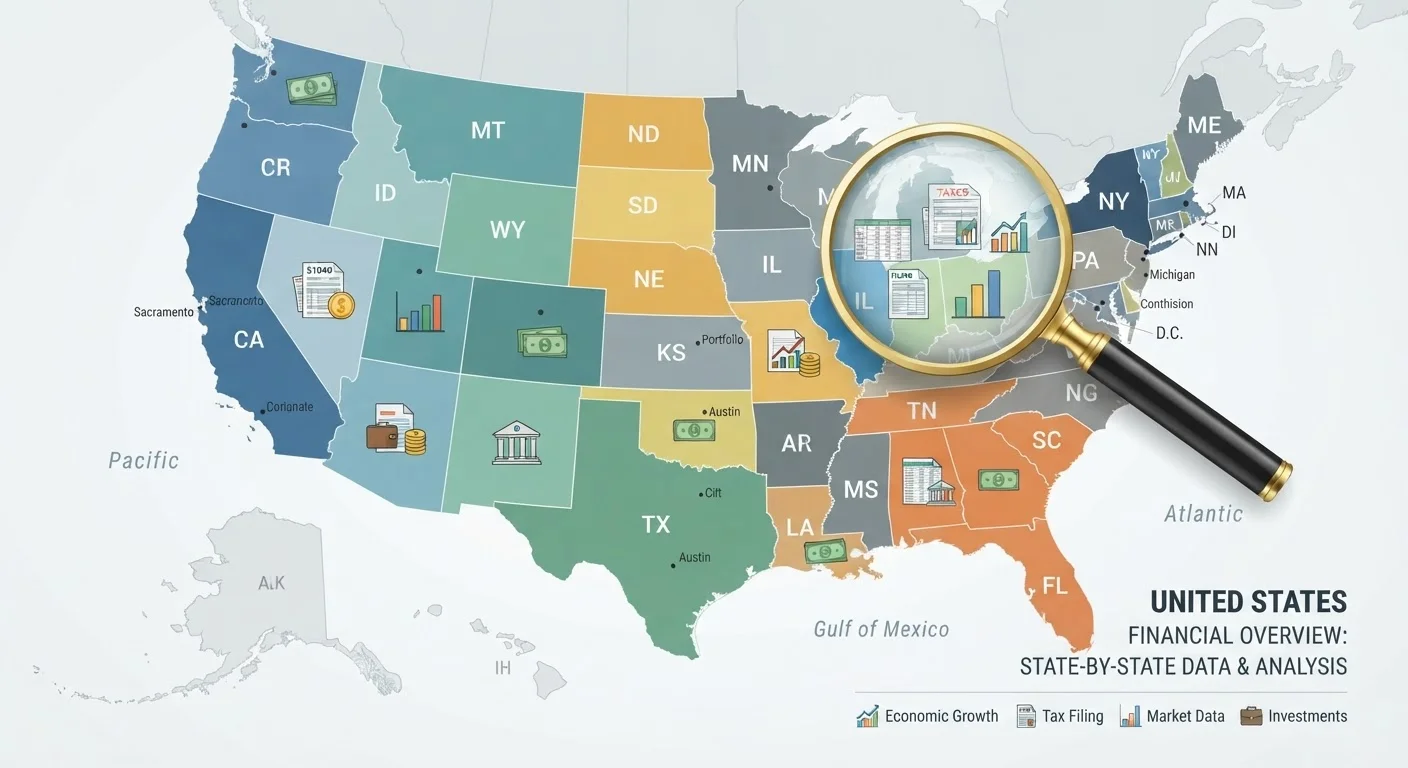
Photo: searchopenrecords editorial
—— In This Article
Key Takeaways
- Every U.S. state has unclaimed property laws, but dormancy periods, covered asset types, and claim procedures vary considerably.
- Most states use a 3-to-5-year dormancy period, but some assets — like traveler's checks — can carry 15-year windows.
- Property is typically reported to the state where the owner's last known address is on file, not where the holder is based.
- Searching multiple state databases is often necessary if you have lived or worked in different states.
- All legitimate state unclaimed property searches are free — no payment is required to file a claim through official portals.
Why Unclaimed Property Law Isn't One-Size-Fits-All
Every U.S. state, plus the District of Columbia and several territories, operates its own unclaimed property program under its own statutes. There is no single federal unclaimed property law that standardizes how states must handle dormant accounts — which means the rules governing when funds are reported, what asset types are covered, and how owners can reclaim property differ depending on where you look.
Most state programs are modeled on the Uniform Unclaimed Property Act, a model law developed by the Uniform Law Commission. Versions were issued in 1954, 1981, 1995, and most recently 2016. Because states adopt (and often amend) these model acts independently, the result is a patchwork: some states follow the 2016 version closely, others still operate under decades-old statutes, and many have hybrid rules tailored to local priorities.
Understanding the key variables — dormancy periods, reportable asset types, and claim procedures — helps you search more effectively and avoid assuming that one state's process mirrors another's. See our guide to federal vs. state unclaimed property searches to understand what falls outside state programs entirely.
Dormancy Periods: The Clock That Varies by State and Asset Type
A dormancy period is the span of time during which an account must remain inactive — with no owner contact — before the holder (a bank, insurer, or employer, for example) is legally required to report and remit the funds to the state. This is the most consequential variable across state lines.
| Asset Type | Typical Dormancy Period | Notable State Variations | |
|---|---|---|---|
| Checking / Savings Accounts | 3–5 years | Some states: 3 years; others: 5 years | |
| Uncashed Payroll Checks | 1–3 years | Several states require reporting after just 1 year | |
| Money Orders | 3–7 years | Varies widely; some states exempt certain issuers | |
| Traveler's Checks | 7–15 years | Older state statutes may allow up to 15 years | |
| Insurance Policy Proceeds | 3–5 years | Trigger date (maturity vs. last contact) differs by state | |
| Gift Cards / Store Credit | Varies or exempt | Many states exempt; others apply 3–5 year dormancy |
Most states set a general dormancy period of three to five years for common financial accounts such as checking and savings deposits. However, the period changes based on asset type. Wages and payroll checks often carry shorter windows — sometimes as little as one year — while traveler's checks may have dormancy periods of up to 15 years in certain states. Money orders typically fall in the 3–7 year range depending on jurisdiction.
States also differ on what counts as "owner contact" that resets the dormancy clock. Some states accept a customer simply logging into an online banking portal; others require a written transaction or direct correspondence. For a deeper look at how dormancy timelines work in practice, see our article on why forgotten accounts have an expiration date.
Which State Receives the Property?
When a financial institution or other holder reports unclaimed property, the funds go to the state associated with the owner's last known address in the holder's records. If no address is on file, the property typically escheats to the state where the holder is incorporated or headquartered — a rule established by two U.S. Supreme Court decisions (Texas v. New Jersey, 1965, and subsequent rulings).
This matters for your search strategy. If you opened a bank account while living in Ohio but later moved to Arizona, and the bank had your Ohio address, those funds are likely held by Ohio — not Arizona. Similarly, an employer headquartered in Delaware may report unclaimed wages to Delaware if they had no employee address on record. This is precisely why searching across multiple states at once is essential for anyone who has moved or had out-of-state financial relationships.
Start Your Multi-State Search for Free
MissingMoney.com, operated in partnership with the National Association of Unclaimed Property Administrators (NAUPA), allows you to search several participating state databases simultaneously at no cost. For states not yet participating, go directly to each state treasurer's official website. Never pay a third party to perform a search you can conduct yourself through these free, government-affiliated tools.
What Asset Types Are Covered — and How Coverage Varies
State unclaimed property programs cover a broad range of asset types, but the specific definitions differ. Common categories covered in virtually every state include dormant bank accounts, uncashed checks, forgotten security deposits, and unpaid insurance proceeds. Less uniformly covered assets include:
- Safe deposit box contents: Most states require holders to report and remit contents, but timelines and handling procedures differ.
- Mineral rights and royalties: Oil- and gas-producing states like Texas, Oklahoma, and Wyoming often have dedicated provisions for these asset types.
- Gift cards: Some states treat unredeemed gift card balances as reportable property; others exempt them entirely or apply only partial escheatment.
- Retirement accounts: IRAs and 401(k) plans are generally reportable, but tax implications and required minimum distribution rules create complexity that varies by state and account type.
- Stored-value cards and digital assets: Emerging asset types are handled inconsistently across states, and many statutes are still catching up.
For a full picture of what can end up in a state's unclaimed property fund, our article on what counts as unclaimed property breaks down the full range of asset categories.
Claim Procedures and Documentation Requirements
Once you locate property in a state database, the claims process is free in every state — but the required documentation, processing times, and submission methods vary. Most states now offer online claims portals, but some still require paper submissions for certain claim types or amounts above a threshold.
Common documentation requirements across states include:
- A valid government-issued photo ID
- Proof of your Social Security number or taxpayer identification number
- Documentation linking you to the address on the original account (utility bills, prior tax returns)
- For estate claims: letters testamentary, probate court documents, or a death certificate
Processing times range from a few weeks in states with streamlined digital systems to several months in states with higher claim volumes or manual review requirements. Some states impose claim value thresholds below which no documentation beyond ID is required; others apply documentation requirements to every claim regardless of amount.
Businesses face a distinct set of requirements. Corporate resolutions, EIN verification, and proof of business continuity are commonly required. Our separate guide on business unclaimed property claims covers those differences in detail.
For a thorough understanding of what information you'll find — and won't find — before you file, see what unclaimed property databases actually tell you. You can also explore the Claiming Your Money hub for step-by-step guidance on filing.
This article provides general educational information about unclaimed property laws and processes. It is not legal or financial advice. For questions specific to your circumstances, consult a qualified legal or financial professional.

Unclaimed Money Editorial Team
Unclaimed Money Editorial Team is the collective byline for our editorial team and contributor network. Articles published under this byline or an editorial pen name are researched, written, and reviewed according to our editorial standards for clarity, consistency, and independence before publication.
View author profile