
What Counts as Unclaimed Property? A Closer Look at the Asset Types Governments Hold
From dormant savings accounts to forgotten pension checks, the range of assets classified as unclaimed property is wider than most people realise.
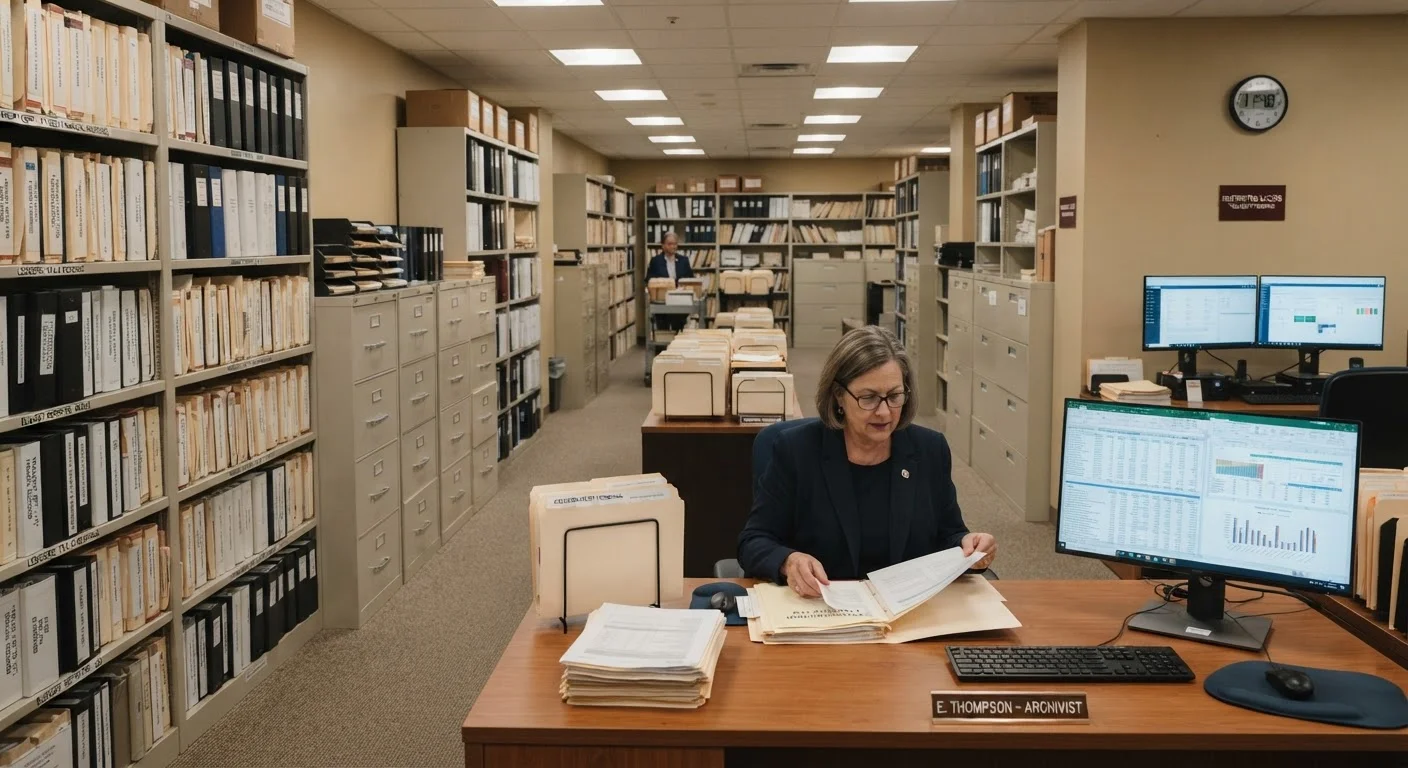
Photo: searchopenrecords editorial
—— In This Article
Key Takeaways
- Unclaimed property spans far more than forgotten bank accounts — it includes insurance payouts, stock dividends, utility deposits, and more.
- States take custody of dormant assets after a legally defined inactivity period, typically ranging from one to five years.
- Physical items like safe deposit box contents can also be turned over to state custody and auctioned if unclaimed.
- Every asset type has its own dormancy trigger, which determines when the clock starts on the reporting timeline.
- Rightful owners — or their heirs — can generally claim these assets at any time, regardless of how long the state has held them.
Why the Definition of Unclaimed Property Is Broader Than Most People Think
When most people picture unclaimed property, they imagine a forgotten savings account gathering dust at a closed bank branch. The reality is considerably more varied. Under state escheatment laws — which govern when dormant private assets transfer to state custody — dozens of distinct asset categories qualify. Understanding which types are included can make the difference between overlooking money that belongs to you and successfully recovering it.
Each state maintains its own list of reportable property types, though most follow the model established by the Uniform Law Commission. Holders — meaning the banks, insurers, employers, and other institutions that originally held your assets — are required to report and remit dormant property to the state after a set inactivity period. From there, the state acts as custodian until the rightful owner steps forward.
The asset types below represent the most commonly held categories you are likely to encounter when searching state databases. For a deeper look at how this custody process works from start to finish, see the full lifecycle of unclaimed property.
Dormant Bank and Credit Union Accounts
Checking accounts, savings accounts, certificates of deposit, and money market accounts are the most frequently reported category of unclaimed property. An account typically becomes reportable after three to five years of owner inactivity — meaning no deposits, withdrawals, or contact initiated by the account holder. The dormancy clock usually resets if the owner logs into online banking, writes a check, or formally acknowledges the account in writing.
When the dormancy period expires, the financial institution reports the balance to the state treasurer and transfers the funds. Interest accrued up to the date of transfer is generally included, though states vary on whether they continue to credit interest afterward.
Dormant checking and savings accounts are the single largest category of unclaimed property held by states.
Uncashed Checks and Negotiable Instruments
Payroll checks, vendor refund checks, insurance settlement checks, tax refund checks, and dividend warrants all qualify as unclaimed property if the recipient never cashes them. Businesses are required to track outstanding checks and, after the applicable dormancy period, remit the face value to the state.
This category is surprisingly common. A paycheck from a former employer that was mailed to an old address, or a small rebate check that slipped behind a filing cabinet, can sit unclaimed for years before the issuing company reports it. The original check itself is not needed to file a claim — states verify ownership through other documentation.
An uncashed paycheck or refund check mailed to an old address can become reportable unclaimed property within a few years.
Life Insurance Policy Proceeds
Life insurance benefits become unclaimed property when a policy matures or the insured passes away but the beneficiary never comes forward to collect. Insurers are obligated to conduct reasonable searches for beneficiaries, but they are not always successful — especially when beneficiary contact information is outdated.
Unclaimed life insurance proceeds are one of the largest dollar-value categories in many state systems. Whole life policies with accumulated cash value, annuity contracts, and group life coverage through former employers all fall within this category. Heirs researching a deceased relative's estate should specifically search for insurance proceeds, as these are often overlooked during probate.
Life insurance proceeds are one of the highest-value unclaimed property categories, often overlooked during estate settlement.
Stock Shares, Dividends, and Brokerage Assets
Forgotten brokerage accounts, shares held in direct registration with a transfer agent, and uncashed stock dividend checks are all reportable. If a shareholder moves without updating their address, dividend checks may begin returning undelivered — a common trigger that sets the dormancy clock in motion.
When stock is eventually turned over to the state, the shares may be liquidated and the cash equivalent held, or in some cases the shares themselves are retained. The treatment depends on the state. Heirs of investors who held physical stock certificates should check both state databases and transfer agent records for outstanding shares. For context on how unclaimed money moves through the system, see how unclaimed money moves from private hands to public record.
Undelivered dividend checks are a frequent trigger that starts the dormancy clock on brokerage and investment accounts.
Utility and Security Deposits
When renters move and close utility accounts, or when landlords return security deposits to forwarding addresses that no longer exist, the uncollected funds eventually pass to the state. Electric, gas, water, and telephone companies are all common holders of unclaimed deposit balances.
These amounts are often small — sometimes only a few dozen dollars — but they are legitimate unclaimed property nonetheless. People who have moved frequently or rented multiple properties over the years may find several small deposits across different states.
Utility and rental deposits often go uncollected after a move and can end up in state unclaimed property systems.
Pension and Retirement Benefits
Former employees who left a job without rolling over or withdrawing a pension benefit may have unclaimed retirement funds waiting for them. This applies to both defined-benefit pension plans and some defined-contribution plans where the employer could not locate the former employee to distribute a small-balance payout.
The U.S. Department of Labor maintains resources for locating pension plan administrators, and the Pension Benefit Guaranty Corporation (PBGC) holds unclaimed benefits from terminated pension plans. These federal-level resources supplement state databases, making retirement benefits one category where searching multiple systems is worthwhile. A beginner's overview of how the system works explains how federal and state databases relate to each other.
Former employees may have unclaimed pension distributions held at the state level or by federal agencies like the PBGC.
Safe Deposit Box Contents
Safe deposit boxes are among the more unusual categories of unclaimed property. When a box holder stops paying rental fees and cannot be located, the bank is eventually required to drill the box, inventory the contents, and turn them over to the state. Cash inside the box is held as currency; non-cash items such as jewelry, coins, collectibles, or documents may be auctioned by the state after a required holding period.
Claimants who can demonstrate ownership before auction can generally recover the items themselves. After auction, the proceeds — rather than the original objects — are what the state retains and what can be claimed.
Safe deposit box contents, including jewelry and documents, can be turned over to states and auctioned if the owner is unreachable.
What Happens After You Identify a Matching Asset
Spotting your name in a state database is only the first step. Each asset type carries its own documentation requirements when filing a claim — a stock certificate requires different proof of ownership than a forgotten utility deposit. States generally ask claimants to verify identity and their connection to the original account or policy.
Search Multiple Databases Before Filing
Assets from different categories are sometimes held by different agencies. Run your name through your state treasurer's portal, MissingMoney.com (a multi-state search tool operated in partnership with NAUPA), and any relevant federal resources such as the PBGC database. Covering all three gives you the most complete picture before you invest time in a formal claim.
Rules differ meaningfully by jurisdiction. Dormancy periods, the specific asset types that must be reported, and claim procedures all vary from state to state — a point covered in detail in how unclaimed property laws vary across U.S. states. Before assuming a search result belongs to you, review what the public record actually shows by consulting what unclaimed property databases tell you.
Once you are ready to act, the claiming your money hub walks through the steps, documents, and typical timelines involved in filing an official claim. There is no deadline for most unclaimed property — states hold assets indefinitely on behalf of rightful owners — but acting sooner reduces the risk of records becoming harder to trace.
This article is for general informational purposes only and does not constitute financial, legal, or tax advice. For guidance specific to your situation, consult a qualified professional.

Unclaimed Money Editorial Team
Unclaimed Money Editorial Team is the collective byline for our editorial team and contributor network. Articles published under this byline or an editorial pen name are researched, written, and reviewed according to our editorial standards for clarity, consistency, and independence before publication.
View author profile