
Searching Unclaimed Property Databases: What the Records Actually Tell You
Public unclaimed property databases list names, amounts, and asset types — but not everything. Know what information is available and what you'll need to verify.
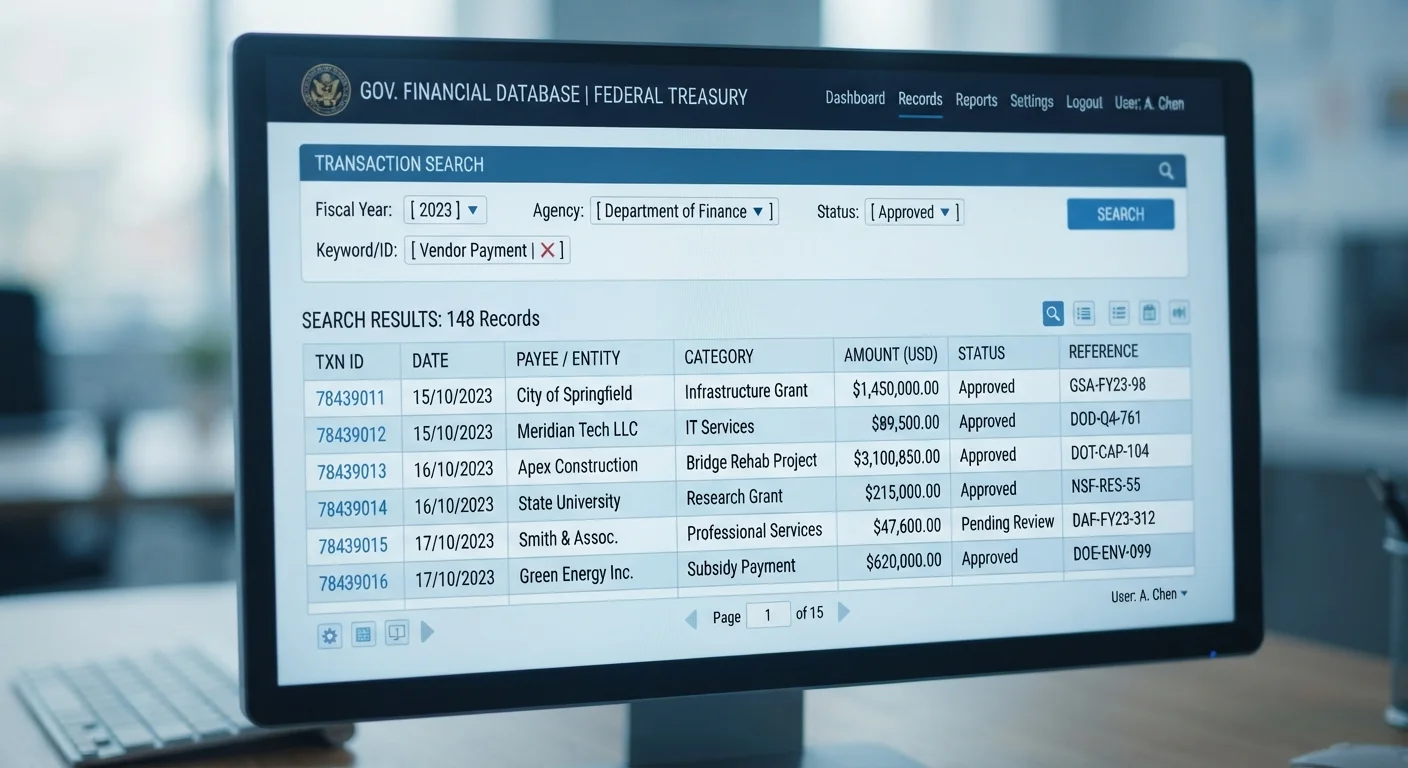
Photo: searchopenrecords editorial
—— In This Article
How Forgotten Assets Become Searchable Public Records
When a financial account, paycheck, or other asset sits untouched long enough, the holding institution — a bank, insurance company, employer, or utility — is legally required to transfer those funds to the state. This process is called escheatment, and it's the engine behind every unclaimed property database you can search today.
Dormancy periods vary: a checking account may need to sit inactive for three to five years before the bank reports it, while an uncashed payroll check might reach the state in one year. Once transferred, the state treasurer's office records the property and makes it searchable in a public database. The original owner — or a legal heir — can then search and file a claim at no cost. See how dormancy periods and rules differ by state for context on why timelines aren't uniform.
What a Database Record Actually Contains
State databases display a limited but useful snapshot of each property. Most records include:
- Owner name — as reported by the holder at the time of transfer, which may reflect an old or abbreviated version of your name.
- Last known address — often outdated, since dormancy begins when contact is lost.
- Property type — a code or label such as "checking account," "insurance proceeds," or "utility deposit."
- Reported amount or value — frequently shown as an approximate range rather than an exact figure, or as "unknown" for safe deposit box contents.
- Holder name — the institution that originally held the asset (e.g., a bank or insurance company).
What the record does not include: account numbers, Social Security numbers, or the full transaction history behind the asset. That data is withheld to protect privacy and prevent fraud. For a deeper look at decoding each field, see what the search results page is actually telling you.
Escheatment
The legal process by which a state takes custody of abandoned or inactive financial assets from a holding institution. Ownership rights are not extinguished — the original owner or heir may still file a claim.
Dormancy period
The required length of time an account or asset must sit inactive before the holder is obligated to report and transfer it to the state. Periods vary by asset type and state law.
Holder
The institution — such as a bank, insurance company, or employer — that was originally responsible for an asset before transferring it to the state under escheatment law.
Property type code
A label or abbreviation used in unclaimed property databases to categorize the nature of an asset, such as 'CK' for checking account or 'MS' for miscellaneous. Codes vary by state.
NAUPA
The National Association of Unclaimed Property Administrators — the professional organization that represents state unclaimed property programs and authorizes multi-state search tools like MissingMoney.com.
Limitations You Should Expect When Searching
Databases reflect what holders reported — no more, no less. That creates several practical limitations:
- Name mismatches are common. If you moved, married, or changed your name, records may list you under an older variation. Search broadly.
- Amounts can be imprecise. Some states show exact dollar values; others show ranges or suppress the figure entirely until a claim is verified.
- Multi-state coverage isn't guaranteed. Each state runs its own database. Property you held in a former state of residence won't appear in your current state's results. MissingMoney.com, a database authorized by the National Association of Unclaimed Property Administrators (NAUPA), searches multiple states simultaneously and is a reliable starting point.
- Federal assets are separate. Accounts covered by federal programs — such as certain pension benefits or U.S. savings bonds — are held by federal agencies, not state treasurers.
Techniques for searching more completely, including using name variations and former addresses, can help you surface records you might otherwise miss.
Searching Safely: Free, Official, and Direct
Every legitimate state unclaimed property search is free. No government portal charges a fee to search, and no credible database requires a subscription to view results. If a website asks for payment before showing you records, treat that as a warning sign.
Official search paths include:
- Your state treasurer's website — search directly for " unclaimed property" and look for a .gov domain.
- MissingMoney.com — operated under NAUPA authorization, this multi-state tool is legitimate and free to use.
Why all legitimate searches are free — and how to spot sites that exploit your search explains the difference between official resources and third-party services that charge unnecessary fees.
Once you identify a match, the next phase is filing a claim with documentation. The claiming process — including required documents and typical timelines — is covered in the Claiming Your Money hub.
This article provides general informational guidance about public unclaimed property databases. It is not legal or financial advice. Consult a qualified professional regarding decisions about your specific circumstances.

Unclaimed Money Editorial Team
Unclaimed Money Editorial Team is the collective byline for our editorial team and contributor network. Articles published under this byline or an editorial pen name are researched, written, and reviewed according to our editorial standards for clarity, consistency, and independence before publication.
View author profile