
What the Unclaimed Property Search Results Page Is Actually Telling You
Property type codes, holder names, reported dates—decode what state database results mean before you decide whether to file a claim.
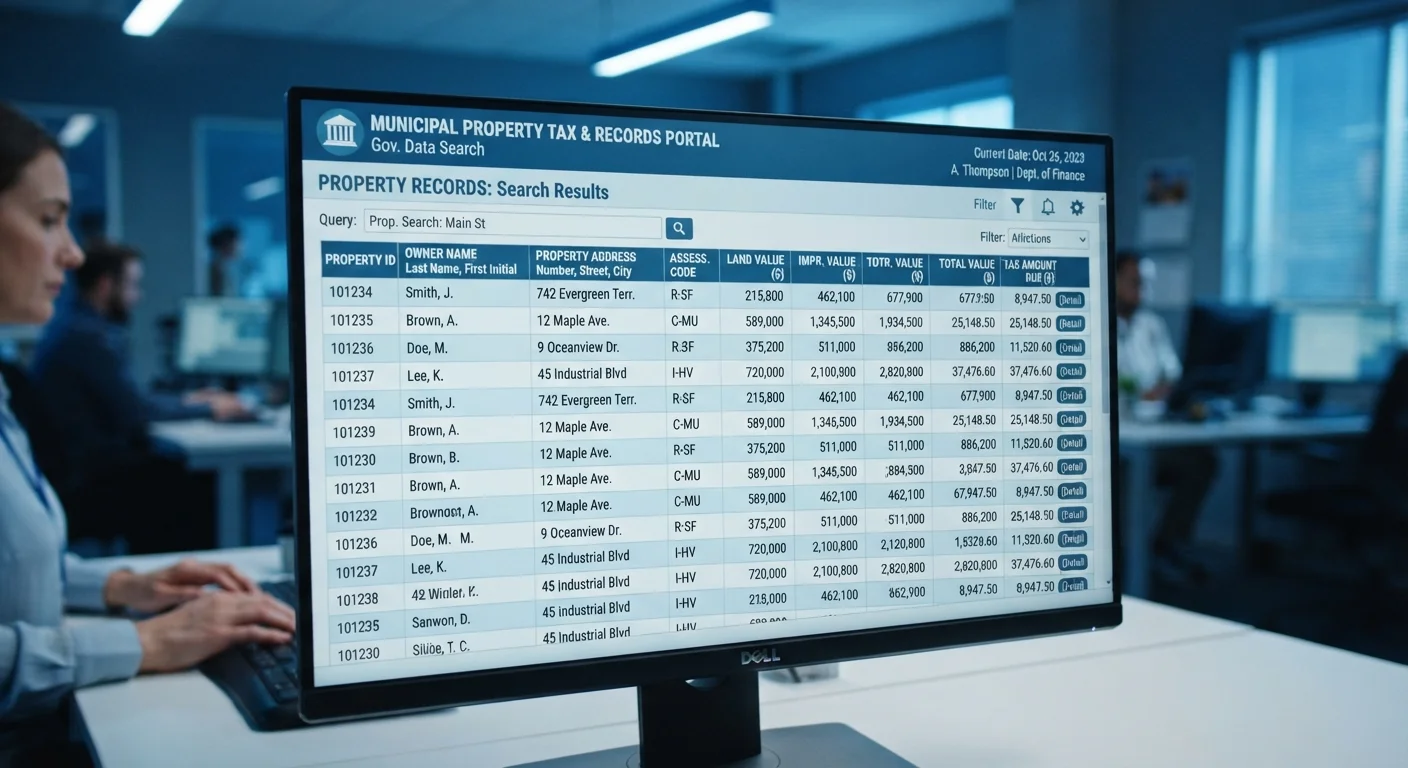
Photo: searchopenrecords editorial
—— In This Article
The Anatomy of a Search Results Page
When you run a name search on a state unclaimed property portal, you receive a table of records rather than a simple yes-or-no answer. Each row represents a distinct property that was reported by a business or institution—called a holder—after it lost contact with the owner. Understanding every column in that table is what separates a confident claimant from a confused one.
Most state portals, whether accessed directly or through the multi-state search at MissingMoney.com (operated under the NAUPA umbrella), display roughly the same core fields: owner name, last known address, holder name, property type, and reported amount or value. Some states mask the exact dollar amount until you log in or begin a claim, but the other fields are usually visible immediately.
For a broader look at how these portals are built and maintained, see how state unclaimed property databases actually work.
Holder
A business or institution—such as a bank, insurer, or employer—that held property belonging to someone else and was required by state law to transfer it to the state after a dormancy period elapsed.
Property Type Code
A standardized abbreviation, drawn from NAUPA reporting guidelines, that identifies the category of unclaimed property (e.g., AC for bank account, IN for insurance). Codes appear on state portal results and affect what documentation is needed to claim.
Dormancy Period
The legally defined length of time a property must remain inactive or uncommunicated before a holder must report and remit it to the state. Periods vary by property type and by state.
NAUPA
The National Association of Unclaimed Property Administrators—a nonprofit organization of state officials that coordinates unclaimed property standards, multi-state search tools, and best practices across U.S. jurisdictions.
Reported Date
The date on which a holder formally transferred the unclaimed property to the state treasury. This date is typically later than the date the property first became dormant.
Securities (Unclaimed)
Stocks, bonds, or mutual fund shares that were transferred to the state in custody form rather than as cash. Their displayed value may reflect share quantity rather than a fixed dollar amount.
Decoding the Key Data Fields
Owner Name: This is the name on record at the time the property was reported. It may reflect a maiden name, a middle initial variation, or a slight spelling difference from what you use today. A result that doesn't match your name exactly is not automatically someone else's property—address history and holder context often clarify the connection. See tips for searching more completely for guidance on name variations.
Last Known Address: The address a holder had on file—often a former home or workplace. If it matches anywhere you have lived, that is a meaningful signal worth pursuing.
Holder Name: The company or institution that originally held the funds and transferred them to the state. Common holders include banks, insurance companies, utilities, employers, and brokerage firms. The holder name helps you identify the original account or relationship, which you may need to document when filing a claim.
Property Type Code: States use standardized codes drawn from NAUPA's reporting guidelines. Common examples include AC (bank account), IN (insurance proceeds), MS (miscellaneous), SC (securities), and WG (wages). These codes tell you what kind of asset it is—important because the documentation required to prove ownership often differs by property type.
Reported Date / Dormancy Date: This is approximately when the holder reported the property to the state, not when the account went dormant. Dormancy periods—the time a property must sit inactive before being reported—vary by asset type and state. State-by-state dormancy rules explain why a recently reported property may reflect an account that went inactive years earlier.
Amount or Value: For cash properties (bank accounts, insurance checks, wages), this is a dollar figure. For securities, some states report shares rather than a cash value, because the shares are held in custody and not automatically liquidated. The value shown may differ from what you ultimately receive if shares have changed in price.
| Common property type codes | AC (bank account), IN (insurance), SC (securities), WG (wages), MS (miscellaneous) (NAUPA standard reporting codes) |
| Who operates state portals | State treasury or unclaimed property divisions |
| Multi-state search tool | MissingMoney.com (NAUPA-affiliated) |
| Typical dormancy period range | 1–5 years depending on property type and state (Varies by jurisdiction) |
| Information withheld publicly | Full SSN, complete account numbers, sometimes exact dollar amounts (Privacy protection standard) |
| Securities handling | Shares may be held in custody, not liquidated automatically |
What the Results Do Not Tell You
A results page confirms that the state holds a property associated with a name and address—it does not confirm that property is yours, nor does it guarantee a specific payout. Several details are deliberately withheld from public view to protect privacy: full Social Security numbers, complete account numbers, and sometimes the precise dollar amount are hidden until you initiate a claim and verify identity.
Results also do not tell you whether a claim has already been filed by someone else, or whether the property has already been paid out. If a record appears stale or you suspect a prior claim, contact the state's unclaimed property office directly—their contact information is on every official state treasury website.
For a fuller picture of what public records do and don't disclose, learn what unclaimed property records actually tell you.
Once you have identified a record that looks like a match, the logical next step is understanding what happens when you file. The claims process walkthrough explains the documentation, timelines, and verification steps involved from submission to receipt of funds.
This article is for general informational purposes only and does not constitute legal, financial, or tax advice. For questions specific to your circumstances, consult a qualified professional.

Unclaimed Money Editorial Team
Unclaimed Money Editorial Team is the collective byline for our editorial team and contributor network. Articles published under this byline or an editorial pen name are researched, written, and reviewed according to our editorial standards for clarity, consistency, and independence before publication.
View author profile