
How State Unclaimed Property Databases Actually Work
Understand the systems behind official state unclaimed property portals—who runs them, how funds get listed, and what to expect when you search.
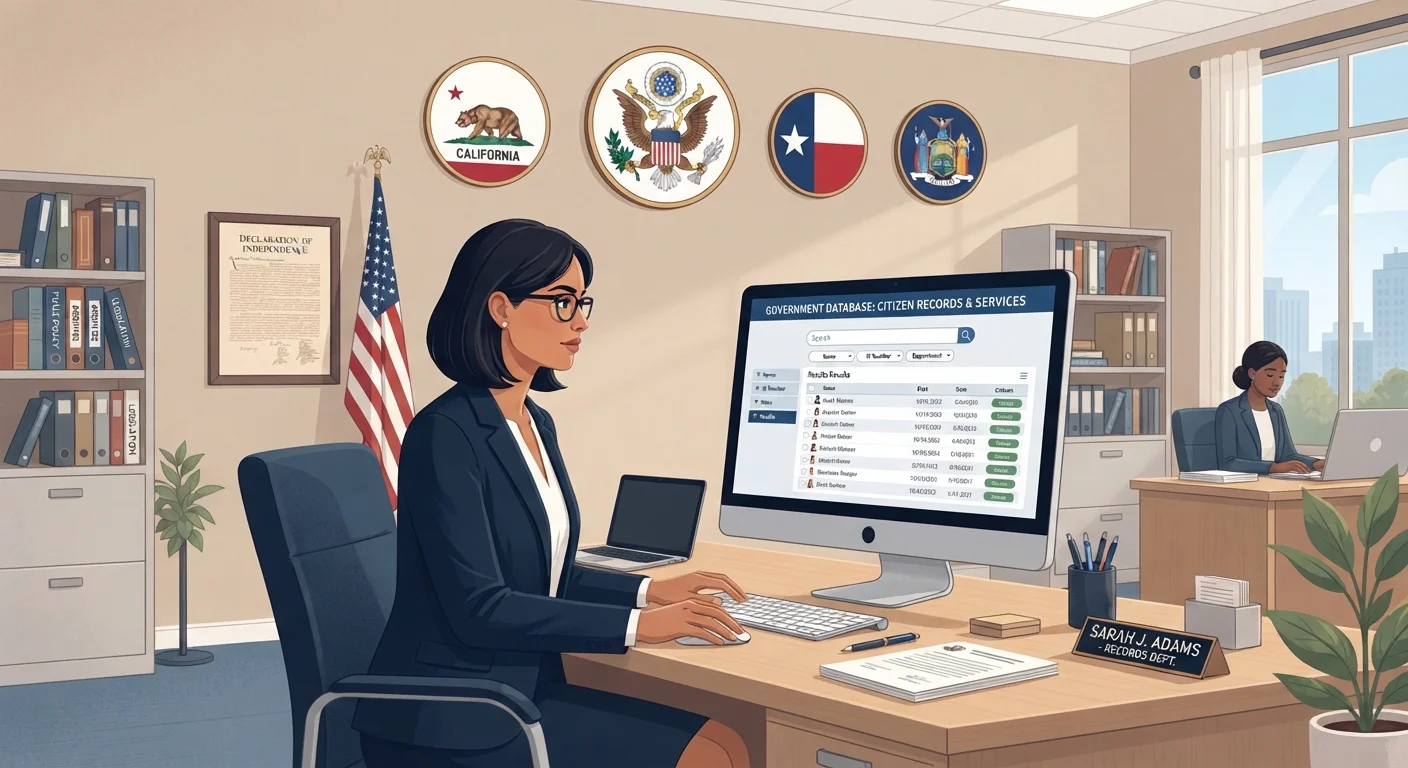
Photo: searchopenrecords editorial
—— In This Article
Key Takeaways
- State unclaimed property databases are operated by official government offices, not private companies.
- Businesses are legally required to report and transfer dormant assets to the state after a set dormancy period.
- Searching official databases is always free — you should never pay to find your own unclaimed funds.
- Records show property type and holder name but often omit exact dollar amounts until a claim is filed.
- Multi-state aggregators like MissingMoney.com link to official state systems and are also free to use.
Who Runs These Databases — and Why
Every U.S. state operates an unclaimed property program under its own escheatment laws — statutes that govern what happens when financial assets go unclaimed for a defined period. The agency responsible varies by state but is almost always the state treasurer, state controller, or a comparable revenue authority. These are legitimate government offices, not private intermediaries.
Their mandate is straightforward: accept dormant assets from businesses, maintain a public record of those assets, and return them to rightful owners upon verified request. The databases they maintain are a direct extension of that public trust function. Understanding this chain of authority is the first step to using these systems confidently — and to recognizing services that may misrepresent themselves as official sources.
For a broader view of how individual state programs differ in scope and design, see our state-by-state overview of unclaimed property portals.
How Funds Enter the System
Before a dollar appears in a state database, it goes through a legally structured process. Businesses — including banks, insurance companies, utilities, brokerage firms, and employers — are classified as holders under state law. When a holder has an account or asset with no owner activity for a state-defined dormancy period (commonly one to five years, depending on asset type), it is required to:
- Attempt to contact the owner, usually by mail, before the reporting deadline.
- Report the dormant property to the state agency, including the owner's last known address and identifying details.
- Transfer the funds or assets to the state.
Once the state receives and processes the transfer, the property becomes part of the public database. This process means there is always a lag — sometimes a year or more — between when an account goes dormant and when it shows up in a searchable record.
$70B+
Total unclaimed property held by U.S. states
NAUPA estimates states collectively hold more than $70 billion in unclaimed property on behalf of owners.
1–5 years
Typical dormancy period before funds are reported
State escheatment laws set dormancy periods that vary by asset type; bank accounts are commonly subject to a three-to-five-year period.
3 billion+
Individual unclaimed property records nationwide
NAUPA has reported that U.S. state programs collectively maintain billions of searchable records across all participating states.
To understand what information the public record actually contains, see what unclaimed property records actually tell you.
What the Database Actually Contains
State unclaimed property databases are public records, but they are not exhaustive financial disclosures. A typical listing includes:
- The owner's name (and sometimes last known address)
- The name of the original holder (e.g., a specific bank or insurer)
- The property type (checking account, insurance proceeds, stock, etc.)
- In some states, a value range or approximate amount
Exact dollar amounts are frequently withheld from the public-facing record. States do this to protect owners' financial privacy — the full value is disclosed once a claim is filed and identity is verified. This is normal and expected, not a sign that a listing is incomplete or suspicious.
Because records are drawn from holder-reported data, search results depend heavily on how your name and address were recorded at the time the account went dormant. Variations in spelling, maiden names, and old addresses can all affect what surfaces. Our guide on getting the most out of a state unclaimed property portal covers strategies to account for these variations.
How to Search: Official Portals and Legitimate Aggregators
Every state maintains its own searchable portal, accessible directly through the state agency's website. You can also use MissingMoney.com, a multi-state search tool endorsed by the National Association of Unclaimed Property Administrators (NAUPA), which queries participating state databases simultaneously. Both approaches are free.
When using any portal, keep these principles in mind:
- Search your current and former states. Property is held by the state where your last known address was on file with the holder — not necessarily where you live now.
- Try name variations. Maiden names, middle names, and common misspellings are worth testing.
- Search for deceased relatives. You may be entitled to claim property belonging to a deceased family member if you are the legal heir.
For a step-by-step walkthrough of your first search, see Your First Unclaimed Property Search: A State Database Walkthrough. If you want to understand how federal unclaimed money programs differ from state ones, our article on federal vs. state unclaimed property searches explains the key distinctions.
This article is for general informational purposes only and does not constitute legal or financial advice. For questions about your specific situation, consult a qualified professional.
Frequently Asked Questions

Unclaimed Money Editorial Team
Unclaimed Money Editorial Team is the collective byline for our editorial team and contributor network. Articles published under this byline or an editorial pen name are researched, written, and reviewed according to our editorial standards for clarity, consistency, and independence before publication.
View author profile