
Documents to Gather Before Filing an Unclaimed Property Claim
A practical checklist of the identity documents, account records, and supporting materials most state programs require before releasing funds.
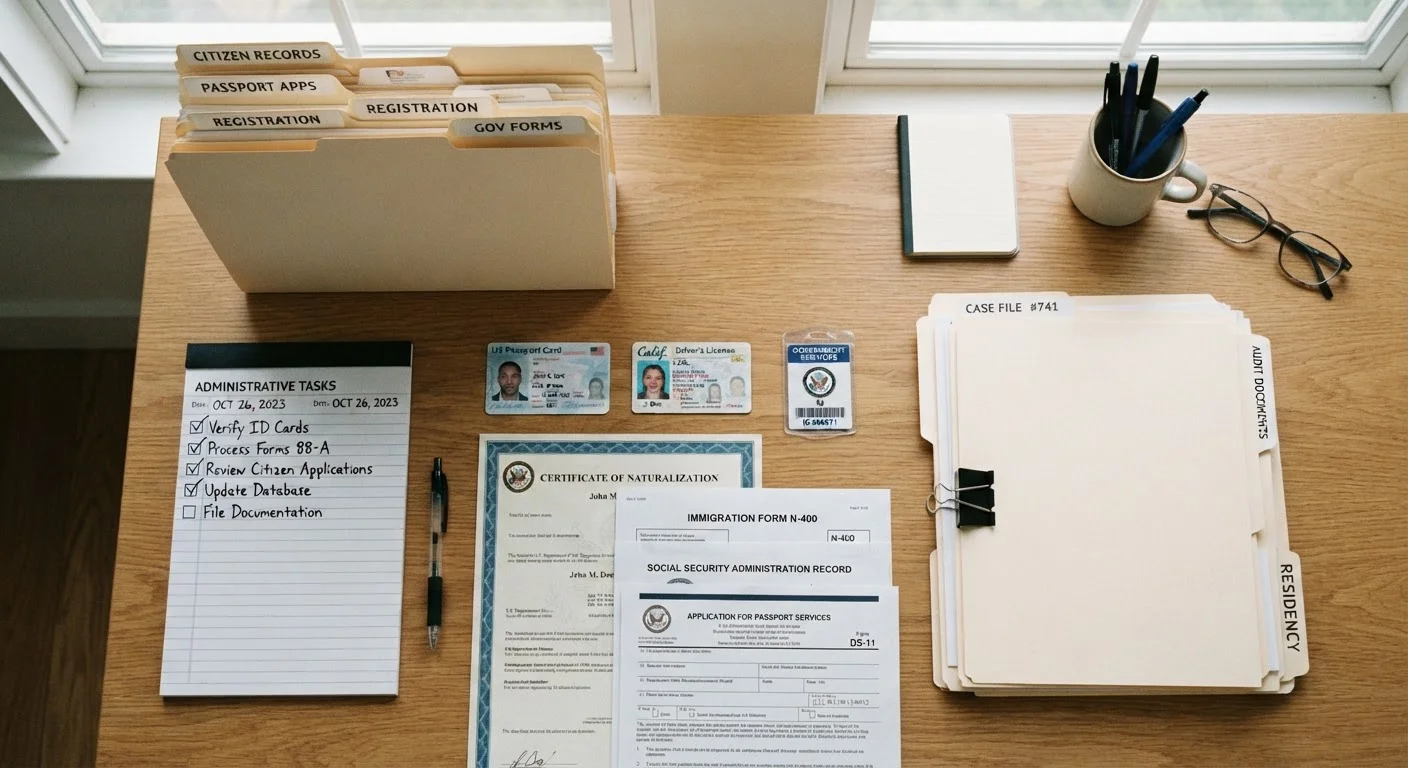
Photo: searchopenrecords editorial
—— In This Article
Key Takeaways
- Most state programs require government-issued photo ID and proof of your Social Security number before releasing funds.
- Address history documentation is often required to link you to the property's last known owner address.
- Claims for deceased relatives require additional legal documents such as a death certificate and letters testamentary.
- Submitting complete documentation upfront reduces the chance of your claim being delayed or rejected.
- Document requirements vary by state — always verify with the specific state's unclaimed property office.
Why Document Preparation Matters
Filing an unclaimed property claim is a straightforward process — but only when you arrive prepared. State unclaimed property offices, which hold funds on behalf of rightful owners, are required by law to verify that claimants are who they say they are before releasing any money. Incomplete or mismatched documentation is the most common reason claims stall or get denied.
Understanding the unclaimed property claims process from start to finish helps you see why document preparation is a critical early step, not an afterthought. The checklist below reflects the categories of evidence most state programs request. Because requirements vary by state and by the type of property being claimed, always confirm specifics with the relevant state treasurer or unclaimed property office before submitting.
This article is for general informational purposes only and does not constitute legal or financial advice. Consult a qualified professional for guidance specific to your situation.
What to Gather Before You File
The documents you'll need generally fall into four categories: proof of identity, proof of your Social Security number or tax ID, proof of address history, and — in some cases — proof of ownership or entitlement. For claims involving a deceased relative, there is a fifth category covering estate and legal authority documentation.
Review the checklist below and assemble as many items as apply to your situation before opening a claim. For a deeper look at what each document is used for, see our reference on documents typically needed to prove ownership of unclaimed funds.
Proof of Identity
Proof of Social Security Number or Tax ID
Proof of Address History
Proof of Ownership or Account Connection
Estate and Legal Authority Documents (Deceased Owner Claims)
Submission and Verification Readiness
State Requirements Vary — Always Verify
No single document list applies to every state or every claim type. A small property claim in one state may require only a photo ID, while a large securities claim in another may demand notarized affidavits and additional ownership proof. Before collecting documents, visit the official unclaimed property portal for the state holding the funds and review their specific instructions. Using a third-party service's generic checklist as your only guide can result in an incomplete submission.
If you are claiming on behalf of an estate or deceased relative, the document requirements expand considerably. Our guide on claiming unclaimed money for a deceased relative covers the additional proof of entitlement that authorities typically require.
Tools and Resources You'll Need
Before diving into document collection, make sure you have access to the right starting points. The official how unclaimed money works hub explains which databases hold funds and how money moves from dormancy into state custody. Once you've confirmed a match, the Claiming Your Money section walks you through the full filing journey.
NAUPA / MissingMoney.com
A free, multi-state search tool endorsed by the National Association of Unclaimed Property Administrators for locating unclaimed property records.
State Treasurer or Unclaimed Property Office Website
Each state maintains its own official portal with claim forms, document requirements, and status tracking for submitted claims.
Document Scanner or Scanning App
Used to create clear digital copies of identity and supporting documents for online claim submissions.
Vital Records Office (State or County)
Source for certified copies of birth, death, and marriage certificates required to establish identity or relationship in estate claims.
Once your documents are in order, review our first-timer's complete guide to filing a claim for a step-by-step walkthrough of submission, processing timelines, and what to expect after you apply. You can also learn about how state offices verify your identity so you understand why each document on this checklist serves a specific verification purpose.

Unclaimed Money Editorial Team
Unclaimed Money Editorial Team is the collective byline for our editorial team and contributor network. Articles published under this byline or an editorial pen name are researched, written, and reviewed according to our editorial standards for clarity, consistency, and independence before publication.
View author profile