
Common VIN Misconceptions That Lead Buyers and Owners Astray
Many people misunderstand what a VIN guarantees. This myth-vs-fact breakdown corrects the most widespread errors about VIN data.
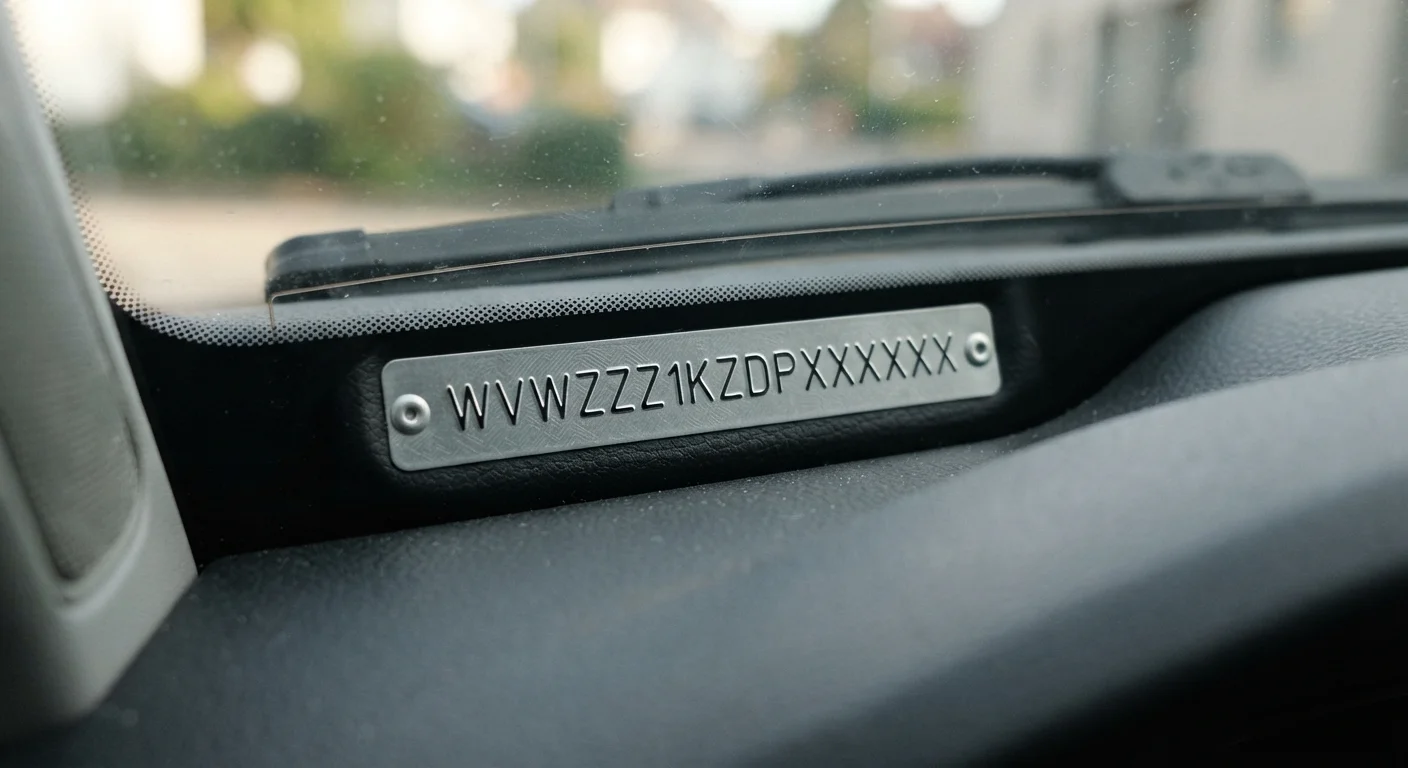
Photo: searchopenrecords editorial
—— In This Article
Key Takeaways
- A VIN identifies the vehicle as manufactured, not its current mechanical condition or accident-free status.
- A clean title does not mean a vehicle has never been damaged — it means no salvage brand was recorded.
- VIN reports depend on what data states and agencies have reported; unreported events leave no trace.
- The ninth position of every VIN is a check digit that detects formatting errors, not fraud by itself.
- Different VIN report providers may return different results based on the data sources they access.
Why VIN Misconceptions Are Costly
A Vehicle Identification Number (VIN) is a 17-character code assigned to every road vehicle manufactured after 1981, standardized under NHTSA regulations. It encodes details like the country of assembly, manufacturer, vehicle type, and production sequence — not a vehicle's life story.
Misreading what a VIN search can confirm leads buyers to overpay, skip necessary inspections, or unknowingly purchase vehicles with undisclosed problems. The misconceptions below are among the most common — and the most consequential. For a broader orientation, see the first-time VIN lookup guide before diving into a search.
Myths vs. Facts: The Core Misconceptions
Each myth below represents a belief that circulates widely among buyers and current owners alike. The corrections reflect how US public records systems — state DMVs, NHTSA, and insurance databases — actually work.
Myth
A VIN search will tell me whether the car has been in an accident.
Fact
A VIN search reveals only accidents that were reported to an insurer, a state agency, or a salvage database — private repairs leave no public record.
Insurance claims, police-reported collisions, and salvage auctions feed the databases that VIN reports draw from. A fender bender paid for out of pocket, or a repair made without an insurance claim, generates no reportable event. Because no record was created, no record can be found. Buyers who rely solely on a VIN report to confirm accident-free status are working with incomplete information. A professional mechanical inspection remains the only way to assess physical damage history that was never formally reported.
Myth
A clean title means the vehicle has never been seriously damaged.
Fact
A clean title means no salvage, rebuilt, or similar brand has been applied to the title record — it says nothing about the vehicle's actual damage history.
Title branding is a state-administered process. A vehicle receives a salvage brand only when an insurer declares it a total loss and that declaration is submitted to the state DMV. Damage that didn't trigger a total-loss determination — even if structurally significant — typically doesn't affect title status. Additionally, a vehicle rebuilt after a salvage designation and re-inspected receives a rebuilt or reconstructed title, not a clean one. The ownership and title data a VIN unlocks depends entirely on what state agencies have officially recorded.
Myth
The ninth character of a VIN is a security feature that proves the VIN is authentic.
Fact
The ninth position is a mathematical check digit that validates the format of the VIN string — it detects transcription errors, not deliberate fraud.
The check digit is calculated using a weighted formula applied to the other 16 characters. If the ninth character doesn't match the expected result of that formula, the VIN is malformed — likely a typo or misread. However, a fraudster who correctly recalculates the check digit for a cloned or altered number can produce a VIN that passes the mathematical test. The check digit is a data-integrity tool, not an anti-counterfeiting measure. For a full explanation of the formula and its purpose, see VIN Check Digit: Why Position 9 Exists and How It Catches Fraud.
Myth
If the VIN on the report matches the VIN on the car, the vehicle is legitimate.
Fact
VIN cloning — applying a legitimate VIN to a stolen or salvaged vehicle — can produce a match on paper while the physical vehicle is fraudulent.
VIN cloning involves copying the VIN from a legally registered vehicle of the same make, model, and year onto a stolen or otherwise problematic vehicle. The cloned VIN will appear clean in a database search because it belongs to a legitimate car. Physical inspection of VIN plates — checking for signs of tampering, verifying that door-jamb, dashboard, and engine-block VINs all match, and confirming the plate's rivets and font are factory-original — is a necessary step that no remote database check can replace. Law enforcement and licensed appraisers are trained to spot these discrepancies. How VIN tampering is spotted and what it means for ownership covers the detection process in detail.
Myth
All VIN lookup tools return the same information.
Fact
Different providers access different combinations of data sources, so results can vary significantly for the same VIN.
No single VIN report provider has access to every US state's records, every insurer's total-loss database, and every salvage auction feed simultaneously. Each provider negotiates data-sharing agreements independently, which means the depth and breadth of any single report reflects its provider's specific data partnerships. Running a search through one source and finding no issues is not equivalent to a comprehensive check. Cross-referencing across sources and using NHTSA's free recall database alongside any paid report gives a more complete picture. Common errors when running a VIN lookup outlines how to approach searches more reliably.
For a structured breakdown of precisely which data points a VIN does and does not surface, the article Eight Things a VIN Can Reveal — and Four It Cannot provides a useful complement to the corrections above.
Understanding Why Reports Vary — and What To Do About It
One persistent source of confusion is why two VIN searches on the same vehicle can return different results. The answer lies in data sourcing: providers pull records from different combinations of state DMVs, salvage auction databases, insurance total-loss files, and inspection records. A state that doesn't report certain title brands electronically, or an accident settled privately without an insurance claim, may simply not appear in any report.
This is not a flaw unique to one provider — it reflects the decentralized nature of US vehicle records. Why the Same VIN Can Produce Different Reports from Different Sources explains the structural reasons behind discrepancies and how to reconcile them.
The practical takeaway: treat any VIN report as one input, not a final verdict. Pair it with a pre-purchase inspection by a qualified mechanic and, for title questions, a direct check with the relevant state DMV.
This article is for general informational purposes only and does not constitute legal, financial, or mechanical advice. For decisions involving significant financial transactions or safety concerns, consult a qualified professional.

Vin Search Editorial Team
VIN Search Editorial Team is the collective byline for our editorial team and contributor network. Articles published under this byline or an editorial pen name are researched, written, and reviewed according to our editorial standards for clarity, consistency, and independence before publication.
View author profile