
The 17-Character Code on Every Vehicle: What a VIN Actually Is
A VIN is more than a serial number. Learn what a Vehicle Identification Number is, where it came from, and why every car has one.
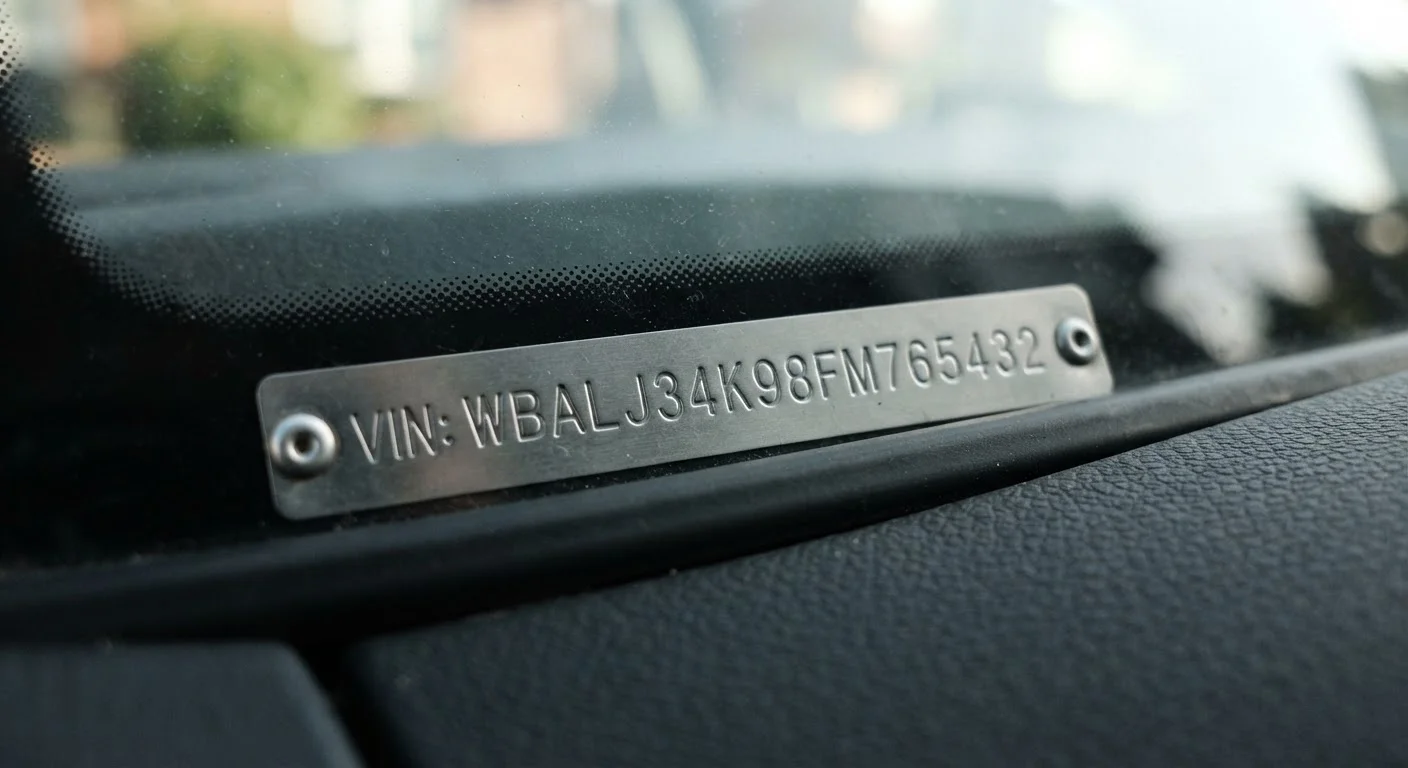
Photo: searchopenrecords editorial
—— In This Article
Key Takeaways
- Every US vehicle manufactured since 1981 has a standardized 17-character VIN.
- Each character position in a VIN encodes specific information about the vehicle's origin and specifications.
- VINs appear in multiple physical locations on a vehicle and in official public records.
- A VIN connects a vehicle to its title, registration, recall, and ownership history.
- The VIN is your most reliable tool for verifying a vehicle's identity before any transaction.
Why Every Vehicle Gets a Unique Code
Think of a VIN as a vehicle's fingerprint. Just as no two fingerprints are identical, no two vehicles in active service share the same VIN. This uniqueness is not accidental — it is the entire point of the system.
Before the US standardized the VIN format in 1981, automakers used their own identification schemes. Lengths, character sets, and structures varied by manufacturer, making it difficult for regulators, insurers, and law enforcement to track vehicles consistently across state lines. NHTSA introduced the current standard to solve that problem. Since the 1981 model year, every vehicle sold in the US carries the same 17-character structure governed by the same rules.
The result is a shared language. When a state DMV records a title transfer, when an insurer files a claim, or when a recall is issued, all of those records attach to the same VIN. That continuity is what makes the VIN so powerful as a public records tool.
1981
Year the 17-character VIN was standardized in the US
NHTSA regulations required all vehicles manufactured for the 1981 model year and beyond to use the current standardized VIN format.
17
Characters in every modern VIN
The format is governed by ISO Standard 3779 and used consistently across all major vehicle markets.
3 sections
Structural segments within a VIN
The WMI, VDS, and VIS each encode distinct categories of vehicle information, from manufacturer origin to unique serial number.
Breaking Down the 17 Characters
A VIN is not a random string. Each of its three main sections encodes specific, structured information about the vehicle.
World Manufacturer Identifier (WMI) — Characters 1–3
The first three characters identify the manufacturer and the country of assembly. Character one represents the geographic region (for example, 1, 4, or 5 indicate vehicles assembled in the United States). Character two narrows to the specific manufacturer. Character three identifies the vehicle type or manufacturing division.
Vehicle Descriptor Section (VDS) — Characters 4–9
Characters four through eight describe the vehicle's attributes: body style, engine type, restraint systems, and model line. Character nine is a check digit — a mathematically calculated value used to detect fraudulent or mistyped VINs. This built-in verification step helps authorities and databases flag VINs that do not add up correctly.
Vehicle Identifier Section (VIS) — Characters 10–17
The final eight characters make each vehicle unique. Character ten encodes the model year using a standardized letter or number. Character eleven identifies the manufacturing plant. Characters twelve through seventeen form the sequential production number — the serial number that distinguishes one unit from the next on the assembly line.
For a deeper look at how to read these sections yourself, see how to decode a VIN character by character.
Where to Find a VIN — and Why Multiple Locations Exist
Manufacturers stamp or print a vehicle's VIN in several locations deliberately. This redundancy makes it harder to tamper with a vehicle's identity, since altering every VIN location consistently is more difficult than changing just one.
- Dashboard (driver's side): The most commonly referenced location, visible through the windshield from outside the vehicle.
- Driver's door jamb: A sticker here typically repeats the VIN along with weight ratings and tire specifications.
- Engine block: Stamped directly on the engine, useful for confirming the original engine has not been swapped.
- Frame or chassis: On trucks and some older vehicles, the VIN may be stamped on the frame rails.
- Title and registration documents: Official state-issued paperwork carries the VIN as the vehicle's legal identifier.
When verifying a used vehicle, it is good practice to check that the VIN matches across at least two physical locations and the title document. Discrepancies can signal tampering. Learn more about how VINs connect to title records at the VIN & Title Records hub.
What a VIN Connects You To
The VIN's value goes beyond identifying a vehicle's specs. Because it persists across every official record tied to that vehicle, it becomes the key that unlocks the vehicle's public record history.
State DMVs use the VIN when issuing and transferring titles. Lienholders record security interests against a specific VIN. NHTSA tracks safety recalls by VIN ranges. Insurance companies file claims under a VIN. Law enforcement uses VINs to record theft and recovery. All of these data points accumulate over a vehicle's lifetime and remain accessible through official channels and authorized lookup services.
That said, a VIN is not an all-knowing identifier. Records only exist when events were reported and entered into the systems that feed VIN-based lookups. Unreported incidents simply do not appear. Understanding this boundary is just as important as knowing what a VIN can surface. For a practical overview of both sides, see eight things a VIN can reveal — and four it cannot.
If you are new to using VIN lookups practically, the first-time vehicle owner's guide to VIN lookups walks through the full process step by step.
Frequently Asked Questions

Vin Search Editorial Team
VIN Search Editorial Team is the collective byline for our editorial team and contributor network. Articles published under this byline or an editorial pen name are researched, written, and reviewed according to our editorial standards for clarity, consistency, and independence before publication.
View author profile