
Courthouse vs. Online Portal: Weighing Your Options for Court Record Searches
In-person visits and online portals each have trade-offs for accuracy, cost, and completeness. Here's how to choose.
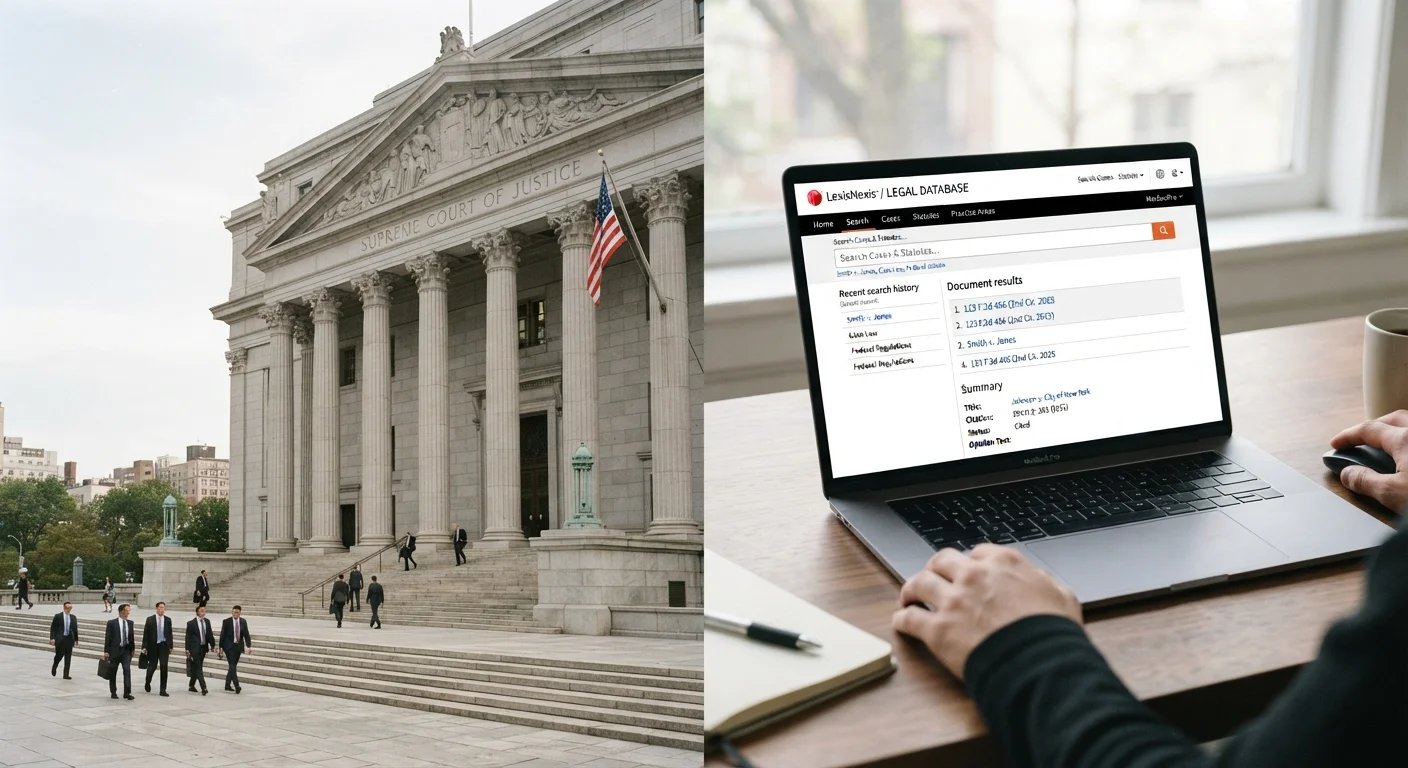
Photo: searchopenrecords editorial
—— In This Article
Key Takeaways
- Online portals offer speed and convenience but may have incomplete or delayed records.
- In-person courthouse visits provide access to sealed exhibits, older files, and certified copies.
- Federal records are largely accessible through PACER; state and local coverage varies widely.
- Neither method is universally superior — the right choice depends on your specific need and jurisdiction.
- Certified copies for legal use almost always require direct contact with the clerk's office.
Why the Access Method Matters
Court records are among the most substantive public records available — they can reveal judgments, criminal dispositions, liens, and civil claims. But the method you use to retrieve them directly affects what you actually find. Two primary paths exist: online portals maintained by courts or government agencies, and in-person visits to the courthouse clerk's office. Each has genuine strengths and meaningful blind spots.
Understanding the structural differences between these two channels — not just the convenience factor — helps you avoid incomplete research and costly assumptions. For a comprehensive orientation before diving into specifics, see The Complete Roadmap to Finding Court Records Online and In Person.
What Online Portals Offer — and Where They Fall Short
Online portals range from the federal PACER system to state-run eCourts platforms and individual county clerk websites. Their primary advantages are accessibility and speed: a researcher can query case dockets, download filings, and verify basic case status from any location without scheduling a visit.
PACER, which covers U.S. federal district, bankruptcy, and appellate courts, charges a per-page fee (currently $0.10 per page, with quarterly billing waivers below a threshold). State portals vary — some are free, some require registration, and coverage quality differs dramatically by jurisdiction. For a structured walkthrough of these systems, PACER, FOIA Portals, and State Court Databases provides practical guidance.
The limitations are significant, however. Many state and local courts have not fully digitized older records — anything pre-dating a court's adoption of electronic filing may not appear online at all. Exhibits, physical evidence logs, and sealed documents are routinely excluded from public portals. Additionally, portal data can lag behind real-time court activity, meaning a recent judgment may not yet be reflected.
| Criterion | Online Portal | Courthouse (Clerk's Office) | |
|---|---|---|---|
| Accessibility | Anytime, from any location | Business hours only, requires travel | |
| Speed | Immediate for indexed records | Same-day to several days depending on volume | |
| Older/pre-digital records | Often unavailable or incomplete | Generally available in physical form | |
| Certified copies | Not available | Available for a per-page fee | |
| Cost | Low to moderate (PACER per-page; some state portals free) | Per-page copy and certification fees | |
| Completeness of file | Docket and filings only; exhibits usually excluded | Full physical file accessible | |
| Data currency | May lag behind actual filings by days | Real-time access to current docket |
What the Courthouse Provides That Portals Cannot
The clerk's office at a courthouse remains the authoritative source for court records. Staff can retrieve physical case files, including older paper records that predate electronic systems, exhibits attached to filings, and documents subject to partial sealing where a redacted public version exists. Crucially, certified copies — required for many legal, immigration, employment, and financial proceedings — can only be obtained directly from the clerk, either in person or by written request.
In-person visits also allow a researcher to ask clarifying questions, confirm name spellings that affect search results, and review indices that may not be replicated online. Some jurisdictions maintain physical docket books or microfilm archives for cases going back decades that have never been scanned.
The trade-offs are real: courthouse visits require travel, adherence to office hours, and sometimes waiting periods for records retrieval. Fees for copies and certifications apply, and complex searches may take multiple visits. For context on how these dynamics compare to archive research more broadly, see Digitised Archives vs. Physical Repository Visits.
Choosing the Right Method for Your Situation
The decision comes down to four key variables: record age, jurisdictional coverage, intended use, and required format.
- Record age: For cases filed after a court adopted electronic filing (often mid-2000s for federal courts, later for many state courts), an online portal is usually sufficient for initial research. For older records, a courthouse visit is likely necessary.
- Jurisdictional coverage: Federal records are well-served by PACER. State-level coverage is uneven — some states have robust statewide portals, while others require county-by-county searching. Locating Court Records Through Official Public Databases maps out state portal options in detail.
- Intended use: Casual background research or due diligence can often rely on portal data. Legal proceedings, visa applications, or employment verification requiring certified documentation demand the clerk's office.
- Required format: If you need a raised-seal certified copy, an online portal will not satisfy that requirement regardless of how complete its data is.
A practical approach for most searches: begin online to establish case numbers, court divisions, and filing dates, then contact or visit the clerk's office if you need the full file, older documents, or an official certified copy. Understanding how government portals compare to unofficial third-party aggregators is also worth reviewing — see Government Portals vs. Third-Party Aggregators for that comparison.

Background Checks Editorial Team
Background Checks Editorial Team is the collective byline for our editorial team and contributor network. Articles published under this byline or an editorial pen name are researched, written, and reviewed according to our editorial standards for clarity, consistency, and independence before publication.
View author profile