
The Complete Roadmap to Finding Court Records Online and In Person
A thorough, end-to-end resource covering federal, state, and local court record searches across every major access method.
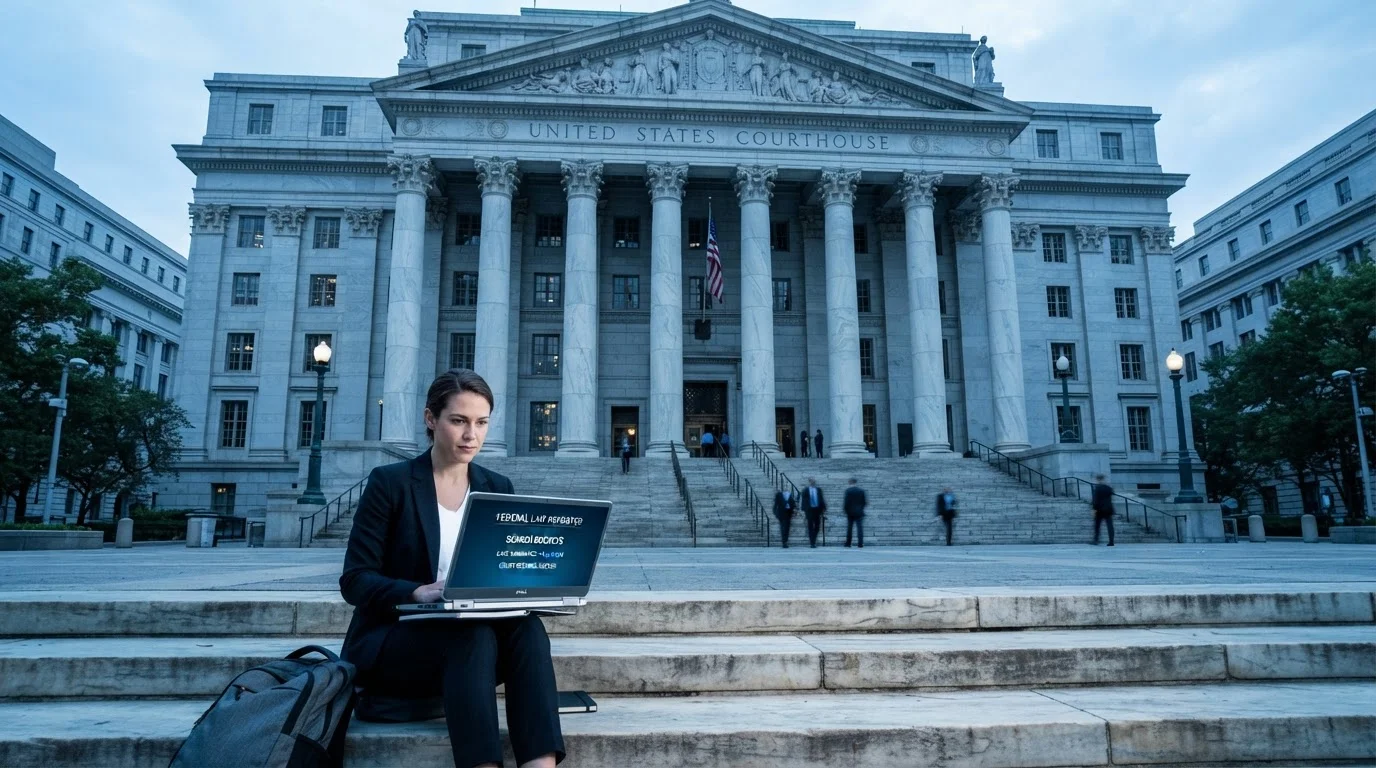
Photo: searchopenrecords editorial
—— In This Article
Key Takeaways
- Court records span three jurisdictional tiers: federal, state, and local — each requires a different access method.
- PACER is the official federal portal for U.S. district, bankruptcy, and appellate court records.
- Most states operate their own online docket portals, but coverage and depth vary significantly by state.
- In-person courthouse visits remain the most reliable method for older, sealed, or incomplete digital records.
- Interpreting a docket correctly requires understanding case status, disposition codes, and document types.
- Public access to court records carries legal and ethical responsibilities under laws such as the FCRA.
What Court Records Actually Contain
Court records are official documents created and maintained by the judiciary throughout the lifecycle of a legal case. They are not a single file but a collection of materials that can include the original complaint or indictment, motions filed by both parties, evidence lists, hearing transcripts, judge's orders, and the final judgment or verdict. In criminal matters, sentencing documents and appeal records may also be part of the file.
Understanding this scope matters because searchers often expect a simple summary and instead encounter a multi-document docket. A docket is the court's official index of every action taken in a case — think of it as a table of contents for the entire proceeding. For an introduction to reading these entries, see Your First Court Records Search.
Not every document in a court file is publicly accessible. Juvenile records, certain family court filings, grand jury materials, and records sealed by judicial order are restricted. What remains open to the public varies by jurisdiction and case type.
Mapping the Court System: Federal, State, and Local
The U.S. court system operates across three tiers, and each maintains its own records independently.
- Federal courts handle matters arising under federal law — bankruptcy, civil rights, immigration, and federal criminal charges. They include district courts, circuit courts of appeals, and the U.S. Supreme Court.
- State courts handle the vast majority of legal disputes: most criminal cases, civil suits, probate, family law, and traffic offenses. Each state operates its own court system with its own rules about public access.
- Local or municipal courts manage minor criminal matters, ordinance violations, and small claims at the county or city level. Their records are often the least digitized.
Because these systems do not share a single database, a thorough search may require consulting all three tiers. The Finding Records Online hub offers broader orientation to navigating official public record systems.
When searching by name in any court portal, try spelling variations and maiden names — clerks enter names exactly as submitted, and a single character difference will cause a record to appear missing.
Name inconsistencies are one of the most common reasons legitimate records go undetected in digital searches, particularly for individuals whose names include hyphens, suffixes, or cultural variations.
Before driving to a courthouse, call the clerk's office to confirm hours, public terminal availability, and whether the file you need is on-site or in off-site storage.
Many court files older than five to seven years are transferred to off-site archives and require advance retrieval requests, which can add days to your search timeline.
Searching Federal Court Records via PACER
PACER (Public Access to Court Electronic Records) is the official federal judiciary portal for accessing case filings from U.S. district courts, bankruptcy courts, and courts of appeals. Registration is free; document retrieval is charged per page, though accounts under a quarterly billing threshold may qualify for a fee waiver.
To search PACER effectively, use the PACER Case Locator, which spans multiple courts simultaneously. You can search by party name, case number, attorney name, or nature of suit. Results link to individual court dockets where you can view or download specific documents.
For a detailed walkthrough of PACER alongside other federal and state systems, the article Locating Court Records Through Official Public Databases provides step-by-step instructions. Additionally, PACER, FOIA Portals, and State Court Databases covers how PACER fits alongside FOIA-based access methods.
Navigating State and Local Court Portals
Every state manages its own court technology infrastructure, which means access quality differs dramatically. Some states — such as California, New York, and Texas — operate robust statewide portals that aggregate case data across most counties. Others provide only county-level lookups, requiring searchers to identify the specific court where a case was filed before searching.
Common features of state portals include party name searches, case number lookups, and basic docket summaries. Full document access, however, is often restricted to in-person inspection or certified copy requests even when the docket index is visible online.
To find your state's portal, search for the official state judiciary website (typically ending in .gov) or the state court administrator's office. County clerk websites are the starting point for local court records not captured by statewide systems.
State Portal Coverage Varies Widely
Some state court portals provide only case index data — names, dates, and dispositions — without linking to underlying documents. In those states, obtaining the actual pleadings or orders still requires a direct request to the clerk's office. Check the portal's help section or FAQ to understand exactly what documents are available before assuming a full record is online.
In-Person Courthouse Searches
Despite the growth of online portals, physical visits to courthouses remain essential in several scenarios: records predating digitization, documents filed under a court order restricting electronic publication, or cases where you need certified copies for legal purposes.
When visiting a clerk's office, bring as much identifying information as possible — full legal name, approximate filing date, case type, and any case numbers you have found online. Most clerks' offices maintain public-access terminals for searching their case management system, and staff can guide you to the correct index without providing legal advice.
Certified copies — which carry an official court seal and are accepted as legal proof — typically require a per-page or per-document fee and may take several days if the file is in off-site storage. For a direct comparison of when an in-person visit outweighs online access, see Courthouse vs. Online Portal.
Interpreting What You Find
Locating a record is only half the work — reading it correctly matters just as much. Docket entries use standardized abbreviations that vary slightly by court. Common terms include:
- Disposition
- The outcome of the case — e.g., dismissed, convicted, acquitted, settled, or transferred.
- Nolo contendere
- A plea of no contest; legally equivalent to a guilty plea for sentencing but not an admission of guilt in civil proceedings.
- Without prejudice / With prejudice
- A dismissal without prejudice may be refiled; one with prejudice is final.
- Pro se
- A party representing themselves without an attorney.
A pending case — one that has not reached final disposition — should never be read as an established finding of wrongdoing. Courts also correct clerical errors through amended filings, so document dates matter. For end-to-end guidance on confirming the authenticity and completeness of what you retrieve, consult From Search to Verified Document.
Privacy, Ethics, and Legal Limits
Public access to court records does not grant unlimited permission to use the information in any way you choose. The Fair Credit Reporting Act (FCRA) restricts how court record data may be used in employment, housing, and credit decisions. Compiling records about another person for certain purposes without following FCRA requirements can expose you to legal liability.
Beyond legal compliance, ethical considerations apply. Court records may contain sensitive personal details — Social Security numbers, addresses, and medical information — that courts sometimes redact but do not always catch. Sharing or publishing such information can cause real harm to individuals, including those who were never convicted.
For a comprehensive treatment of the responsibilities that accompany public record access, Searching Court Records Responsibly is essential reading. Court records can also surface in genealogy research; the Tracing Family Roots hub addresses how historical legal records fit into that context.
This article is for general informational purposes only and does not constitute legal advice. Consult a licensed attorney for guidance specific to your situation.

Background Checks Editorial Team
Background Checks Editorial Team is the collective byline for our editorial team and contributor network. Articles published under this byline or an editorial pen name are researched, written, and reviewed according to our editorial standards for clarity, consistency, and independence before publication.
View author profile