
How Court Records Get Into a Background Check Report
Courthouse data doesn't flow automatically into reports. Learn how criminal records are collected, verified, and translated into readable results.
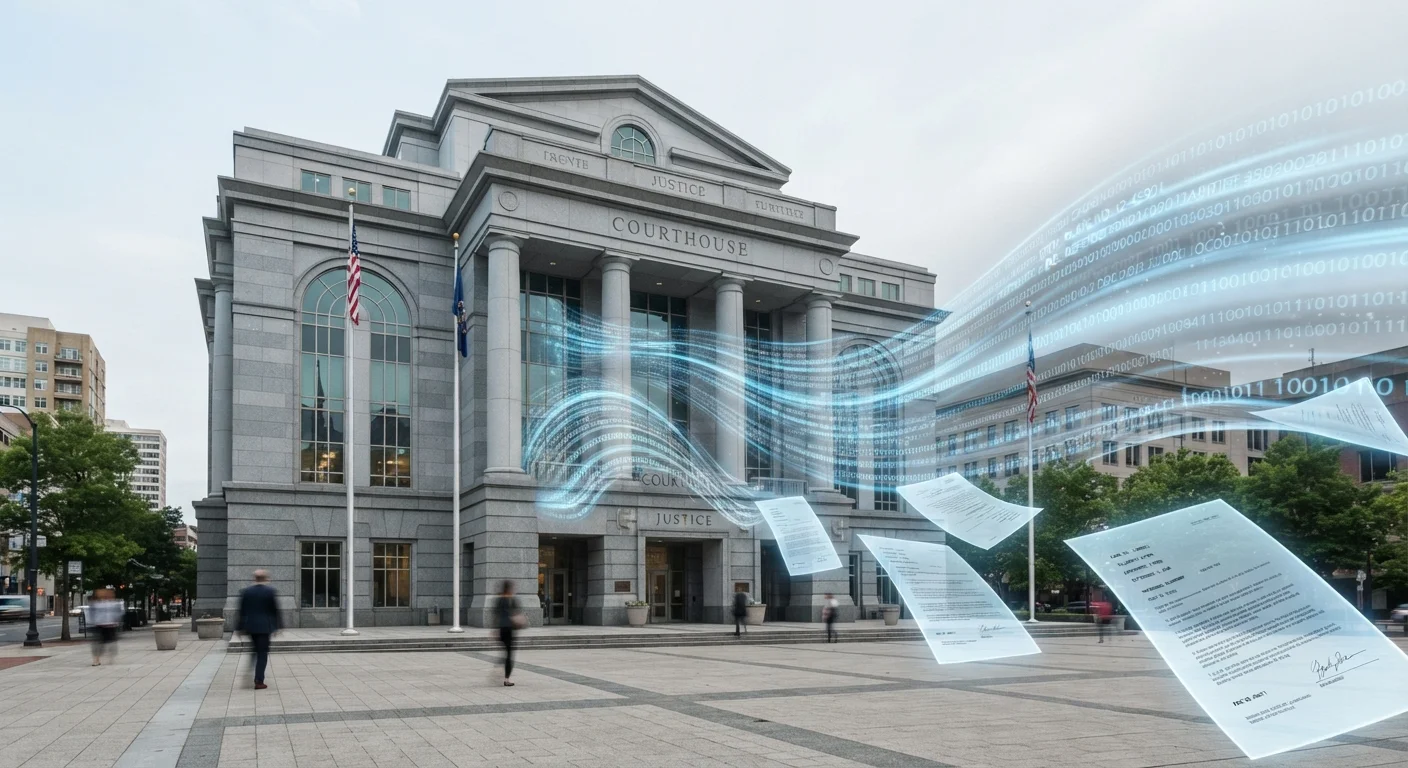
Photo: searchopenrecords editorial
—— In This Article
Key Takeaways
- Court records do not automatically flow into background check reports — they are actively collected through multiple channels.
- Most background check providers use a combination of aggregated databases and direct county-level courthouse searches.
- Record matching depends on personally identifying information, making accuracy contingent on correct subject data.
- Reporting restrictions, sealing orders, and jurisdictional gaps mean not every court record appears in every report.
- The FCRA governs how consumer reporting agencies must handle and verify court-sourced information.
Two Primary Collection Channels
Background check providers rely on two distinct methods to gather court record data, and most reports draw on both.
Aggregated commercial databases are the first channel. Private data companies license, purchase, or compile court records from hundreds of jurisdictions into a single searchable index. These databases allow a provider to scan broad geographic coverage quickly — sometimes in seconds. The tradeoff is currency and completeness: database records can lag weeks or months behind actual court activity, and not every county or state contributes data equally.
Direct courthouse retrieval is the second channel. Here, a researcher — either a local court runner or an electronic interface where available — queries the court's own index for a specific subject. This approach is slower and more expensive, but it returns the most current and jurisdiction-specific results. Thorough background check reports typically combine a broad database sweep with targeted direct searches in jurisdictions flagged as relevant to the subject's residential history.
For a broader view of how all public records feed into a report, see where background check data actually comes from.
The Record-Matching Step
Retrieving raw court data is only part of the process. Providers must then determine whether a retrieved record actually belongs to the subject of the check — a step called record matching or subject identification.
Courts index records by name, and common names can generate numerous results that belong to different individuals. Providers use additional identifiers — date of birth, partial Social Security Number, address history — to confirm or rule out a match. The quality of this step varies: some providers apply strict matching criteria that reduce false positives, while others use looser thresholds that may surface records belonging to different people with similar names.
Your FCRA Dispute Rights
If a background check report contains inaccurate court record information — including records belonging to someone else or records that should have been excluded — you have the right under the Fair Credit Reporting Act to dispute the entry with the consumer reporting agency that issued the report. The agency is then required to investigate and correct or delete information that cannot be verified. Consumers are also entitled to a free copy of any report used in an adverse employment or housing decision.
Misidentification is one of the most cited sources of background check errors. If a report attributes someone else's record to you, the FCRA gives you the right to dispute that entry directly with the consumer reporting agency that issued the report.
From Raw Data to Readable Report
Once records are collected and matched, they are translated into the structured format that appears in the final report. This translation involves several steps.
Raw court data often contains shorthand charge codes, statute references, and case identifiers that vary by jurisdiction. Providers normalize this data — converting local codes into plain-language charge descriptions and standardizing case disposition labels such as "convicted," "dismissed," or "nolle prosequi" (a prosecutor's decision not to proceed).
Reporting restrictions are also applied at this stage. Under the FCRA, certain adverse information has time limits: most criminal records cannot be reported for employment purposes beyond seven years from the date of disposition or release, with an exception for positions paying above a defined salary threshold. Expunged or sealed records are generally excluded, though the reliability of that exclusion depends on how current the provider's data is and whether the sealing order has been communicated to data aggregators.
For related context on how fraud-specific court filings enter this pipeline, see how courts and agencies generate fraud records. To understand the full lifecycle of a submitted background check request, see what actually happens after you hit submit.
Why Gaps and Errors Exist
Even a well-executed background check cannot guarantee complete coverage. Several structural realities create gaps.
- Jurisdictional fragmentation: The U.S. has thousands of separate court systems — federal, state, and county — with no single national criminal database accessible to private providers. A search that covers ten counties may miss activity in an eleventh.
- Digitization disparities: Rural courts may still maintain paper dockets that are not indexed in any commercial database, making direct physical retrieval the only option.
- Disposition lag: A conviction may appear in a database before the final sentence is entered, or an acquittal may not be reflected promptly, leaving an arrest record without its resolution.
- Sealed and expunged records: Legal orders restricting access are not always communicated to every data aggregator in real time, meaning a sealed record can occasionally surface before a database is updated.
Understanding these limitations helps both employers and individuals interpret reports critically rather than treat them as exhaustive or infallible. The court records search hub covers how to locate and read underlying court records independently when verification is needed.
This article is for general informational purposes only and does not constitute legal advice. Consumers with questions about their rights under the Fair Credit Reporting Act should consult a qualified attorney.
Frequently Asked Questions

Background Checks Editorial Team
Background Checks Editorial Team is the collective byline for our editorial team and contributor network. Articles published under this byline or an editorial pen name are researched, written, and reviewed according to our editorial standards for clarity, consistency, and independence before publication.
View author profile