
The Public Records Trail: Where Background Check Data Actually Comes From
Background checks pull from dozens of sources. Learn which databases, courts, and repositories feed the reports most people never question.
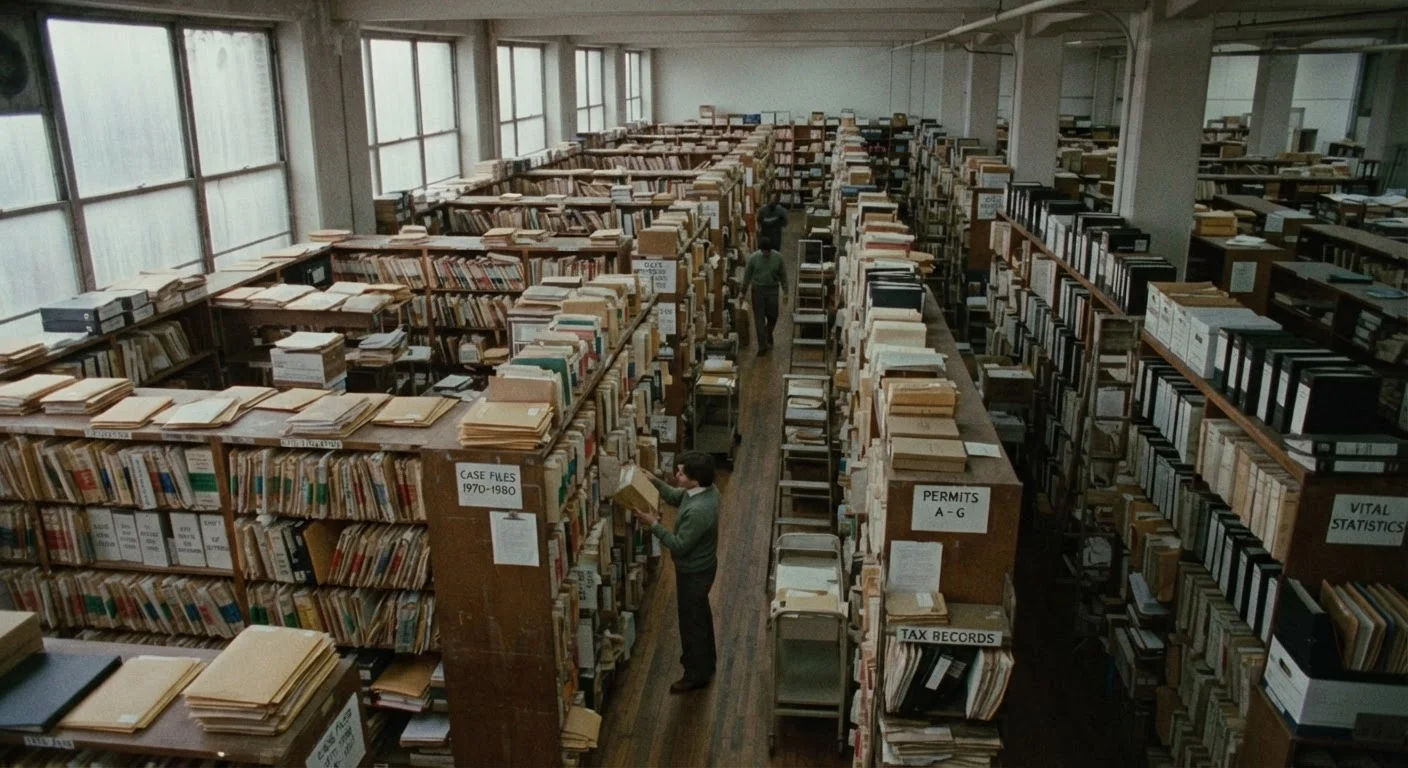
Photo: searchopenrecords editorial
—— In This Article
Key Takeaways
- Background check reports pull from many separate sources, not one centralized national database.
- Court records, credit files, government registries, and licensing boards each contribute different data types.
- Data gaps and delays at the source level directly affect the completeness of any background check report.
- The FCRA governs how CRAs must handle, report, and correct consumer data used in employment or housing decisions.
- Consumers have the right to dispute inaccurate information appearing in an FCRA-covered background check report.
The Myth of the All-Knowing Database
Many people assume a background check taps into a single, omniscient government database and returns a perfectly complete record of someone's history. That assumption is incorrect — and understanding why matters for interpreting any report you receive or request.
In reality, background check data is assembled from a patchwork of independent repositories maintained by different levels of government, private data brokers, and regulatory bodies. Each source is updated on its own schedule, covers its own geographic scope, and defines "records" differently. The screening company's job is to query as many relevant sources as possible and stitch the results into something readable.
For a broader look at which record types routinely surface in reports, the What Records Appear hub outlines the categories in detail. Understanding the source of each category is the next step.
Court Records: The Core Criminal Data Layer
Criminal history information originates primarily at the courthouse level. When a person is charged, convicted, or acquitted, that event is recorded in the court's own docket system. From there, the record may travel — or may not — through several layers before reaching a background check report.
- County and municipal courts maintain case-level records. These are the most granular and often the most current, but they require direct querying of each jurisdiction individually.
- State criminal repositories aggregate records from courts statewide. Quality varies considerably; some states have near-complete coverage while others have significant gaps due to underreporting by local courts.
- The FBI's National Crime Information Center (NCIC) and the Interstate Identification Index (III) hold federal and multi-state criminal data, but access is generally restricted to law enforcement and certain authorized agencies — not commercial screening firms.
Because no single national criminal database is fully accessible to private employers or landlords, most consumer-facing background checks rely on a combination of state repositories and direct county-court searches. This is why the same person can appear "clean" in one report and flagged in another, depending on which counties were searched.
For a detailed walkthrough of how courthouse data becomes a line item in a report, see how court records get into a background check report.
FBI Databases Are Not Fully Open to Employers
A common misconception is that private employers can access the FBI's NCIC or similar law enforcement databases directly. In practice, those systems are restricted to authorized government and criminal justice agencies. Commercial background screening firms build their criminal data picture from state repositories, direct court searches, and proprietary compiled databases — not from law enforcement-only systems.
Beyond Criminal Records: Other Major Data Sources
Criminal history is only one layer. A comprehensive background check may also draw from:
- Credit bureaus
- Equifax, Experian, and TransUnion hold payment history, debt levels, and public financial records such as bankruptcies. Employers in certain industries access a modified credit report (not a credit score) with the applicant's consent.
- Sex offender registries
- Maintained at the state level and aggregated by the National Sex Offender Public Website (NSOPW), these registries are publicly accessible and routinely included in screening reports.
- Federal court records
- The PACER system provides access to U.S. district, bankruptcy, and appellate court records — a source that captures federal criminal convictions and civil litigation at the federal level.
- Professional licensing boards
- State agencies that license doctors, attorneys, contractors, and other professionals maintain public disciplinary databases. Background checks targeting professional roles often query these directly.
- Motor vehicle records (MVR)
- State DMVs hold driving history, license status, and traffic violations. Access is governed by the Driver's Privacy Protection Act (DPPA) and is commonly requested for driving-related positions.
- Employment and education verification
- These are not database lookups but direct outreach to former employers and institutions to confirm dates, titles, and degrees claimed on a resume.
Understanding the distinction between public records and privately held data within a report is important. The public records vs. private data explainer covers where those lines are drawn and why they matter for accuracy and privacy.
Why Data Quality Varies — and What That Means for You
Every link in the data chain introduces a potential point of failure. A conviction entered incorrectly at the county clerk's office propagates forward into every report that draws from that record. A sealed expungement not yet reflected in a state repository may still appear. A name-based search without a Social Security Number match can return records belonging to someone else entirely.
The FCRA requires consumer reporting agencies to maintain "reasonable procedures" for accuracy — but "reasonable" is a legal standard, not a guarantee of perfection. Consumers who discover errors in an FCRA-covered report have the right to dispute those errors, and the CRA must investigate and correct confirmed mistakes.
If you need to trace a document back to its authoritative government source to verify whether a record is genuine, the process for tracing a document back to its official source can help you confirm authenticity rather than relying on a copy several steps removed from the original.
Recognizing that background check data is a composite — drawn from imperfect, independently maintained sources — is not a reason to distrust all reports, but it is a reason to read them critically and exercise your rights when something looks wrong.
This article is for general informational purposes only and does not constitute legal advice. Consult a qualified attorney for guidance specific to your situation.
Frequently Asked Questions

Background Checks Editorial Team
Background Checks Editorial Team is the collective byline for our editorial team and contributor network. Articles published under this byline or an editorial pen name are researched, written, and reviewed according to our editorial standards for clarity, consistency, and independence before publication.
View author profile