
The Difference Between a Self-Check and a Third-Party Background Check
Running a check on yourself works differently than one run by an employer or landlord. Here's how the two processes diverge in scope and legal standing.
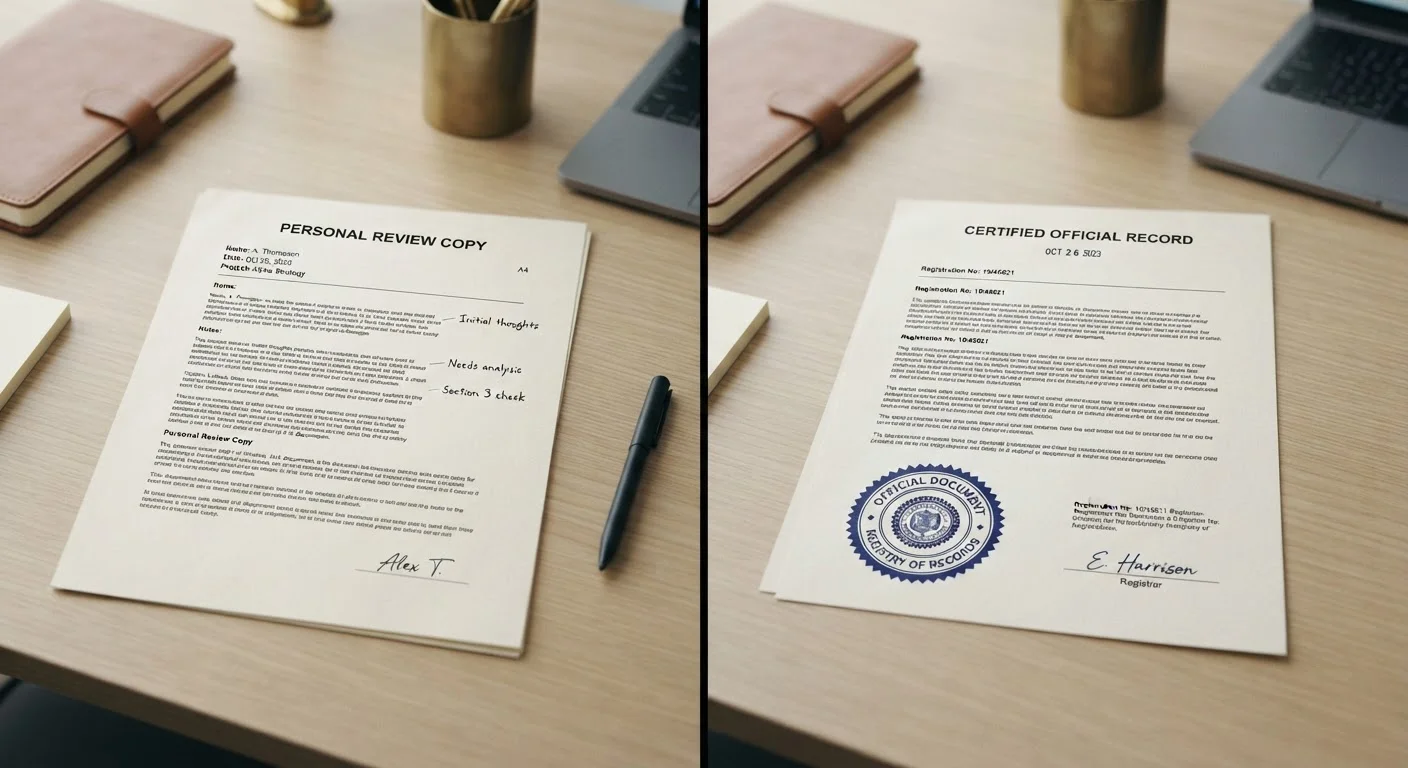
Photo: searchopenrecords editorial
—— In This Article
Key Takeaways
- A self-check gives you access to your own consumer file without triggering FCRA adverse-action protections.
- Third-party checks require a permissible purpose under the FCRA and carry legal obligations for the requester.
- The scope of data each check surfaces can differ based on who is requesting and why.
- Checking your own record does not place an inquiry on your file the way a hard credit pull would.
- Errors found on a self-check can be disputed before an employer or landlord ever sees them.
What Separates These Two Types of Checks
The most important distinction between a self-check and a third-party background check is not the data itself — it is the legal framework that governs each. Under the FCRA, consumer reporting agencies (CRAs) are required to have a permissible purpose before releasing a report about any individual. When you request a report on yourself, that purpose is simply personal review. When an employer, landlord, or lender requests the same report, they must document a specific, legally recognized reason and obtain your consent in advance.
This distinction has practical consequences. A third-party check triggers a set of consumer protections that do not apply to self-checks: the requester must notify you before taking adverse action based on the report, provide a copy of the report and a summary of your rights, and give you an opportunity to dispute inaccuracies. None of those steps are legally required when you are simply reviewing your own file.
For a broader look at how different categories of checks are assembled, see how different background check types are structured.
Scope and Data: What Each Check Actually Shows
A self-check typically gives you access to the same consumer report data that would appear in a third-party screening — criminal records, address history, civil court filings, and in some cases credit data — but the presentation and permissible depth can differ. Critically, some specialized databases used by employers, such as certain employment-verification networks or sector-specific license registries, are only accessible when the requester has a documented permissible purpose tied to a hiring decision.
Credit data offers the clearest illustration of this asymmetry. When you request your own credit report, it appears as a "soft inquiry" that does not affect your score and is not visible to lenders. A third-party credit pull for a lending decision is a "hard inquiry" that is recorded on your file. The underlying data may be largely the same, but the type of access differs fundamentally.
| Criterion | Self-Check | Third-Party Background Check |
|---|---|---|
| Who requests it | The individual themselves | Employer, landlord, or lender |
| FCRA permissible purpose required | Personal review (no external purpose needed) | Yes — must be documented and lawful |
| Consent from subject required | No (you are the subject) | Yes — written authorization typically required |
| Adverse-action protections apply | No | Yes — requester must follow FCRA procedure |
| Credit inquiry type | Soft inquiry (no score impact) | Hard inquiry (recorded on file) |
| Access to specialized employment databases | Generally limited | Available with proper permissible purpose |
| Primary use case | Proactive error review and preparation | Informed decision-making by a third party |
Understanding what records are public versus privately aggregated helps clarify why some information appears in one context but not the other.
Legal Rights and Practical Implications
Your legal rights under the FCRA are substantially stronger when a third party runs a check on you than when you run one on yourself. If a third-party check leads to an adverse decision — a rejected job application, a denied lease — you are entitled to receive a copy of the report, be informed of the CRA that produced it, and dispute any inaccurate entries. The requester must follow a specific adverse-action procedure before finalizing their decision.
None of that legal machinery activates for a self-check, because you are not being subjected to a decision made by someone else. That said, self-checks are a genuinely useful tool. Reviewing your own report before an employer does gives you the opportunity to identify outdated records, merged files (where another person's data appears on your report), or outright errors — and to file disputes through the CRA's correction process before any adverse decision is ever made.
For a full explanation of what the law entitles you to know, see your legal rights when a background check is run on you. And for a practical walkthrough of the self-check process itself, checking your own background report before an employer does offers step-by-step guidance.
This article is for general informational purposes only and does not constitute legal advice. Readers with questions about their specific rights or circumstances should consult a qualified attorney.

Background Checks Editorial Team
Background Checks Editorial Team is the collective byline for our editorial team and contributor network. Articles published under this byline or an editorial pen name are researched, written, and reviewed according to our editorial standards for clarity, consistency, and independence before publication.
View author profile