
Public Records vs. Private Data in a Background Check
Background checks draw from both public records and aggregated private data. Understanding the difference matters for accuracy and privacy alike.
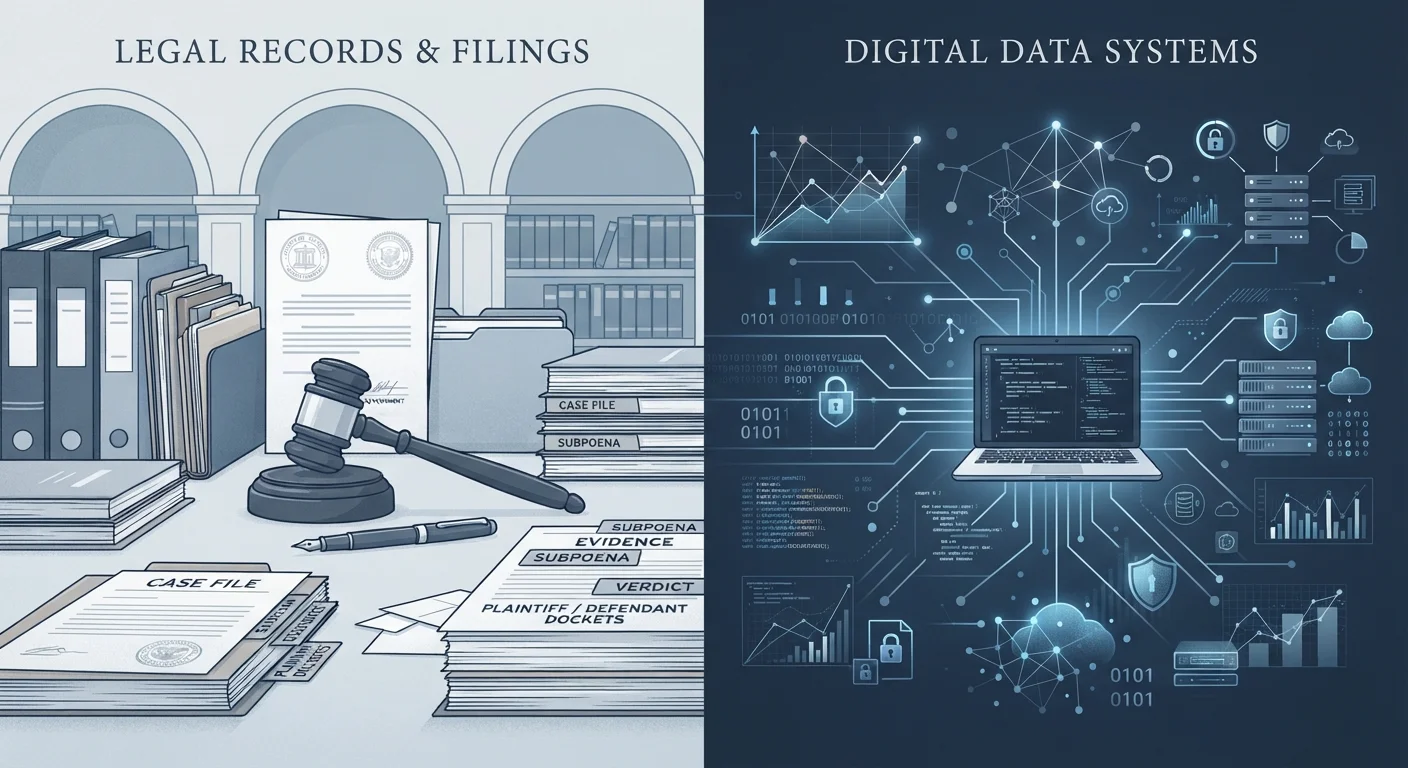
Photo: searchopenrecords editorial
—— In This Article
Key Takeaways
- Public records are created and maintained by government bodies; private data is compiled by commercial entities.
- Background checks typically blend both sources, making it difficult to know exactly what drove a result.
- The Fair Credit Reporting Act governs how private data can be used in employment or housing decisions.
- Errors in private data are common and consumers have the right to dispute inaccurate information.
- Not all data in a background check is legally the same — source type determines your dispute and correction rights.
What Separates Public Records from Private Data
When a background check is assembled, it rarely draws from a single source. Instead, it combines two fundamentally different categories of information: public records and private data. Understanding the distinction matters because each category carries different accuracy standards, legal protections, and dispute rights.
Public records are documents and data generated by government agencies in the course of their official functions. Court case filings, criminal convictions, property deeds, voter registrations, marriage and divorce records, and federal bankruptcy filings are all examples. These records exist because a government body — a court clerk, a county assessor, a federal court — created or maintained them. They are accessible under state or federal open-records laws, subject to specific statutory exceptions for things like juvenile cases or sealed proceedings.
Private data, by contrast, originates outside government. It includes information compiled by credit bureaus, data brokers, insurers, banks, utilities, and commercial aggregators. Employment history verified through payroll processors, rental payment records, telecommunications account data, and online behavioral profiles all fall into this category. No law requires a government agency to create this information — it exists because private entities collected it, often for commercial purposes. For a deeper look at how these categories are defined outside the background check context, see our guide to public vs. private data.
How Each Type Appears in a Background Check
A standard employment or tenancy background check pulls from both pools, often without clearly labeling which source produced which result. Background check data trails run through dozens of repositories — county courthouses, state criminal repositories, federal court systems, and commercial data warehouses simultaneously.
| Criterion | Public Records | Private Data |
|---|---|---|
| Origin | Government agencies and courts | Commercial entities and aggregators |
| Examples | Court filings, deeds, bankruptcies | Credit history, rental data, employment records |
| Access basis | Open-records laws | Commercial licensing agreements |
| Accuracy risk | Gaps from slow digitization | Misattribution and outdated entries |
| Primary federal law | FCRA (when used in consumer reports) | FCRA (if compiled by a CRA) |
| Dispute pathway | CRA dispute + court record correction | CRA dispute; limited recourse outside FCRA |
Public record data tends to be more authoritative but is not always current. Courts may take weeks or months to digitize new filings, and records from smaller jurisdictions may not reach national databases at all. Private data can be more current — some financial and behavioral data updates in near real-time — but it is also more prone to misattribution, since commercial aggregators link records by name, address, and other identifiers that can produce false matches.
Different check types weight these sources differently. A criminal background check leans heavily on public court records. A credit-based tenancy screening relies on private credit bureau data regulated under the Fair Credit Reporting Act (FCRA). An employment verification check draws from both payroll processors (private) and licensing boards (often public).
Legal Frameworks and Consumer Rights by Data Type
The legal rules that apply to your information depend significantly on whether it originated as a public record or private data — and on who is using it.
When private data is compiled by a Consumer Reporting Agency (CRA) — a company that assembles consumer reports for employment, housing, or credit decisions — it is governed by the FCRA. This means you have the right to know a report was used against you, to request a copy, and to dispute inaccurate entries. Not every company holding your data qualifies as a CRA, however. The distinction between CRAs and data brokers is legally significant: brokers that don't supply reports for FCRA-covered purposes operate under fewer obligations.
Public records used in background checks carry their own complexity. Even though the underlying court document is public, the way a CRA presents that record in a consumer report is still subject to FCRA accuracy requirements. Outdated convictions, expunged records that remain in commercial databases, and misattributed charges are common problems. Financial public records like bankruptcies and liens have specific reporting timeframes under FCRA — Chapter 7 bankruptcies, for example, may appear for up to ten years.
It is worth noting that a self-requested check and an employer-ordered check are not equivalent in scope or legal standing. Employer-ordered checks trigger FCRA obligations; personal searches may not, and the data returned may differ accordingly.
This article is for general informational purposes only and does not constitute legal or financial advice. For questions about your specific rights under the FCRA or applicable state law, consult a qualified attorney.

Background Checks Editorial Team
Background Checks Editorial Team is the collective byline for our editorial team and contributor network. Articles published under this byline or an editorial pen name are researched, written, and reviewed according to our editorial standards for clarity, consistency, and independence before publication.
View author profile