
When a Background Check Returns No Record: What That Result Really Means
A clean result isn't always a complete one. Understand the data gaps and jurisdictional limits that can produce a 'no record found' response.
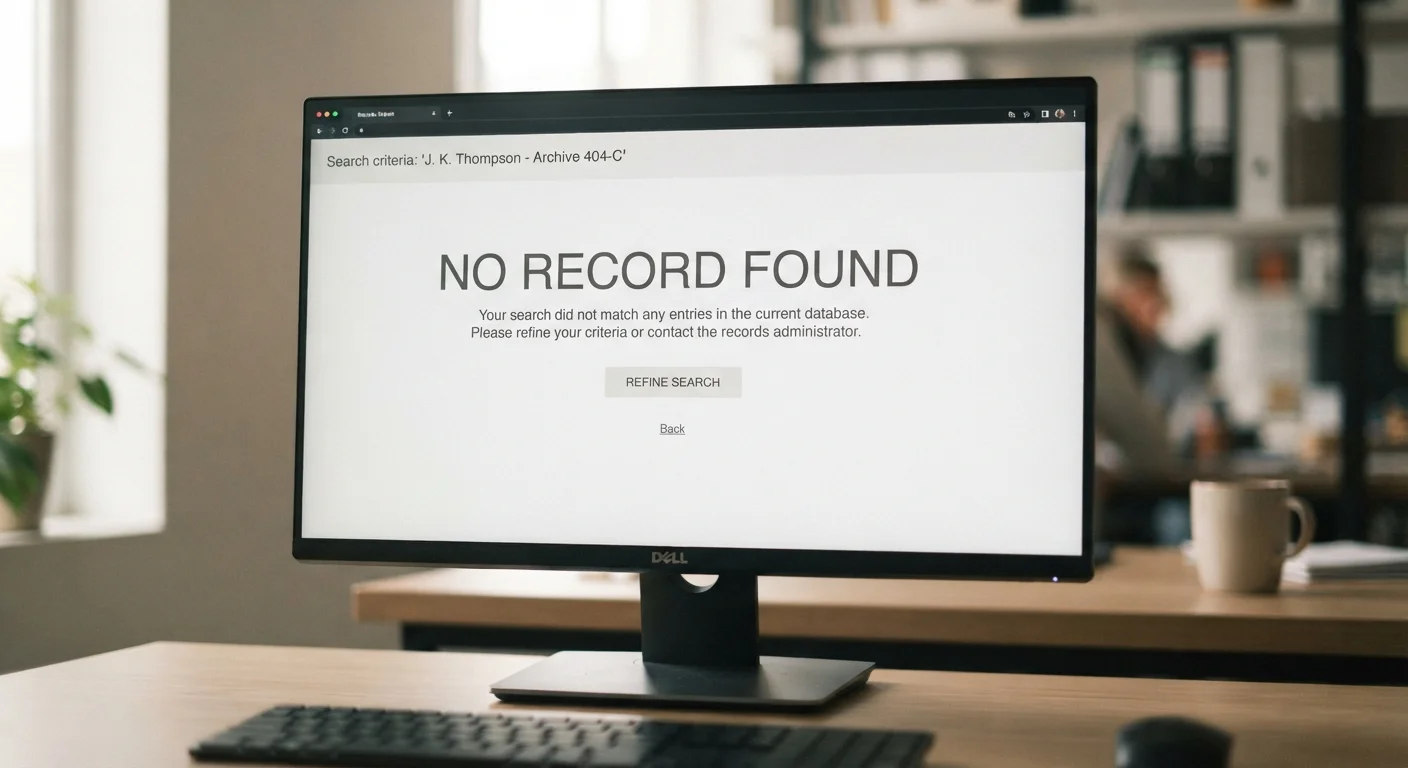
Photo: searchopenrecords editorial
—— In This Article
Key Takeaways
- A 'no record found' result reflects the limits of the data sources queried, not an absolute truth.
- Records can be missed due to jurisdictional gaps, data lag, sealed records, or name discrepancies.
- No single background check database covers every U.S. courthouse or jurisdiction.
- Employers and individuals should understand what sources a provider actually searched before drawing conclusions.
- Pending charges and recent arrests may not yet appear in searchable databases.
The Limits Hidden Inside a Blank Result
When a background check returns the phrase "no record found," it can feel like a clean bill of health. In reality, it is a statement about what was searched — not a definitive declaration about a person's history. Understanding that distinction is the first step to reading these results accurately.
Background check providers pull data from a mix of sources: federal court records, state criminal repositories, commercial database aggregators, and sometimes county-level courthouse records. Each of those sources has its own update schedule, coverage area, and participation rate. A result is only as complete as the weakest link in that chain.
Explore what records typically appear in a report to understand the full range of data that may — or may not — be captured in a standard search.
A Result Reflects the Search, Not the Whole Person
Background check results are bounded by the data sources a provider accesses at the moment of the search. Changes to those sources — new records added, old ones corrected — may alter what appears if the same search were run again later. Treat any result as a snapshot, not a permanent declaration.
Four Common Reasons Records Go Missing
There are well-documented structural reasons why a genuine record might not surface in a background check response:
- Jurisdictional gaps: The U.S. has over 3,000 counties, each maintaining its own court records. Most commercial background check databases do not have complete feeds from every county courthouse. A record filed in a county not covered by the provider's data network simply won't appear.
- Data lag: Even when a jurisdiction is covered, there can be weeks or months between when a court enters a disposition and when that information appears in a searchable database. Pending charges are especially prone to this delay.
- Sealed or expunged records: Courts can order certain records sealed or expunged, making them unavailable to most background check providers. This is intentional — the legal system in many states allows individuals to clear qualifying offenses from their publicly searchable history.
- Name and identifier mismatches: Background checks typically match on name, date of birth, and sometimes Social Security Number. Variations in spelling, use of aliases, or data entry errors can cause a real record to go unmatched.
For a deeper look at which criminal records surface and which don't, see what's included and what isn't in criminal record searches.
What 'Nationwide' Really Covers
The term "nationwide background check" is widely used but frequently misunderstood. No commercial provider has a live, real-time feed from every court in the United States. What providers label as nationwide searches are typically aggregations of available state-level repositories, federal records, and purchased or licensed data — coverage that varies considerably by state and county.
Some states contribute records to multi-jurisdictional databases robustly; others participate minimally or not at all. Rural counties in particular are more likely to maintain paper records or legacy systems that aren't integrated into digital aggregators.
This is why the same person can appear in one background check and not in another, even when both claim broad geographic reach. Court records can mislead when context is missing — the absence of a record carries the same risk.
Ask Your Provider What Was Actually Searched
Before drawing conclusions from a 'no record found' result, request a summary of which databases, states, and counties were included in the search. Reputable providers should be able to supply this information. If a specific jurisdiction is missing and relevant, you may be able to request a supplemental county-level search.
How to Respond When a Result Comes Back Empty
Whether you're an employer reviewing a candidate or an individual checking your own record, a blank result calls for measured interpretation rather than a quick assumption.
For employers, it is worth confirming with your background check provider exactly which sources and counties were searched. If a candidate has lived in multiple states or jurisdictions, targeted county-level searches may be warranted to fill gaps. Employment attorneys can advise on FCRA-compliant procedures for these situations.
For individuals, if you know a record should exist but doesn't appear, consider whether it may have been expunged or sealed — which would be a legal outcome in your favor. Conversely, if you believe incorrect or missing information is affecting your screening result, the FCRA gives you the right to dispute inaccuracies directly with the consumer reporting agency that issued the report.
Understand why a clean result isn't always a complete one for further context on interpreting these outcomes. And if you're navigating broader public records questions, finding records through official digital sources can help you identify where to look next.
Frequently Asked Questions

Background Checks Editorial Team
Background Checks Editorial Team is the collective byline for our editorial team and contributor network. Articles published under this byline or an editorial pen name are researched, written, and reviewed according to our editorial standards for clarity, consistency, and independence before publication.
View author profile