
Why 'No Criminal Record' on a Background Check Doesn't Always Mean a Clean Slate
A clear result isn't always complete. Understand why database gaps, jurisdiction limits, and pending charges can affect what a report actually shows.
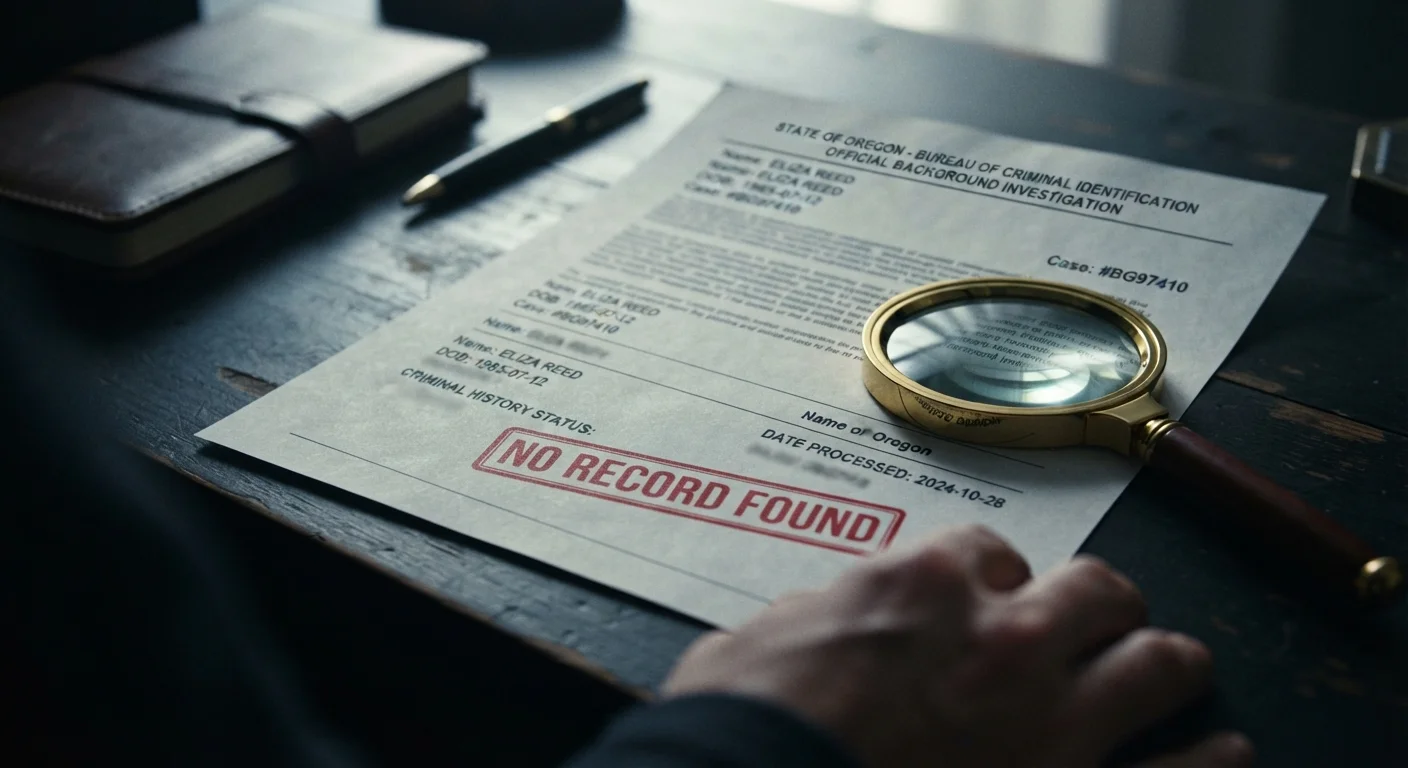
Photo: searchopenrecords editorial
—— In This Article
Key Takeaways
- A 'no criminal record' result only reflects the databases and jurisdictions actually searched.
- Reporting lags, sealing errors, and pending charges can all affect what appears on a report.
- Consumers have legal rights under the FCRA to dispute and correct inaccurate background check data.
- Expunged records do not always disappear from every database automatically.
- No background check system covers every U.S. court or jurisdiction in real time.
What a 'Clean' Result Actually Tells You
When a background check returns no criminal record, many people interpret that result as a definitive statement about a person's history. It isn't. What a report actually communicates is narrower: no matching record was found in the sources queried at that moment. The distinction matters enormously, whether you're an employer reviewing a candidate, a landlord screening a tenant, or an individual reviewing your own file.
Background checks are assembled from a patchwork of county courthouses, state repositories, federal databases, and private data aggregators. Each source has its own update schedule, coverage scope, and access restrictions. As a result, two checks run on the same person through different providers — or even the same provider at different times — can yield different results. For a deeper look at how these processes work, see the How Checks Work hub.
Myth
If a background check shows no criminal record, the person has never been arrested or convicted of anything.
Fact
A clean result means no record was found in the sources searched — not that no record exists anywhere.
Criminal records are held across thousands of separate court systems and databases. A background check only surfaces what it actually queries. A conviction in a county whose records aren't included in the database, or a charge filed after the last data refresh, will simply not appear. Absence of a result reflects the limits of the search, not a comprehensive verification of someone's history. See also: what a no-record result really means.
Myth
Once a record is expunged or sealed by a court, it disappears from all background checks automatically.
Fact
Expungement removes a record from official court systems, but private databases may retain the information unless actively updated.
When a court seals or expunges a record, it issues an order directed at official repositories. Private data brokers and background check vendors are not always notified promptly — or at all — and may continue to display outdated information. Individuals who have had records expunged should confirm with the CRA directly that the data has been removed. If it hasn't, a formal dispute under the FCRA is the appropriate remedy. Expungement and background checks covers this process in detail.
Myth
A background check captures everything — arrests, charges, convictions, and pending cases — in one complete report.
Fact
Most background checks are limited in scope and do not automatically include every type of legal involvement or every jurisdiction.
What a background check includes depends heavily on how it was ordered, which databases were licensed, and what level of search (county, statewide, or national) was conducted. Pending charges, for example, may or may not appear depending on how recently they were entered into a court system. Arrests without convictions are handled inconsistently across states, with some jurisdictions restricting their use in employment decisions. Common misconceptions about background checks addresses several related assumptions in depth.
Myth
If a background check contains an error, there's no practical way to correct it.
Fact
The FCRA provides a formal dispute process that requires consumer reporting agencies to investigate and correct verifiable inaccuracies.
Consumers have enforceable rights under federal law. When you identify an error in a background check — whether it's a record that doesn't belong to you, a charge that was dismissed, or information that should have been expunged — you can submit a dispute directly to the CRA. The agency is generally required to investigate within 30 days and must correct or delete information it cannot verify. Employers and landlords who receive incorrect reports must also follow adverse action procedures before acting on that data. Why court records may not tell the whole story explores how source limitations compound these issues.
Why Gaps Persist in Background Check Databases
The United States has no single, unified criminal record system. Courts operate at the county, state, and federal level, and many do not transmit records to central repositories in real time — or at all. Some rural counties still rely on paper-based dockets that are never digitized. Even when records are submitted electronically, processing backlogs can mean a conviction entered last month hasn't appeared in a statewide database yet.
Private background check companies typically license data from multiple sources, but no vendor has complete coverage across all 3,000-plus U.S. counties. This is why a report showing no record is not the same as a verified absence of any criminal history. Our related article on what criminal records are typically included explains which record categories are most likely to surface and which commonly fall through the cracks.
3,000+
U.S. county court systems holding criminal records
The U.S. court system operates at federal, state, and county levels, with no single unified national criminal database covering all jurisdictions.
~30%
Background check reports estimated to contain errors
Consumer advocacy research has suggested a significant share of background reports contain inaccuracies; consumers are encouraged to review their own files and dispute errors under the FCRA.
Your Rights When a Report Is Wrong
The Fair Credit Reporting Act (FCRA) gives consumers specific rights when a consumer reporting agency (CRA) — which includes most background check companies — produces an inaccurate or incomplete report. You have the right to request your file, to dispute errors, and to have the CRA investigate and correct verifiable mistakes within a defined timeframe (generally 30 days). If an adverse action — such as a rejected job application — is taken based on a report, you must be notified and given the name of the CRA that supplied the data.
Errors can range from records belonging to someone with a similar name appearing on your file, to expunged charges that were never removed from a private database. If you suspect your background check contains inaccurate information, background check errors and their consequences are more common than most people realize, and the dispute process exists precisely to address them. For issues involving records that were supposed to be sealed, expungement and background checks provides guidance on what sealed records should — and sometimes don't — hide.
This article provides general educational information about U.S. background check systems and consumer rights under the FCRA. It is not legal advice. For questions about your specific situation, consult a qualified attorney or consumer rights advocate.

Background Checks Editorial Team
Background Checks Editorial Team is the collective byline for our editorial team and contributor network. Articles published under this byline or an editorial pen name are researched, written, and reviewed according to our editorial standards for clarity, consistency, and independence before publication.
View author profile