
Ancestry Records Explained: What They Are and Where They Come From
Learn what ancestry records are, the institutions that create them, and how they document family lineage across generations.
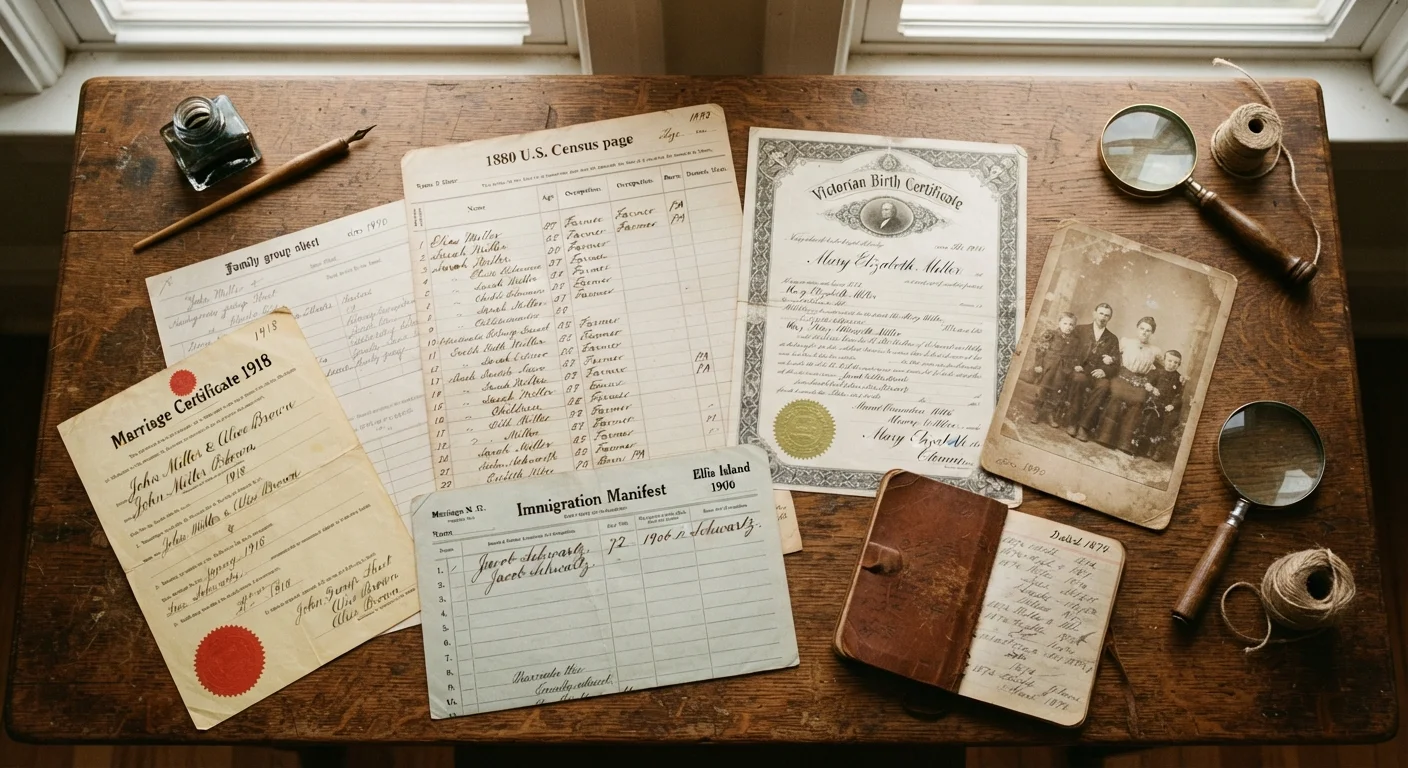
Photo: searchopenrecords editorial
—— In This Article
Key Takeaways
- Ancestry records come from multiple source types: government agencies, religious bodies, courts, and military institutions.
- The same life event — a birth, for example — may appear in several different record types, each with different details.
- Record availability varies significantly by location, time period, and digitization status.
- Interpreting records accurately requires understanding the context in which they were created.
- Cross-referencing multiple record types reduces the risk of building a family tree on a single flawed source.
What Ancestry Records Actually Are
Ancestry records are the documentary evidence of a person's existence — the paper (and increasingly digital) trail left behind by ordinary life events. They answer fundamental genealogical questions: Who were this person's parents? When and where were they born? Whom did they marry? When did they die?
Unlike a family Bible or personal memoir, ancestry records are created by institutions with an administrative purpose. A county clerk issuing a marriage license isn't thinking about future genealogists — they're recording a legal transaction. That institutional origin is precisely what gives these records their evidentiary weight.
Understanding what these records are is the foundation of effective family history research. For a broader view of how historical documents fit into genealogy, see our guide on historical public records and why they matter.
Records Reflect Their Era
Ancestry records document life as institutions understood and categorized it at the time of creation. Race classifications, name spellings, and geographic designations in older records often reflect historical practices that differ from contemporary standards. Researchers should interpret these details in their historical context rather than applying modern frameworks retroactively.
Where Ancestry Records Come From
Ancestry records originate from three broad categories of record-keeping institutions, each producing distinct document types:
- Government bodies: Federal, state, and local governments generate census records, vital records (birth, marriage, death), land deeds, probate files, court records, and naturalization documents. In the U.S., the National Archives and Records Administration (NARA) is the primary federal custodian.
- Religious institutions: Before civil registration became widespread, churches were the primary recorders of births (baptisms), marriages, and burials. Parish registers in particular are indispensable for research before the mid-1800s.
- Military and other agencies: The military has maintained service records, pension files, and draft registrations for centuries. These often include physical descriptions, next-of-kin details, and place of birth — information rarely found elsewhere.
To understand what specific document types reveal about your ancestors, the article on the major types of genealogy records provides a detailed breakdown.
How to Interpret What You Find
Finding a record is only half the task — understanding it correctly is the other half. A few key principles guide accurate interpretation:
Original vs. derivative records: An original record is the first creation of information (a handwritten church register entry). A derivative is a transcription, index, or image of that original. Errors can enter at any transcription stage, so tracing back to the original document is always preferable.
Informant proximity: Consider who provided the information and how likely they were to know it accurately. A mother reporting her child's birth date is a reliable informant. A neighbor reporting the deceased's birthplace on a death certificate may be guessing.
Name variation: Spelling was not standardized in earlier centuries, and immigrant names were frequently anglicized or phonetically transcribed by officials who didn't speak the same language. Searching for surname variants is standard practice, not an optional extra.
1880
First fully indexed U.S. federal census year
The 1880 U.S. federal census is the first to be completely indexed by name, making it a standard starting point for American genealogical research, according to NARA.
4+ billion
Historical records digitized by major genealogy archives
Large genealogical archives and libraries have collectively digitized billions of historical records, though significant gaps remain for certain regions and time periods.
1930
Year most U.S. states completed civil birth registration
By 1930, all U.S. states had implemented civil registration systems for births and deaths, though adoption varied significantly by state.
If you are building a family tree for the first time, our guide on starting your family tree from scratch walks through practical first steps.
Accessing Records: What's Available and Where
Record availability varies by era and region. In the United States, civil registration of births and deaths was not federally mandated — individual states adopted it at different times, most completing the process between 1900 and 1930. Records predating that shift exist in church registers, county courthouse files, and colonial-era archives.
For hands-on research, the following access points are most productive:
- National Archives (NARA): Federal census records, military files, and naturalization records are held here. Many are accessible online through NARA's own catalog.
- State and county archives: Vital records, land records, and probate files are typically held at the county or state level.
- Libraries with genealogy collections: Many public libraries provide free access to digitized genealogy databases through institutional subscriptions.
- Historical and genealogical societies: Local societies often hold unique collections not digitized elsewhere and can assist with regional research.
For those interested in complementing documentary research with genetic evidence, the DNA and ancestry tools hub explores how modern testing methods work alongside traditional records. And for a broader introduction to tracing your family history, the tracing family roots hub is a strong starting point.
Frequently Asked Questions

Genealogy Search Editorial Team
Genealogy Search Editorial Team is the collective byline for our editorial team and contributor network. Articles published under this byline or an editorial pen name are researched, written, and reviewed according to our editorial standards for clarity, consistency, and independence before publication.
View author profile