
The Major Types of Genealogy Records and What Each One Reveals
From census rolls to church registers, explore the key document types used in ancestry research and the family details each one can uncover.
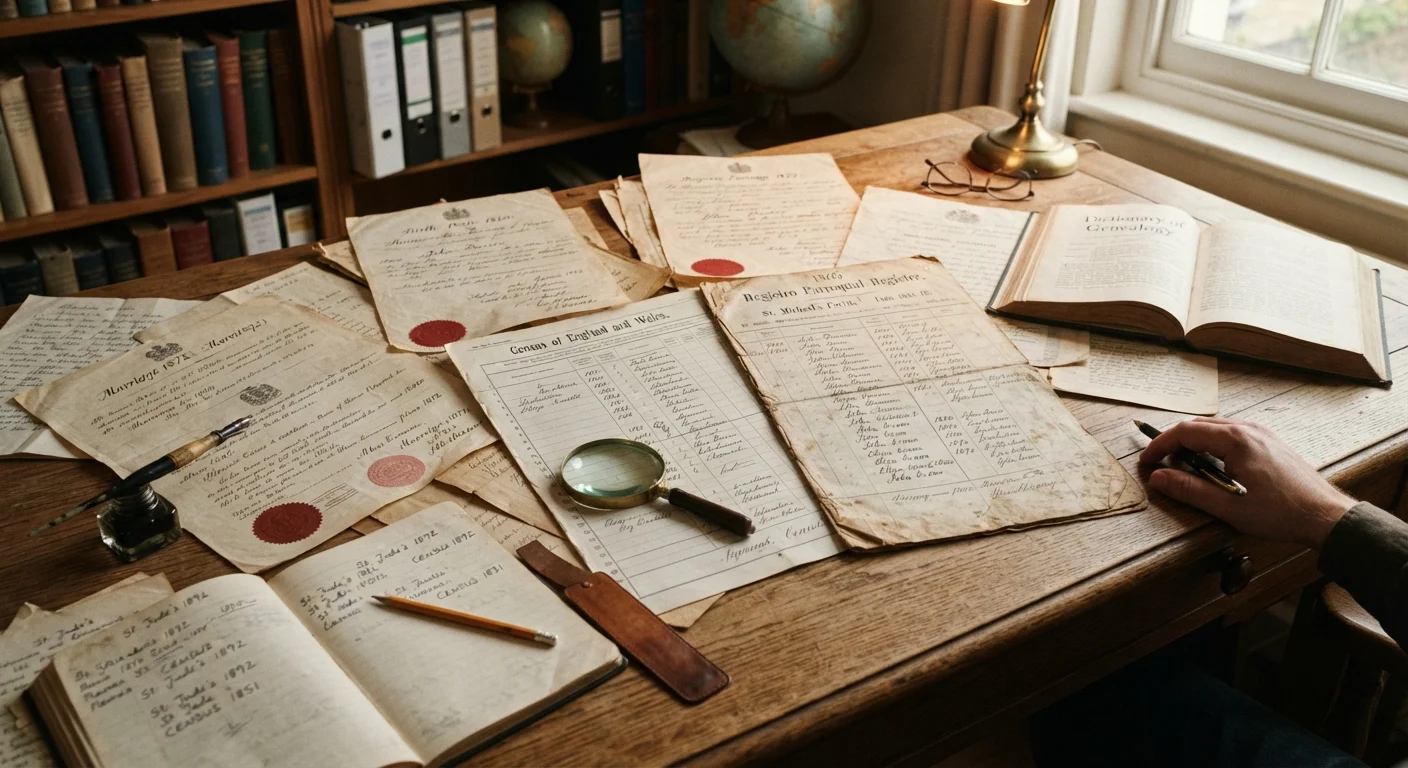
Photo: searchopenrecords editorial
—— In This Article
Why Record Type Matters in Genealogy Research
Every genealogical document was created for a purpose — and that purpose shapes what information it contains, how reliable it is, and where gaps are likely to appear. A death certificate, for instance, records what a surviving family member reported to a clerk, which means cause of death may be accurate but the deceased's birthplace could be approximate or wrong. Understanding the strengths and limitations of each record type prevents costly research detours and helps you cross-verify findings effectively.
For a broader foundation on the records that anchor most research, see which public records matter most in genealogy. This reference article focuses on the document categories themselves — what each one captures, and what it typically cannot tell you.
Vital Records
Official government documents recording birth, marriage, and death events. In the United States, these are typically maintained at the state or county level and are among the most reliable sources for confirming family relationships.
Census Record
A periodic government count of the population that captures household members, ages, occupations, and other details at a specific point in time. U.S. federal censuses were conducted every ten years beginning in 1790.
Probate Record
Court documents related to the settlement of a deceased person's estate, including wills, inventories of property, and records of debt. These often name family members who might not appear in other record types.
Naturalization Record
Documents created when an immigrant formally became a U.S. citizen. They frequently include birthplace, arrival date, and sometimes the names of a spouse and children.
Land Record
Documents recording the ownership, transfer, or sale of property. Deeds and land grants can place an ancestor in a specific location and reveal economic status or family ties through co-signers.
Church Register
Parish-level records of baptisms, marriages, and burials maintained by religious institutions. These records often pre-date civil registration and are essential for research before the mid-1800s.
Vital Records: Birth, Marriage, and Death
Vital records are the cornerstone of most family history research. A birth certificate typically records the child's full name, birth date and place, and parents' names — sometimes including the mother's maiden name and the parents' ages or birthplaces. Marriage records often reveal both spouses' ages, residences, and the names of witnesses, who were frequently relatives. Death certificates capture the date, place, and cause of death, along with the informant's relationship to the deceased.
The reliability of vital records varies by era. U.S. states began mandating civil registration at different times — many not until the early twentieth century — so earlier events may only appear in church registers or county courthouse records. For a thorough walkthrough of how these documents work together, consult birth, marriage, and death records as the backbone of genealogy.
Census, Land, and Probate Records
Census records are exceptional for locating an entire household at a single moment in time. From 1880 onward, U.S. federal censuses include the relationship of each person to the head of household, making it possible to confirm family structures. Earlier censuses (1790–1870) listed only the head of household by name, with other members counted by age and sex grouping. The 1950 census — the most recent available to the public under the 72-year privacy rule — was released by the National Archives in 2022.
| U.S. federal census frequency | Every 10 years since 1790 (U.S. Census Bureau) |
| 72-year privacy restriction on census data | Most recent publicly available census: 1950 (National Archives, released 2022) |
| Oldest U.S. vital records | Some colonial church registers date to the 1600s (FamilySearch Historical Records) |
| Civil registration of births, marriages, deaths | Required in most U.S. states by the early 1900s (National Center for Health Statistics) |
| Military service records held by NARA | Records dating from the Revolutionary War onward (National Archives and Records Administration) |
Land records (deeds, grants, and survey plats) can trace an ancestor's migrations across states and often name adjacent landowners who turned out to be relatives. Probate records, filed in county courts, are especially valuable because wills frequently name all heirs, including daughters who changed their surnames at marriage and grandchildren who otherwise vanish from the paper trail.
Military, Immigration, and Church Records
Military service records held by the National Archives (NARA) document service dates, physical descriptions, and sometimes pension files that include a veteran's widow's testimony — a rich source of family detail. Pension files in particular can stretch across decades and contain affidavits from neighbors and relatives confirming key life events.
Passenger lists and naturalization records are the primary tools for tracing immigrant ancestors. Passenger manifests after 1906 include the immigrant's last residence, destination contact in the U.S., and physical description. Naturalization records often identify the specific town or village of birth, which unlocks research in the country of origin. For guidance on record systems across multiple countries, see researching family history across borders.
Church registers — baptism, marriage, and burial books maintained by parishes — frequently pre-date civil registration by centuries and are often the only source for ancestors born before the mid-1800s. Many have been microfilmed or digitized and are accessible through repositories such as FamilySearch. For more on the full landscape of historical document types, visit historical record types every family researcher should know.
Combining Record Types for a Complete Picture
No single record type tells the whole story. Experienced researchers triangulate across multiple document categories — using a census to identify a household, a deed to confirm a migration, a church register to fill the gap before civil registration, and a probate file to identify daughters and grandchildren. When records conflict (a common occurrence due to spelling variations, transcription errors, or informant uncertainty), the goal is to assess which source was created closest to the event and by the person most likely to have direct knowledge.
DNA evidence increasingly supplements documentary research, particularly for breaking through brick walls when paper records no longer exist. DNA and ancestry tools provide a complementary path when documents are unavailable or ambiguous.
For a deeper look at what ancestry records are and the institutions that produce them, see ancestry records explained. Building familiarity with each document category — its origin, custodian, and informational limits — is the single most effective investment a genealogist can make early in their research.

Genealogy Search Editorial Team
Genealogy Search Editorial Team is the collective byline for our editorial team and contributor network. Articles published under this byline or an editorial pen name are researched, written, and reviewed according to our editorial standards for clarity, consistency, and independence before publication.
View author profile