
Starting Your Family Tree From Scratch
A comprehensive introduction to ancestry research for beginners—what to gather first, where to search, and how to build a reliable family tree.
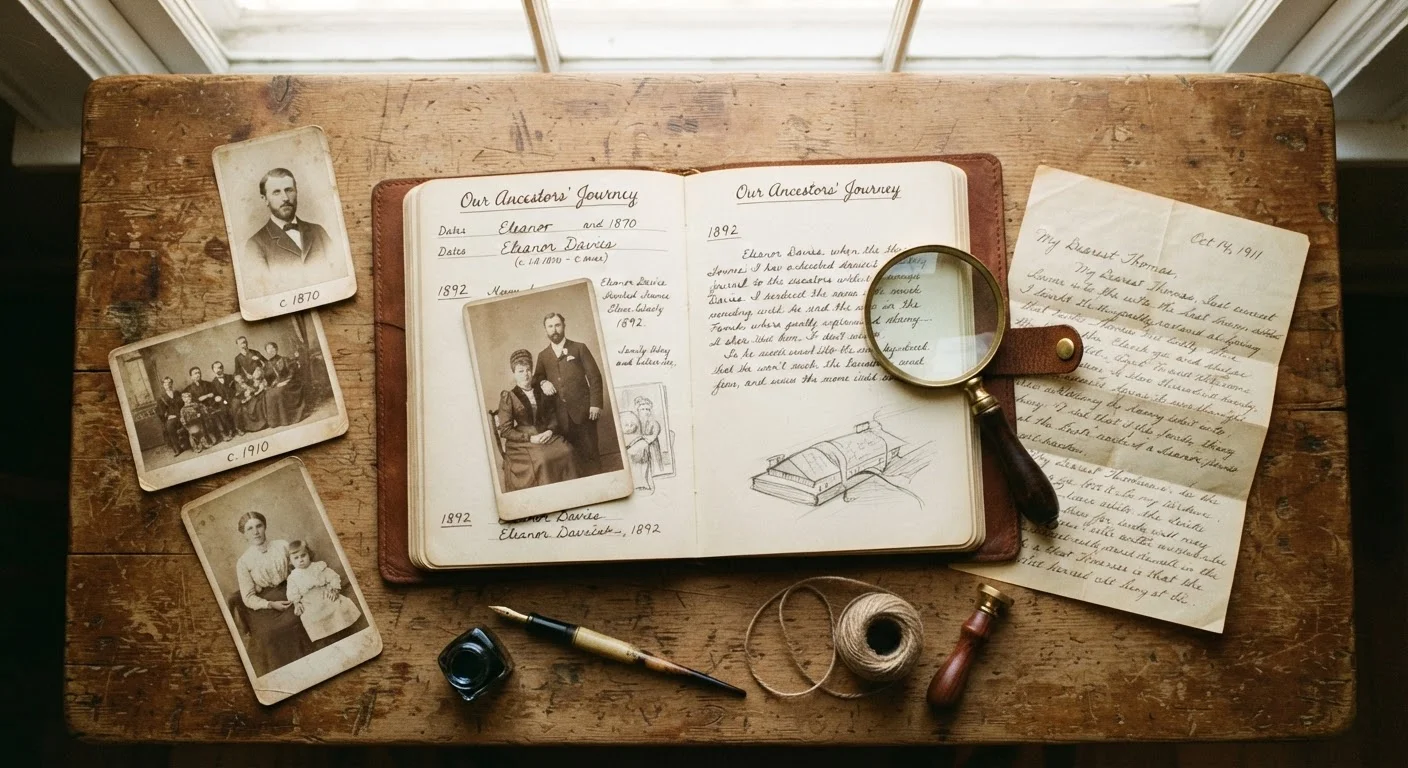
Photo: searchopenrecords editorial
—— In This Article
Key Takeaways
- Begin with your own documents and family knowledge before searching any database.
- Vital records — birth, marriage, and death certificates — are the backbone of genealogical proof.
- Free resources like the National Archives, FamilySearch, and public libraries cover a surprising amount of ground.
- Always cite your sources and cross-check facts across at least two independent records.
- Name spelling variations and digitization gaps are normal; expect them and plan around them.
Start With What You Already Know
Every reliable family tree is built from the present backward — never the other way around. Before opening any archive or database, spend time documenting what you already know or can easily verify. Your goal at this stage is to create a baseline of facts tied to real people.
Begin by writing down full legal names, approximate birth years, birthplaces, and relationship connections for yourself, your parents, and your grandparents. Then gather physical documents already in your home or family: birth certificates, Social Security cards, marriage licenses, naturalization papers, old passports, military discharge papers, and family bibles often contain crucial details. Even a handwritten note or an inscription in a book can be a legitimate lead.
Interviews with older relatives are equally valuable. Ask open-ended questions about where family members grew up, what work they did, and what family stories have been passed down. Record these conversations if possible — memories can be lost. As our guide on starting your family tree when you know almost nothing explains, this inventory stage often surfaces more material than researchers expect.
Number Your Sources From the Start
Assign a simple reference number to every document or source you collect, even in your earliest sessions. Linking each fact in your notes to a numbered source prevents confusion later and makes it easy to share your evidence with other researchers. A plain spreadsheet works perfectly well for this purpose.
Key Record Types for Beginners
Understanding which record types exist — and what information each contains — will help you search more efficiently and interpret results accurately.
Vital records
Official government documents recording life events — births, marriages, and deaths. In the U.S., these are issued and stored at the state or county level.
Primary source
A record created at or near the time of the event by someone with direct knowledge of it, such as a birth certificate filed shortly after birth.
Secondary source
A record where the information was reported by someone who did not witness the event directly, such as a death certificate's reported birthdate supplied by a family member.
Collateral research
Researching relatives who are not your direct ancestors — siblings, cousins, aunts, uncles — to find clues that help identify or confirm details about a direct ancestor.
Pedigree chart
A diagram that shows your direct ancestors in a branching format, with you at the starting point and each generation expanding outward.
Derivative record
A copy, transcription, or abstract of an original document created after the fact. It may contain errors introduced during copying or indexing.
- Vital records (birth, marriage, and death certificates) are the foundation. Each confirms names, dates, locations, and family relationships. In the U.S., vital records are maintained at the state level; availability and access rules vary by state and year.
- U.S. federal census records (taken every ten years from 1790 onward) list household members by name, age, birthplace, and — in later years — parents' birthplaces. The 1950 census is currently the most recent publicly available under the 72-year privacy rule.
- Immigration and naturalization records include passenger manifests, declaration of intention, and naturalization certificates. These are indispensable for tracing immigrant ancestors back to their countries of origin.
- Military records such as draft registration cards and pension files often contain physical descriptions, next-of-kin information, and places of birth not found elsewhere.
- Probate and land records can reveal family relationships, property holdings, and migration patterns decades before census records were standardized.
Where to Search for Ancestry Records
Once you know what records you need, the next step is knowing where to find them. Many essential resources are free or available through public libraries.
- FamilySearch.org — a free, nonprofit platform with billions of digitized records spanning many countries and centuries. It also hosts collaborative family trees that can provide leads, though always verify shared tree data independently.
- The National Archives (archives.gov) — the official repository for U.S. federal records including census microfilm, military service records, and immigration files. Many holdings are accessible online; others require an in-person or written request.
- State archives and vital records offices — hold birth, marriage, and death certificates. Most states have an online portal or mail-in request process for certified copies.
- Public libraries — many offer free access to subscription genealogy databases including newspaper archives, city directories, and regional collections through their digital card portals.
- Historical societies — local and state historical societies often hold unique regional records, church registers, and county histories not available anywhere else.
For a structured approach to archival research, see our guide on starting your genealogy journey with historical archives.
How to Interpret and Verify What You Find
Finding a record is only the first step — interpreting it correctly and verifying its accuracy are what separate reliable genealogy from speculation.
Genealogists distinguish between original records (the actual document created at the time of an event), derivative records (transcriptions or abstracts made later), and compiled sources (such as published family histories or shared online trees). Original records carry more weight; derivative records may contain transcription errors. Always try to view the original image rather than relying solely on an index entry.
Name spelling variations are one of the most common sources of confusion. A surname like "Fischer" might appear as "Fisher," "Fisscher," or simply "F." in different records. Use wildcard searches and phonetic search options where available, and keep a running list of variant spellings for each ancestor.
Conflicting information between two records is normal, not a crisis. When dates or places disagree, consider which record was created closest to the actual event. A person's death certificate, for example, reports birth information secondhand — the informant may not have known exact details. Cross-reference at least two independent records before accepting any fact as confirmed. Our complete family tree research walkthrough covers verification methodology in depth.
Organizing and Growing Your Family Tree
Good organization is what transforms a collection of documents into a coherent family tree. From your first search session, develop a consistent citation habit: record where you found each piece of information, what the source is, and when you accessed it. This makes it far easier to retrace your steps and spot errors later.
Many researchers use genealogy software or an online platform to structure their data. These tools let you attach source citations directly to each person and fact, view relationships visually, and flag unresolved questions. Whatever system you choose, consistency matters more than complexity.
As your tree grows, set a research goal for each session — a single question to answer rather than a general browse. This keeps progress measurable and prevents you from being sidetracked by interesting but off-topic discoveries. When you hit a wall on one line, shift focus to a different branch rather than speculating to fill gaps.
For building a solid foundation using only free tools, our guide on building a three-generation family tree using free sources is a practical companion resource. And if you want a comprehensive end-to-end methodology, the roadmap for first-time genealogy researchers covers every foundational step from initial inventory to documented lineage.
Frequently Asked Questions

Genealogy Search Editorial Team
Genealogy Search Editorial Team is the collective byline for our editorial team and contributor network. Articles published under this byline or an editorial pen name are researched, written, and reviewed according to our editorial standards for clarity, consistency, and independence before publication.
View author profile