
Family Trees and Public Records: What You Can Actually Find
Discover which public records are genuinely useful for building a family tree and what each document type can—and cannot—tell you.
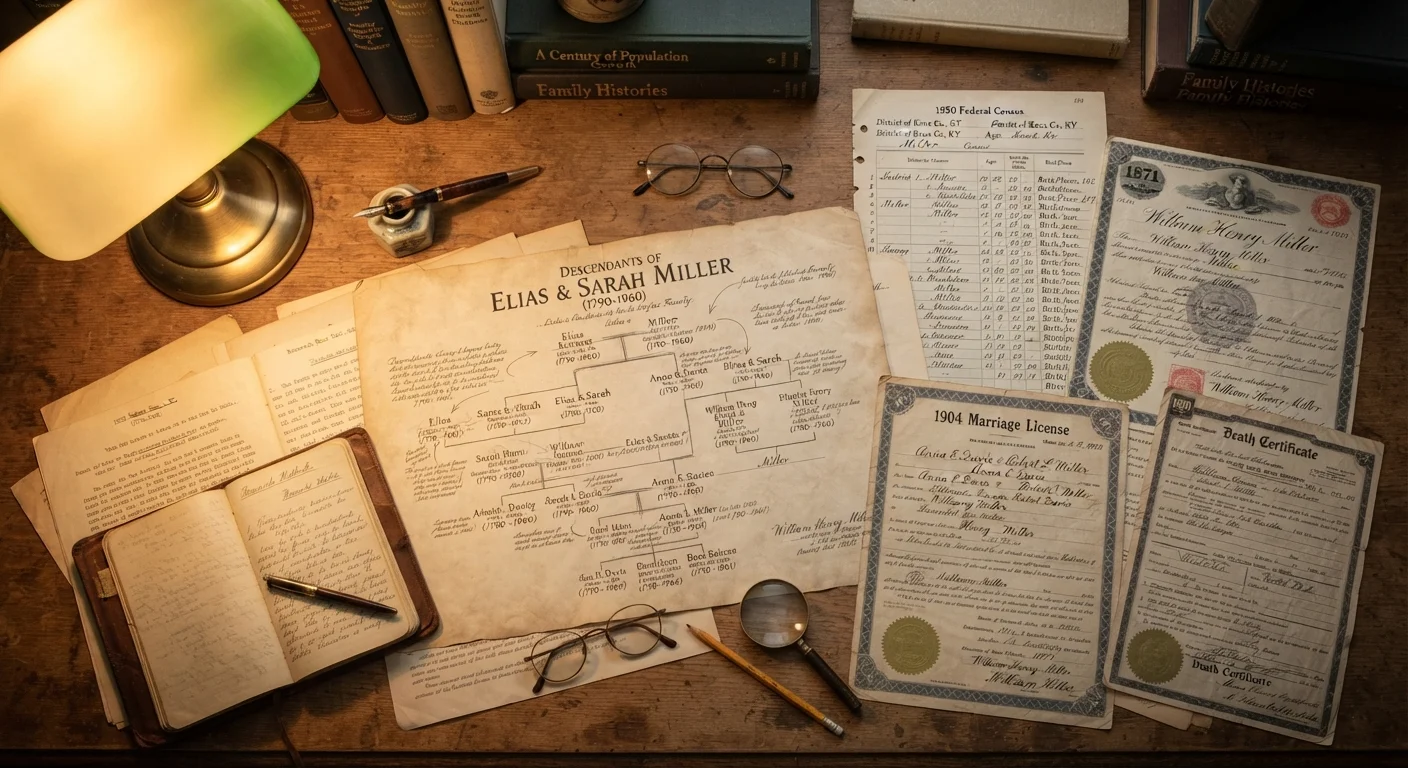
Photo: searchopenrecords editorial
—— In This Article
Key Takeaways
- Vital records — births, marriages, and deaths — form the foundational layer of any accurate family tree.
- Census records reveal household composition, approximate ages, and relationships across a decade-by-decade timeline.
- Each record type has distinct strengths and known gaps; no single document tells the whole story.
- Digitization varies widely by state and county, meaning some records require direct archive contact.
- Cross-referencing multiple record types significantly reduces the risk of identity confusion between relatives with similar names.
Starting with What You Know: The Four Core Record Types
Effective family tree research follows a simple principle: move from the known to the unknown, and anchor every step in a document. The four record types that form the foundation of this process are birth certificates, death certificates, marriage licenses, and federal census records. Together, they allow you to confirm identities, establish generational links, and track family movement across time and geography.
Birth certificates — issued at the state level beginning roughly in the late 19th to early 20th century, depending on the state — typically list the child's name, birth date and place, and both parents' names, including the mother's maiden name. That maiden name is one of genealogy's most valuable data points, because it opens an entirely new surname line to research.
Death certificates add another layer. Beyond confirming a life span, they often record the deceased's birthplace and parents' names — details particularly useful when researching generations who didn't leave many other paper records. Keep in mind that the informant who reported those details may not have had complete or accurate information, so treat the parental fields as leads rather than confirmed facts until corroborated.
For a deeper breakdown of what each record type contains, see the core public record types used in genealogy.
Always Collect the Full Document
When you locate a record in an online index, treat the index entry as a pointer, not a source. Obtain the actual document image whenever possible. Index entries frequently contain transcription errors — especially with older handwriting — and the original document often contains additional fields that the index omits entirely.
Census Records: A Decade-by-Decade Window into Family Life
Federal census records, conducted every ten years since 1790, are among the most powerful tools available to genealogists. Because they capture an entire household on a single date, they show you who was living together, their approximate ages, relationships to the head of household, birthplaces, and — in later schedules — occupations, immigration years, and citizenship status.
The 1940 census is currently the most recent schedule available to the public under the 72-year privacy rule. The 1950 census was released in 2022 and is increasingly indexed. Each decade's schedule asks slightly different questions, so it's worth reviewing what a given year captures before you search.
Census records are particularly valuable for identifying siblings — a detail that birth certificates alone rarely reveal unless you collect records for every child in a family. They also help you distinguish between two relatives who share a name, since comparing ages, locations, and household members across multiple census years usually clarifies which individual is which.
72 years
Privacy hold on federal census records
Under U.S. law, individual-level census records are released to the public 72 years after the census date, making the 1950 census the most recent fully available schedule.
~1915
Median year states began mandatory birth registration
According to the National Center for Health Statistics, most U.S. states didn't achieve complete birth registration until the 1930s, creating significant gaps for earlier generations.
3,000+
U.S. county-level archives holding genealogy records
The National Archives estimates that thousands of county courthouses and clerks' offices across the U.S. hold probate, land, and marriage records not yet available through any online database.
To understand how census and vital records complement each other in practice, learn which public records carry the most genealogical weight.
Filling the Gaps: Marriage Records, Probate, and Obituaries
Once you've exhausted the four core types, several additional record categories can bridge gaps and confirm relationships. Marriage records are especially important for tracing women's surnames across generations, since many other records list only the husband's last name. County courthouse records and church registers are the two main repositories, though increasing amounts are digitized through state archive portals.
Probate records — wills and estate inventories — often name heirs explicitly, providing family structure that no vital record captures. A will written in 1870 might list children, grandchildren, and in-laws by name, resolving ambiguities that census records leave open.
Obituaries occupy a useful middle ground: not official government records, but frequently rich in family detail. A well-written obituary can name every surviving child, list the deceased's parents, and mention a hometown that doesn't appear anywhere in official records. Using obituary records as a foundation for genealogy is a practical starting point for incorporating them into your workflow.
It's equally important to understand where public records fall short. A balanced look at the trade-offs of building a family tree through public records alone can help you calibrate expectations before you invest significant research time.
Accessing Records: Where to Actually Look
Knowing which records exist is only half the challenge — knowing where they're held determines your research strategy. Federal census records and military records are held by the National Archives and Records Administration (NARA) and are partially available through FamilySearch.org, a free resource maintained by the Church of Jesus Christ of Latter-day Saints. State vital records are managed by each state's department of health or vital statistics office, with varying access rules for recent records due to privacy restrictions.
County-level repositories — courthouses, county clerk offices, and local historical societies — hold probate files, land records, and older marriage registrations. These are often the least digitized and most underused sources. If online indexes return nothing, a written request or in-person visit to the relevant county office can surface records that have never been scanned.
Church registers, particularly for Catholic, Lutheran, and Quaker communities, predate many civil registration systems and can extend your research by generations. Contacting the specific parish or regional denominational archive is usually necessary to access them.
For a structured overview of where your family's history is already documented, see the public records and archives that already hold your family's story. And if you're just beginning the process, tracing family roots using public records offers a practical starting framework.
Frequently Asked Questions

Genealogy Search Editorial Team
Genealogy Search Editorial Team is the collective byline for our editorial team and contributor network. Articles published under this byline or an editorial pen name are researched, written, and reviewed according to our editorial standards for clarity, consistency, and independence before publication.
View author profile