
Record Repositories Worth Knowing Beyond the Usual Genealogy Databases
Courthouse basements, ethnic society archives, and colonial-era collections hold records most searchers overlook. Here's where else to look.
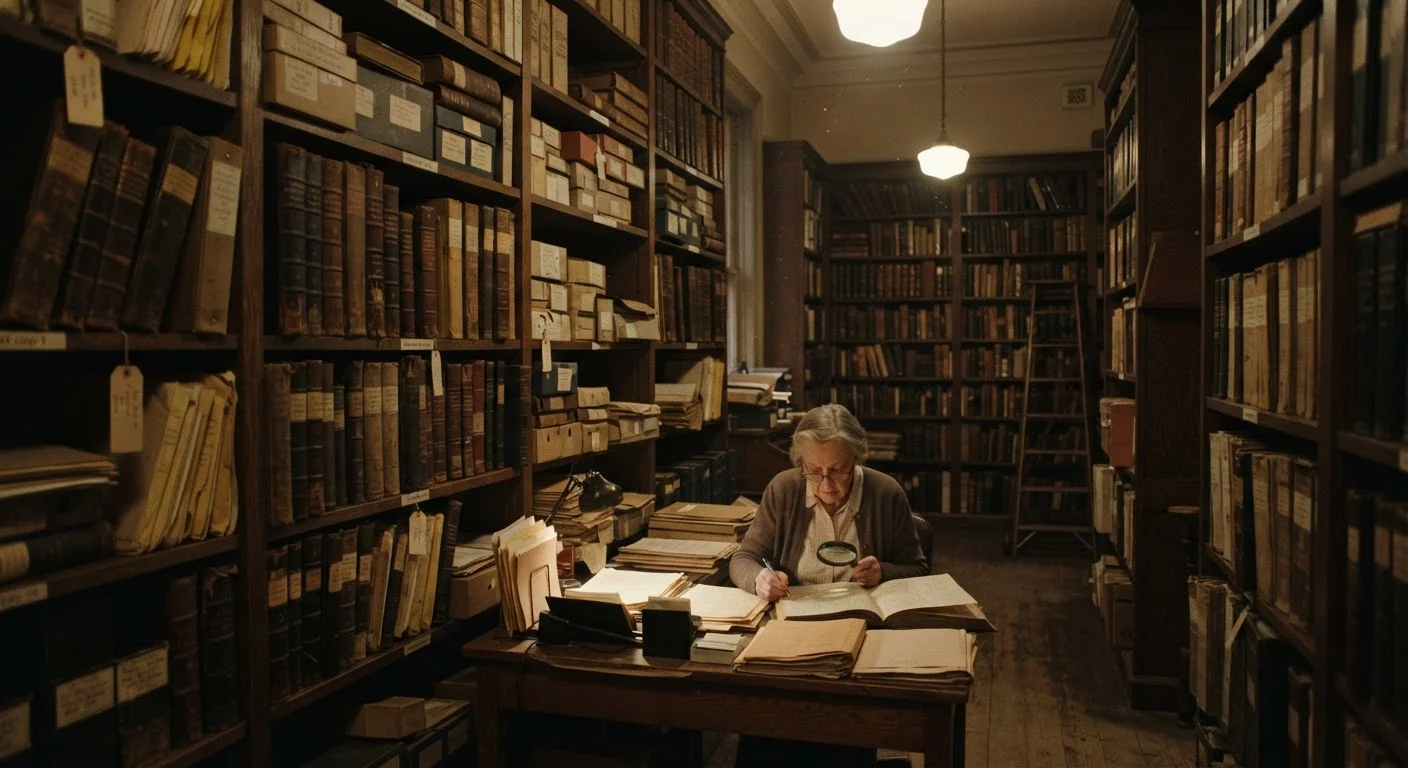
Photo: searchopenrecords editorial
—— In This Article
Key Takeaways
- Major genealogy databases capture only a fraction of surviving historical records — physical repositories often hold what's missing.
- Ethnic heritage societies, religious archives, and colonial-era collections preserve records unavailable through standard online searches.
- County courthouses, state land offices, and university special collections are practical, often underused starting points.
- Researchers who visit or contact repositories directly regularly uncover records that no digitization project has reached.
- Understanding where a record was created — not just what type it is — determines which repository to approach.
Why the Usual Databases Aren't Enough
Online genealogy platforms have transformed what's possible from a home computer, but they represent a curated slice of the historical record. Estimates within the archival community suggest that the vast majority of surviving historical documents have never been digitized — they exist only on paper, microfilm, or fragile original media held in physical repositories. If your research has stalled on the standard sites, the problem may not be that the records don't exist. It may simply be that no one has scanned them yet.
The public records most central to genealogy — births, deaths, marriages, and census returns — are relatively well-covered online. But the moment you push beyond those categories, or beyond the mid-20th century into earlier eras, gaps multiply quickly. The repositories below are where experienced researchers turn when the databases run dry.
Contact Before You Visit
Many small archives operate with limited staff and irregular hours. Send a written inquiry — email or letter — at least two weeks before planning a visit. Include specific names, date ranges, and record types you're seeking. Repositories are far more likely to locate relevant materials in advance when the request is precise. Some will pull records ahead of your arrival, saving hours of in-person searching.
Eight Repositories Worth Adding to Your Research Plan
County Courthouse Vaults
County courthouses hold records that predate state-level centralization: deed books, probate inventories, guardianship files, and civil court minutes. Many date to a county's founding. While some deed indexes are now available through state land records portals, the original bound volumes — which often contain marginalia, witness signatures, and related instruments — typically remain in the courthouse itself. Probate files are particularly rich, often listing children, debts, neighbors, and household goods in detail no census captures.
Probate inventories can name children, neighbors, and debts no census record captures.
State Archives and Land Grant Offices
Every U.S. state maintains an official archive, and most hold records that fall outside federal digitization efforts: colonial assembly records, state military rosters, legislative petitions, and original land grant files. State land grant records are especially valuable in the eastern states where land was distributed through state — not federal — systems. These offices often hold the only copy of pre-1900 naturalization records filed at the state level, which can document an immigrant's country of origin before federal forms required it.
State land grant files in eastern states document early settlers that federal land records entirely miss.
Ethnic Heritage and Immigrant Aid Society Archives
Organizations founded to support specific immigrant communities — Polish, Slovak, Irish, Jewish, Scandinavian, and many others — often maintained detailed membership rosters, death benefit records, and correspondence files. Groups like the Polish National Alliance, the Sons of Norway, and numerous mutual aid fraternities tracked members across decades. Their archives, frequently held by the organization itself or deposited with a university library, can provide village-of-origin information that naturalization papers omit.
Mutual aid society rosters often record the exact village of origin that naturalization papers omit.
Denominational and Parish Archives
Church records predate civil registration in most of the United States by generations. Diocese archives, synod record centers, and individual congregation collections hold baptismal registers, confirmation records, burial ledgers, and pew rental books. Catholic diocese archives are especially well-organized and often accessible by appointment. For Protestant denominations, the relevant synod or regional body usually maintains a record center. These overlooked record types frequently name godparents and witnesses — extending the family network considerably.
Godparent and witness names in parish registers extend your known family network significantly.
University Special Collections and Regional History Libraries
Academic libraries frequently hold manuscript collections donated by local families, historical societies, or defunct organizations. A university in a former mill town may hold company employment ledgers; one near a Civil War battlefield may hold regimental papers. These collections are cataloged in WorldCat and the ArchiveGrid database, both freely searchable. The finding aids describe folder-level contents, making it possible to identify a collection worth visiting before you travel.
ArchiveGrid lets you search manuscript collection finding aids nationwide before committing to a visit.
Colonial-Era and Pre-Statehood Record Centers
For families present in the Americas before statehood, the relevant records may be held by entities that no longer exist as governments. Spanish colonial records for Florida, Louisiana, and the Southwest are held partly by the AGI (Archivo General de Indias) in Seville and partly by state archives in the affected states. French colonial records for the Great Lakes and Mississippi Valley exist in Canadian and French national archives. The pre-1800 research strategies guide addresses these jurisdictional complexities in more detail.
Spanish and French colonial records for U.S. territory are partly held in European national archives.
Freedmen's Bureau Field Office Records
For researchers tracing African American ancestry through and beyond the Civil War era, the Bureau of Refugees, Freedmen, and Abandoned Lands — commonly called the Freedmen's Bureau — created an extraordinary body of documentation between 1865 and 1872. Field office records include labor contracts, marriage registers, ration rolls, and letters that name individuals who appear in almost no other 19th-century source. Many of these records are held at the National Archives regional facilities and are being progressively indexed through volunteer transcription projects.
Freedmen's Bureau marriage registers document individuals who appear in almost no other 19th-century source.
Newspaper Morgues and Publishing House Archives
Before news organizations moved to digital workflows, staff clipping files — known as morgues — accumulated decades of local coverage organized by name and subject. Some surviving morgues have been donated to public libraries or historical societies; others remain with the newspaper or its successor. A library's obituary and newspaper collections frequently include morgue materials that never made it to microfilm. Beyond obituaries, these files can contain wedding announcements, accident reports, business profiles, and letters to the editor — all primary sources for a life not otherwise documented.
Newspaper morgue clipping files contain primary sources for lives that no official record fully documents.
Making the Most of Physical Repositories
Before visiting or contacting any repository, write out exactly what you're looking for: the person's full name (with spelling variants), approximate dates, and the county or parish where they lived. Many smaller archives have no online catalog, and a clear, specific inquiry letter dramatically improves your chances of getting a useful response. Ask explicitly whether the collection has been microfilmed or partially digitized, and whether a finding aid — a guide to the repository's holdings — exists in any form.
For research that crosses national boundaries, record-keeping systems differ so fundamentally that repository knowledge becomes even more critical. Our country-by-country record guide covers what survives and where it's held across major regions. Closer to home, public libraries and state archives often hold obituary collections and local newspaper runs that complement the record types discussed here. The strategies for pre-1800 ancestry research are especially relevant when working with the colonial and early national repositories on this list.
Persistence and specificity are the core skills. Repositories reward researchers who understand their holdings — and that understanding comes from exploring beyond the familiar.

Genealogy Search Editorial Team
Genealogy Search Editorial Team is the collective byline for our editorial team and contributor network. Articles published under this byline or an editorial pen name are researched, written, and reviewed according to our editorial standards for clarity, consistency, and independence before publication.
View author profile