
Why Blocking a Number Doesn't Always Stop the Calls
Blocking scam numbers feels satisfying, but spoofed numbers rotate constantly. Understand why blocking has limits and what complements it.
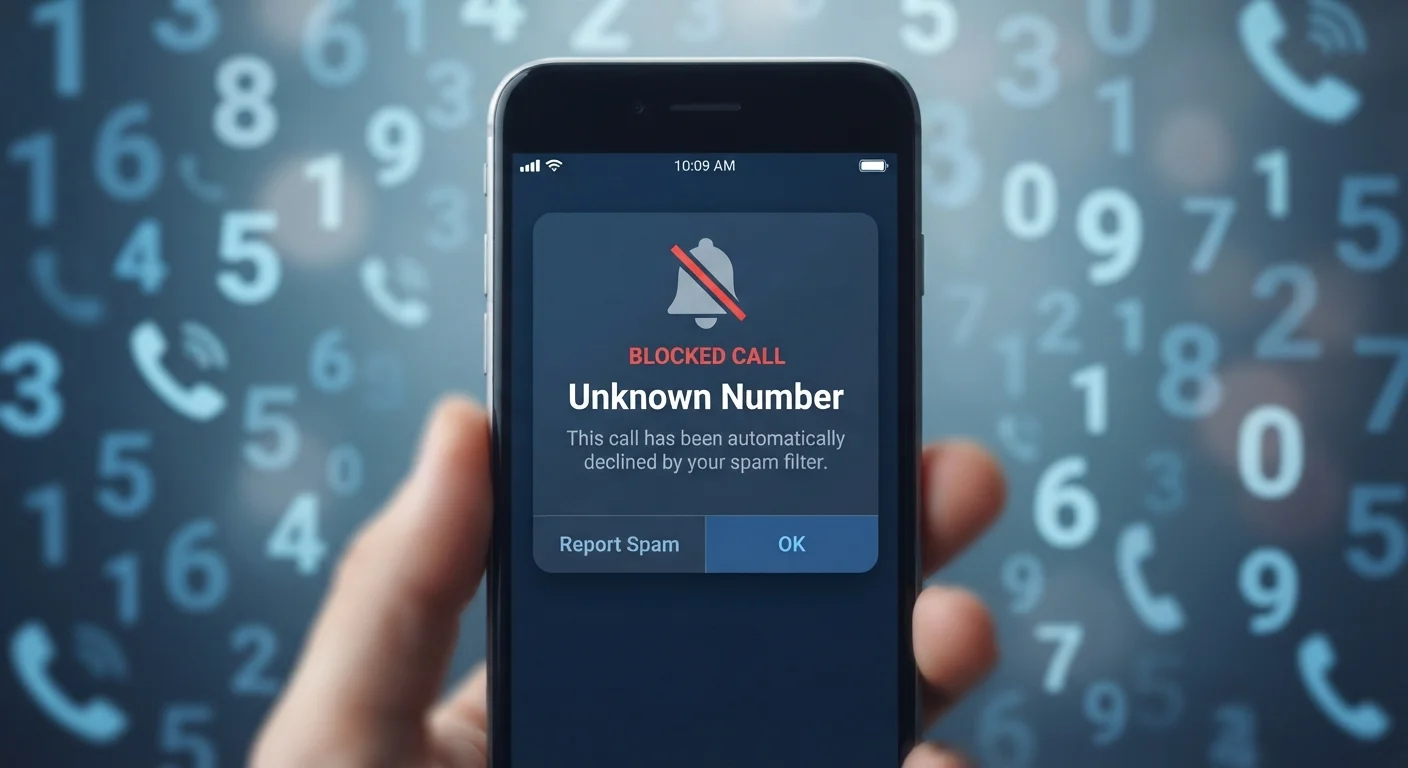
Photo: searchopenrecords editorial
—— In This Article
Key Takeaways
- Blocking works against persistent callers using a fixed number, but most scammers rotate numbers automatically.
- Caller ID spoofing lets fraudsters display any number they choose, making blocks ineffective after one call.
- VoIP technology makes generating new outbound numbers cheap and fast for bad actors.
- Carrier-level call filtering tools and FCC complaint reporting complement — and often outperform — manual blocking.
- Reverse phone lookup can help you assess an unknown number before deciding how to respond.
How Blocking Actually Works
When you block a number on your smartphone, you are instructing either your device's operating system or your carrier to reject any incoming call that displays that exact digit string. The logic is straightforward: if a known bad number calls again, the call never reaches your phone.
That mechanism works well in a narrow set of circumstances — an unwanted personal contact, a local business that calls too frequently, or a telemarketer with a stable outbound number. In those cases, blocking is a reliable, permanent fix.
The problem is that modern phone scam operations are not built around stable numbers. Understanding why requires a closer look at how scammers generate and discard phone numbers in the first place.
Why Scammers Are Designed to Defeat Blocking
Large-scale phone fraud operations rely on caller ID spoofing — technology that allows the displayed caller ID to be set to any number the sender chooses, regardless of the number actually placing the call. You can read a detailed breakdown of how this works in our article on how fraudsters use your own number against you.
Because spoofing is built into the call-placing software, rotating to a new display number costs the scammer nothing. Automated dialing systems can cycle through thousands of number combinations in a single campaign. By the time you block today's incoming number, tomorrow's call already has a different one queued up.
VoIP (Voice over Internet Protocol) makes this even easier. Unlike traditional landlines, VoIP numbers can be provisioned and discarded quickly through internet-based services. The economics favor the scammer: one call center can appear to call from hundreds of different area codes and local prefixes in a single day. Caller ID spoofing and number recycling are distinct phenomena, but both contribute to the sense that blocking never quite catches up.
Let Unknown Calls Go to Voicemail
If you do not recognize a number, allowing it to go to voicemail is often the safest immediate step. Legitimate callers almost always leave a message; scam operations typically do not. This also gives you time to run a reverse lookup before deciding whether to return the call.
What Complements Blocking More Effectively
Rather than relying on blocking alone, a layered approach addresses the structural problem scammers exploit.
- Carrier-level call filtering: Most major US carriers offer network-based spam screening that analyzes call patterns across their entire subscriber base — flagging numbers that have triggered mass complaints, even ones that have never called you before. This operates upstream of your block list.
- Reverse phone lookup: Before answering or returning an unfamiliar call, a reverse phone lookup can reveal whether the number is associated with a legitimate business, a VoIP provider, or a history of complaints. Our guide to signals that a phone number may be linked to a scam explains what patterns to watch for.
- FCC and FTC complaints: Reporting scam numbers to federal agencies feeds enforcement databases and contributes to carrier-level blocking decisions. Individual reports aggregate into actionable intelligence at scale.
- Skepticism about caller ID itself: Treating any unexpected call from an unknown number — even one with a familiar area code — as unverified by default reduces the risk that spoofing will succeed.
Understanding how scammers build their call lists adds further context: if your number is circulating in data broker databases or leaked lists, volume of scam calls is likely to persist regardless of how many numbers you block.
4,000+
Robocall complaints filed daily with the FTC
The FTC receives thousands of robocall complaints each day, illustrating the scale at which scam call operations rotate numbers across US consumers.
50%+
Of scam calls use VoIP infrastructure
Industry analyses of spam call traffic consistently find that a majority of fraudulent calls originate through internet-based VoIP services, which make number rotation inexpensive and fast.
Knowing When Blocking Is Still the Right Tool
None of this means blocking should be abandoned. It remains the correct response to a known, fixed-number harasser — someone calling repeatedly from a personal or business line. It also has real utility when combined with carrier filtering: removing confirmed bad numbers from your call queue reduces noise even if it does not address the source.
The key distinction is understanding what type of number you are dealing with. Different phone number types — landline, mobile, and VoIP — behave differently in lookup systems and respond differently to blocking. A VoIP number tied to a scam campaign is almost certainly disposable; blocking it is a minor inconvenience to the caller at best. A mobile number tied to a real individual is far more likely to stay constant, making blocking genuinely effective.
Matching the tool to the threat is the most useful frame. Blocking is one layer in a broader set of defenses — not a comprehensive solution on its own.
Frequently Asked Questions

Phone Lookup Editorial Team
Phone Lookup Editorial Team is the collective byline for our editorial team and contributor network. Articles published under this byline or an editorial pen name are researched, written, and reviewed according to our editorial standards for clarity, consistency, and independence before publication.
View author profile