
Caller ID Spoofing vs. Number Recycling: Two Very Different Reasons a Call Looks Suspicious
Not every strange-looking call is a scam. Understand the difference between spoofed numbers and recycled ones to make better decisions.
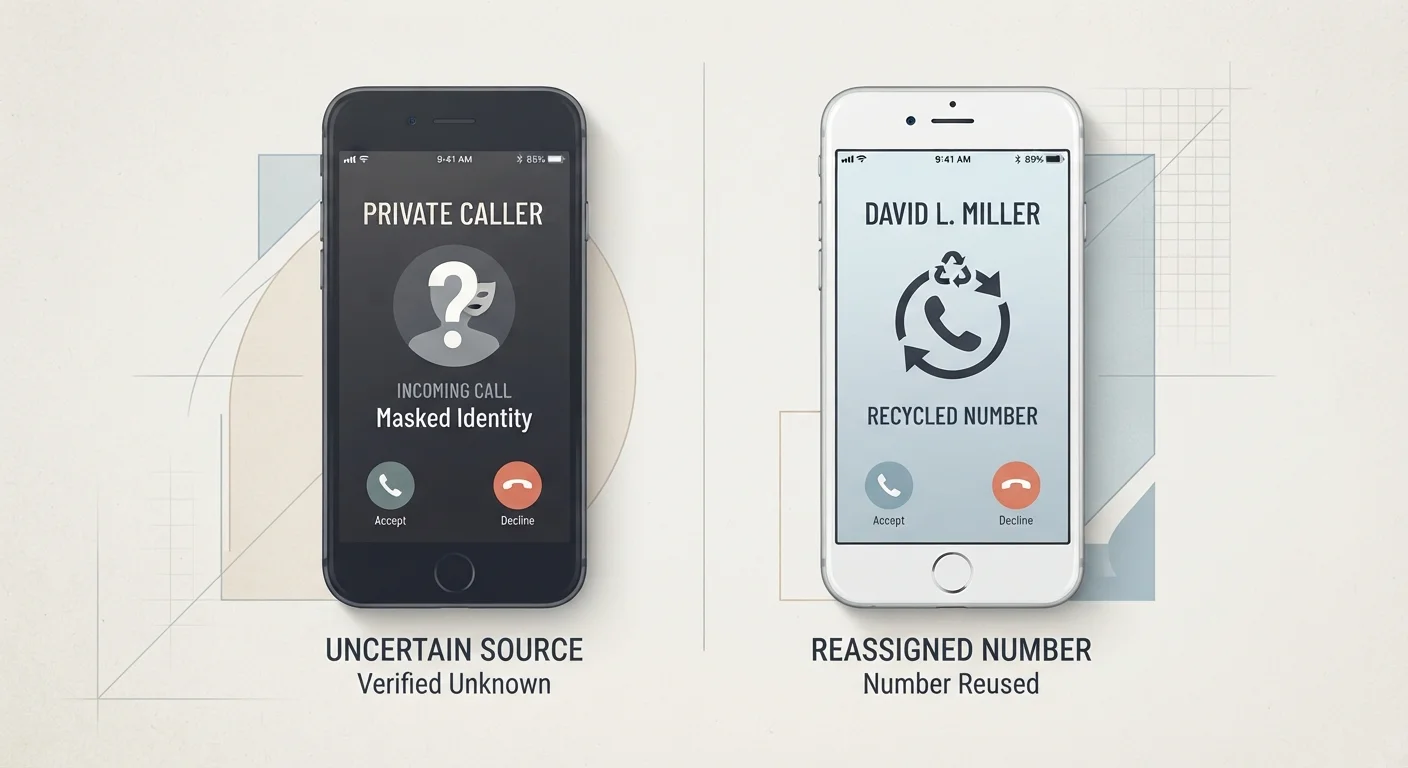
Photo: searchopenrecords editorial
—— In This Article
Key Takeaways
- Caller ID spoofing is intentional: a bad actor deliberately transmits a false number to deceive you.
- Number recycling is a carrier-driven process where deactivated numbers are reassigned to new subscribers.
- A reverse lookup result that looks suspicious may reflect the number's previous owner, not the current caller.
- Spoofed numbers rotate constantly, making call-blocking largely ineffective against determined scammers.
- Context clues — what the caller says and asks for — matter more than the number alone.
What Each Term Actually Means
When an incoming call looks strange — an unknown name, a number that mirrors your own area code, or a reverse lookup result that doesn't match reality — two distinct technical explanations are usually responsible. They are often confused, but they have fundamentally different causes, different implications, and different appropriate responses.
Caller ID spoofing is the deliberate transmission of a false number to your caller ID display. Using widely available Voice over Internet Protocol (VoIP) software and commercial spoofing APIs, a caller can instruct the telephone network to display virtually any number they choose. The displayed number may be a real, active number belonging to a bank, a government agency, or even someone in your own contacts. The technology itself is neutral — legitimate businesses use it for callback consistency — but it is routinely weaponized by scammers. For a deeper look at how this affects lookup data, see how spoofing distorts reverse lookup results.
Number recycling is something different entirely. When a subscriber cancels or loses a phone line, the carrier eventually returns that number to its available inventory and assigns it to a new customer. The US phone number system — governed by the North American Numbering Plan (NANP) — has finite number resources, and recycling is a routine, necessary process. The new subscriber is innocent; the number simply carries a history they didn't create.
| Criterion | Caller ID Spoofing | Number Recycling |
|---|---|---|
| Cause | Deliberate deception by caller | Routine carrier number reassignment |
| Intent | Usually fraudulent or misleading | No malicious intent; administrative process |
| Who is affected | Call recipients and number owners whose ID is copied | New subscribers and people calling outdated contacts |
| Reverse lookup accuracy | Returns owner of spoofed number, not real caller | Returns previous subscriber, not current one |
| Blocking effectiveness | Low — numbers rotate constantly | N/A — not a persistent threat |
| How common | Extremely common in scam and robocall campaigns | Routine; affects all phone number systems |
| Recommended response | Disengage; verify through official channels | Inform caller of reassignment; wait for database updates |
Why the Distinction Matters for Reverse Lookup
Reverse phone lookup tools aggregate data from carrier records, public filings, and user-contributed databases. Both spoofing and recycling can make their results misleading, but in opposite directions.
With spoofing, the number displayed on your screen may be entirely real and belong to an identifiable person or business — who had nothing to do with the call you received. Running a lookup on a spoofed number returns accurate information about the number's legitimate owner, which is useless for identifying the actual caller. This is not a flaw in the lookup tool; it is a fundamental limitation imposed by the deception itself. See how reverse phone lookup tools work for background on what these services can and cannot determine.
With number recycling, the lookup may return the name and history of the previous subscriber. Databases take time — sometimes months — to update after a number changes hands. A new customer who has held their number for only a few weeks may find that lookups still display the prior owner's identity. This is a data-freshness issue, not a sign of fraud.
Understanding which problem you're dealing with changes how you should interpret the result. A lookup that returns a legitimate business name doesn't mean the call was legitimate if spoofing is in play. Equally, a lookup that returns an unfamiliar or mismatched name doesn't mean the caller is a scammer if recycling is the explanation. For context on what lookup patterns are actually associated with fraud, see signals that a phone number may be linked to a scam.
How to Tell Them Apart — and What to Do
No single data point reliably distinguishes a spoofed call from one originating with a recycled number's new owner. But several contextual signals help narrow it down.
Indicators pointing toward spoofing:
- The caller makes an urgent request for money, gift cards, login credentials, or personal identification.
- The displayed number belongs to a government agency, financial institution, or someone you know — yet the caller's story doesn't add up.
- You receive repeated calls from different numbers with the same script or the same background noise.
- Blocking the number has no effect; the calls continue from slightly varied numbers.
Indicators pointing toward number recycling:
- The caller seems to be a real individual — perhaps confused that you're not the person they expected to reach.
- The lookup result shows someone else's name but there's no pressure, no ask, and no urgency in the call.
- You recently obtained a new number and are receiving calls intended for the previous holder.
When spoofing is suspected, the most effective response is to disengage and contact the purported organization directly using contact details from their official website. As explained in why blocking a number doesn't always stop the calls, blocking is largely futile against spoofed numbers that rotate on every call. For a broader view of the tactics scammers use, phone scams explained and phone scam red flags every caller should know are useful references.
When recycling seems more likely, simply informing the caller that you're a new subscriber is usually sufficient. Over time, databases will update and misdirected calls will decrease.

Phone Lookup Editorial Team
Phone Lookup Editorial Team is the collective byline for our editorial team and contributor network. Articles published under this byline or an editorial pen name are researched, written, and reviewed according to our editorial standards for clarity, consistency, and independence before publication.
View author profile