
From Dormant to Claimable: A Timeline of the Unclaimed Funds Process
See the step-by-step sequence — from the first missed statement to a searchable state database — that defines how unclaimed money becomes publicly accessible.
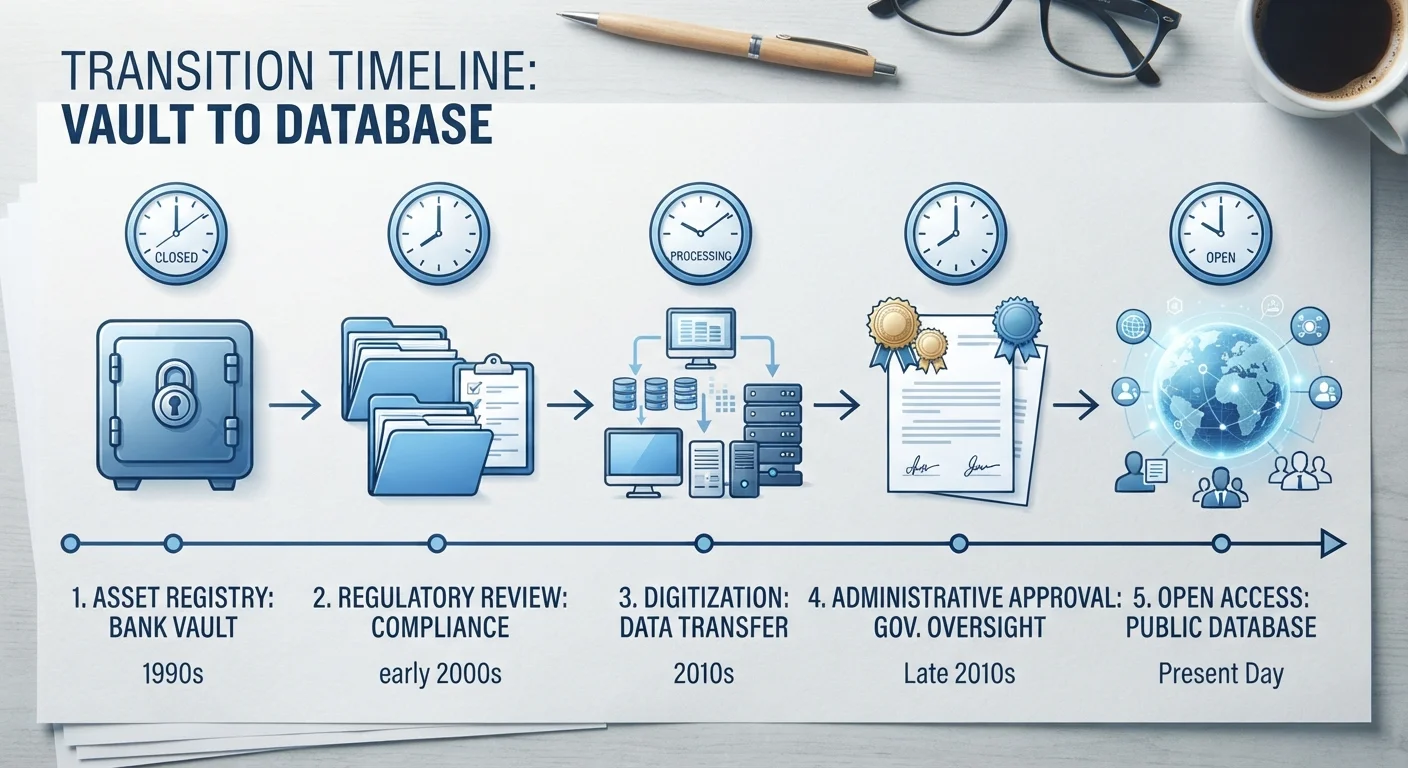
Photo: searchopenrecords editorial
—— In This Article
Stage 1: Inactivity — When an Account Stops Moving
The unclaimed property timeline begins not with a government action, but with ordinary inactivity. When an account holder stops initiating transactions — no deposits, withdrawals, or even correspondence — the financial institution or company holding those funds starts a clock.
This period of inactivity is called the dormancy period. Each state sets its own dormancy threshold, but most fall between one and five years, depending on the property type. A standard checking account typically becomes dormant after three years of no owner-initiated activity. Insurance policies, stock dividends, and payroll checks each carry their own timelines defined by state law.
During dormancy, the holder — the bank, insurer, employer, or brokerage — is still legally responsible for the funds. To understand how responsibilities shift between these parties, see our guide on who is responsible for unclaimed funds at each stage.
Stage 2: Due Diligence — The Holder Must Try to Reach You
Before transferring any property to the state, holders are legally required to make a good-faith effort to locate the owner. This obligation is called due diligence, and most states mandate it in writing — typically a notice mailed to the owner's last known address within a specific window before the reporting deadline.
If the notice goes unanswered or is returned undeliverable, the holder documents the attempt and proceeds with the next step. Holders cannot simply keep inactive funds indefinitely — they face penalties for failing to report or remit property on schedule.
Stage 3: Reporting and Escheatment — Funds Transfer to the State
Once the dormancy period expires and due diligence is complete, the holder files an annual report with the appropriate state agency — usually the State Treasurer or State Controller — and remits the property. This legal transfer is called escheatment.
Most states require holders to report and remit between once and twice per year, commonly on a fall or spring cycle. At this point, the state takes legal custody of the funds and assumes the obligation to reunite them with their rightful owner. Importantly, the owner's right to claim the property is preserved indefinitely in most states — the state holds it on the owner's behalf, not for its own permanent benefit.
For a broader look at how this journey unfolds, trace the full path of dormant funds from private hands to public record.
Stage 4: Database Entry — Property Becomes Publicly Searchable
After escheatment, the state processes the remitted property and enters owner information into a public-facing database. This step is what transforms a forgotten account into a searchable public record.
Most states list unclaimed property on their official treasurer or controller websites. In addition, the National Association of Unclaimed Property Administrators (NAUPA) operates MissingMoney.com, a free multi-state search tool that aggregates records from participating states. Federal-level holdings — such as funds from the IRS, U.S. Savings Bonds, or Veterans Affairs — are maintained separately through their own agency portals.
There is typically a processing lag between when funds are remitted and when they appear in the searchable database. This can range from a few weeks to several months, depending on the state's internal workload and processing cycles. If you've been told funds were remitted recently, it may be worth re-checking the database after 60 to 90 days.
When you're ready to search, explore the official state database search guides for step-by-step instructions by state.
Stage 5: The Claim — Proving Ownership and Receiving Funds
Finding your name in a database is only the beginning. To actually recover the funds, you must file a formal claim with the state that holds them. This involves submitting proof of identity and, depending on the amount and property type, documentation establishing your connection to the original account.
States review claims and may request additional verification. Processing times vary widely — from a few weeks to several months. Once approved, the state issues payment directly to the rightful owner, typically by check or electronic transfer. There is no fee to file a claim through an official state portal.
For a detailed walkthrough of what happens after you locate a match, see how the unclaimed property claims process actually works, or review the full lifecycle of a claim from filing to payment.
One practical consideration: unclaimed funds are generally held at their face value, without accruing interest in most cases. Money held for years may have less purchasing power than when it was originally deposited. For more on this, see how inflation and time affect the real value of unclaimed money.
This article provides general educational information about how unclaimed property systems operate in the United States. It is not legal or financial advice. For questions specific to your situation, consult a qualified attorney or financial professional.

Unclaimed Money Editorial Team
Unclaimed Money Editorial Team is the collective byline for our editorial team and contributor network. Articles published under this byline or an editorial pen name are researched, written, and reviewed according to our editorial standards for clarity, consistency, and independence before publication.
View author profile