
Why Unclaimed Money Doesn't Disappear: The Government's Custodial Role
Once funds are escheated, the state holds them indefinitely on behalf of the rightful owner. Understand what custodial stewardship actually means for claimants.
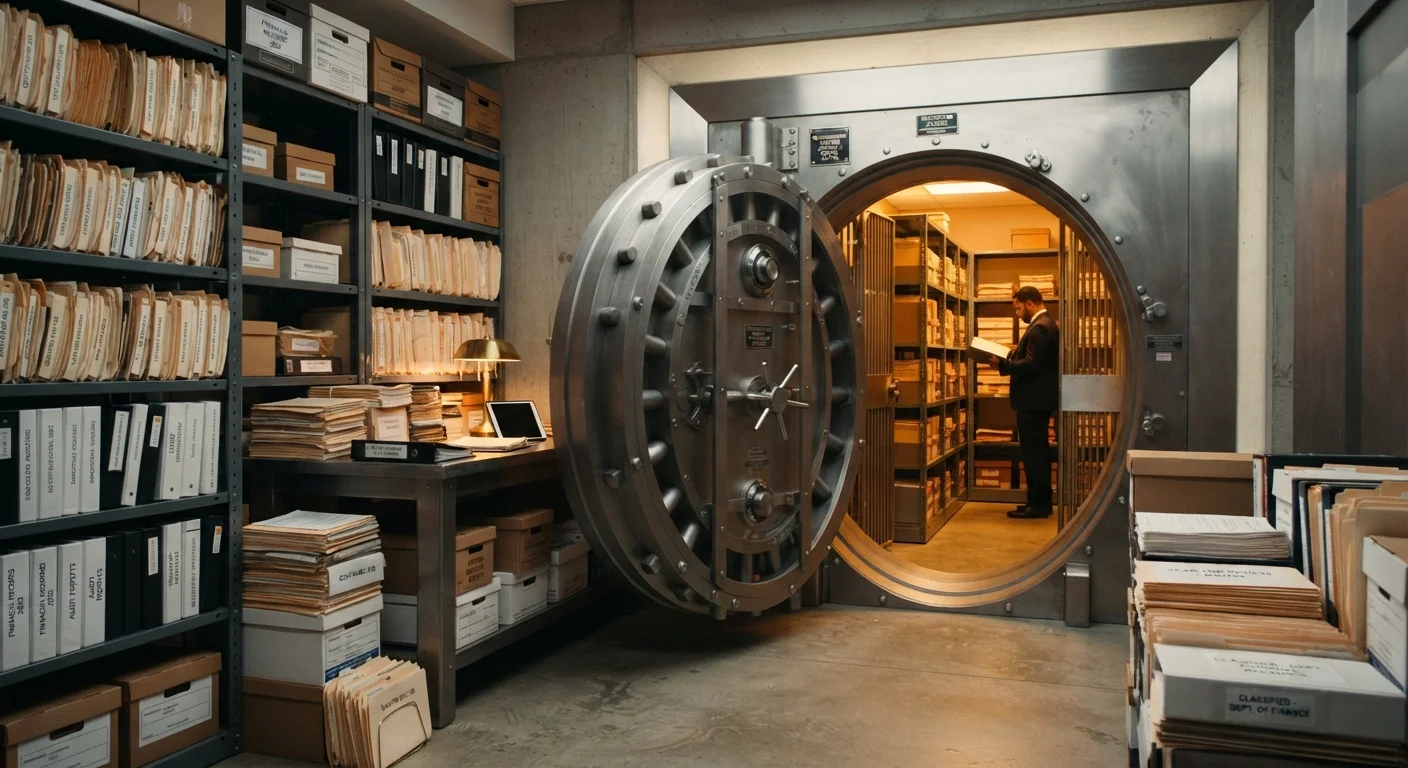
Photo: searchopenrecords editorial
—— In This Article
Key Takeaways
- States hold escheated funds indefinitely; the money does not expire or disappear.
- Governments act as custodians, not owners — they cannot permanently keep your property.
- Most states allow claims from original owners or legal heirs at any point in time.
- Escheated funds are typically deposited into general state funds but remain claimable as a liability.
- The process is governed by state-specific unclaimed property statutes, not a single federal law.
What Happens to Money After Escheatment
Many people assume that once a bank account or forgotten paycheck is handed over to the government, the money is gone for good. That assumption is incorrect. The transfer — called escheatment — is the beginning of a custodial relationship, not a financial dead end.
When a holder (a bank, brokerage, insurance company, or employer) determines that an account has been dormant beyond the state-mandated dormancy period, it is legally required to report and remit those funds to the appropriate state authority. That authority — usually the State Treasurer or State Controller — formally takes custody. From that moment, the state becomes a steward of the property, holding it on behalf of whoever is entitled to it.
To understand the full arc of this journey, see how dormant funds move from private hands to public record. The critical distinction is that ownership does not transfer — only physical custody does.
Custodial Stewardship Is Not Forfeiture
It is important to distinguish between escheatment under unclaimed property law and legal forfeiture. Forfeiture transfers ownership to the government permanently, often as a consequence of unlawful activity. Unclaimed property escheatment does neither — it is a protective custody arrangement. The state holds the property in trust and remains legally obligated to return it to whoever can prove rightful ownership.
The Legal Basis for Perpetual Custody
Each U.S. state has its own unclaimed property statute, and while the details vary, a consistent principle runs through all of them: the state's duty to return property to its rightful owner does not diminish over time. Unlike a statute of limitations in a lawsuit, the custodial obligation does not expire simply because years pass.
States record escheated funds as a financial liability — an amount owed — even after depositing the money into general operating funds. This accounting treatment reflects the legal reality: the state is always on the hook to pay a valid claimant. Courts have repeatedly affirmed that escheatment under modern unclaimed property law is a custodial arrangement, not a confiscation.
For a broader look at how this fits into the complete property lifecycle, trace the full lifecycle of unclaimed property from dormancy to your pocket.
How States Make Funds Searchable
Part of the custodial responsibility is making property discoverable. State programs publish the names, last known addresses, and property types of reported owners in searchable public databases. The National Association of Unclaimed Property Administrators (NAUPA) coordinates a multi-state search tool at MissingMoney.com, and most states also maintain their own portals through treasurer or controller websites.
This transparency requirement exists precisely because the state's goal is to reunite property with owners — not to retain it. Publishing the data publicly is how states fulfill their custodial mandate.
$70B+
Total unclaimed property held by U.S. states
NAUPA has reported the collective holdings of state unclaimed property programs exceed $70 billion, illustrating the scale of custodial stewardship across the country.
1 in 10
Americans estimated to have unclaimed property
NAUPA estimates roughly one in ten Americans has some form of unclaimed property being held by a state program, underscoring how common dormant accounts are.
50+
Separate state unclaimed property programs
Every U.S. state, plus Washington D.C. and several territories, operates its own unclaimed property program under its own statutes, each with distinct dormancy periods and claim procedures.
When you are ready to search, official state database guides walk you through each portal step by step.
What Claiming Your Property Actually Involves
Because the state holds funds indefinitely, there is no urgency-driven deadline forcing you to act within a short window. However, acting sooner rather than later is practical: records are easier to verify, and documentation is more accessible when less time has passed.
Filing a claim typically involves locating your property through an official database, submitting an identity-verified claim form, and providing supporting documentation — such as proof of address history, account records, or, for heirs, legal documentation of relationship and authority. States review claims and, once approved, issue payment directly to the claimant at no charge.
For a clear walkthrough of the post-search process, see how the unclaimed property claims process actually works, or review the full lifecycle of an unclaimed property claim for end-to-end context.
The Claiming Your Money hub also covers the steps, documents, and timelines involved in filing an official claim.
This article is for general informational and educational purposes only. It does not constitute legal or financial advice. Consult a qualified attorney or financial professional regarding decisions specific to your situation.
Frequently Asked Questions

Unclaimed Money Editorial Team
Unclaimed Money Editorial Team is the collective byline for our editorial team and contributor network. Articles published under this byline or an editorial pen name are researched, written, and reviewed according to our editorial standards for clarity, consistency, and independence before publication.
View author profile