
Lien Records in Vehicle Histories: What Outstanding Finance Entries Actually Signal
A lien entry on a vehicle history report means a creditor has a legal claim on the vehicle. Here's how lien records work and why they matter.
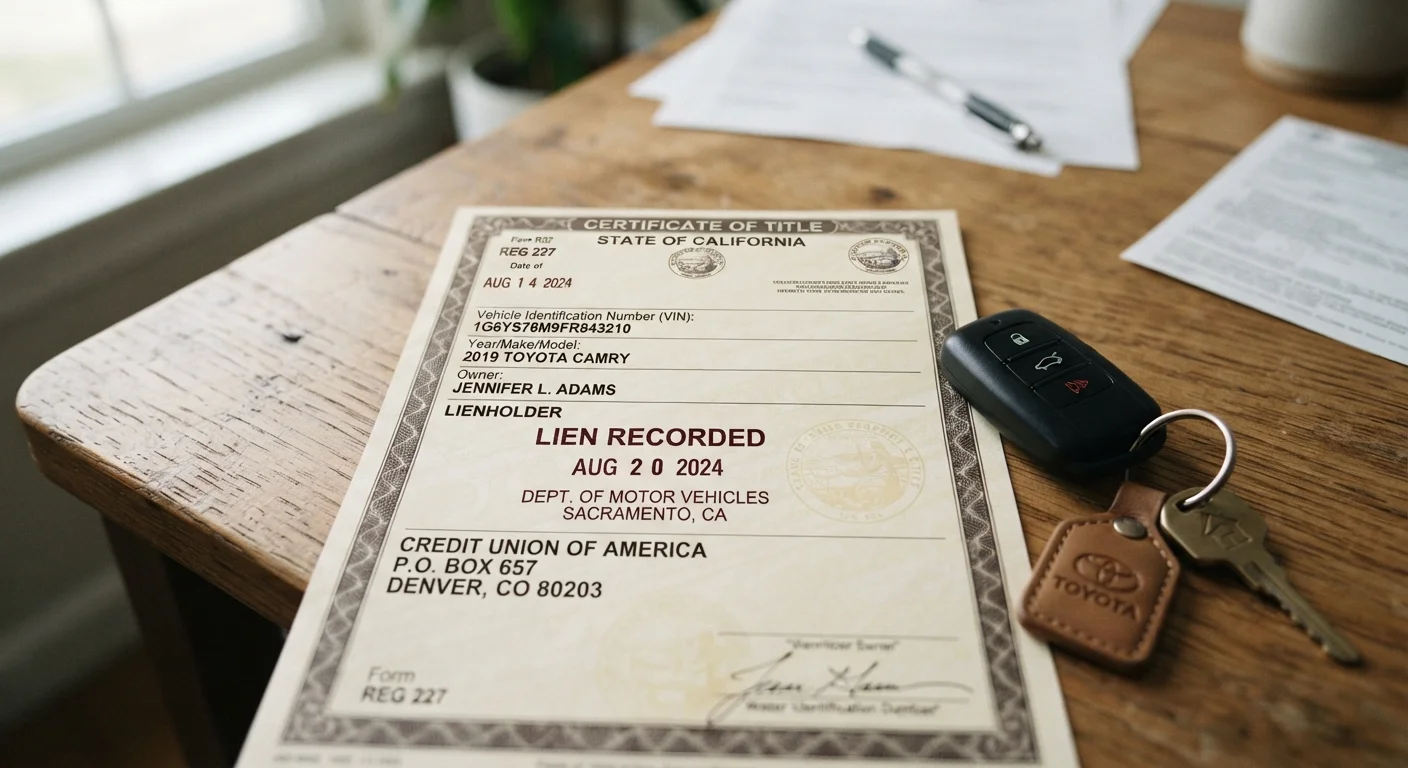
Photo: searchopenrecords editorial
—— In This Article
Key Takeaways
- A lien entry signals an outstanding financial claim held by a creditor against the vehicle.
- Liens are recorded by state DMVs and appear on the vehicle's title document.
- An open lien can legally follow a vehicle even after a private sale.
- A lien release must be recorded with the state DMV before a clean title can be issued.
- VIN-based history reports can surface lien records, but may not reflect the most current status.
- Buyers should verify lien status directly with the relevant state DMV before completing any purchase.
What a Lien Entry Actually Represents
When a lien record appears on a vehicle history report, it communicates one specific fact: a creditor has a legally recognized financial interest in that vehicle. This most commonly arises from an auto loan — when a buyer borrows money to purchase a vehicle, the lender records a lien with the state DMV as security against the debt. The lien is not a sign of wrongdoing; it is a standard feature of financed vehicle purchases.
What makes a lien significant from a buyer's perspective is its attachment to the vehicle itself, not to a particular owner. This is the concept of a perfected lien under state titling law: the creditor's interest travels with the vehicle through ownership changes unless it is formally released. Understanding this distinction is foundational to reading any VIN-linked title record correctly. See how title records connect to lien filings for a fuller picture of this chain.
How Lien Records Reach a Vehicle History Report
Lien information enters the public record through the state DMV's title process. When a lender finances a vehicle, they are typically listed as the lienholder on the title itself. The DMV records this, and that data eventually flows into commercial and government databases that power VIN-based history reports.
It is worth understanding that history reports aggregate data from multiple sources — state DMV records, court filings, insurance totals, and auction data among them. Lien records specifically originate from state title filings, not from the lender's internal systems. This means the accuracy and timeliness of lien data in a history report depends directly on how current the underlying state records are.
Other Types of Liens Can Appear on a Title
Beyond auto loans, mechanics may record a mechanic's lien for unpaid repair work, and tax authorities may place liens for unpaid obligations. Each type is filed through state-specific processes and can appear on a title. For context on how liens appear in broader public record searches, see how liens surface in civil record checks.
Beyond auto loans, other creditors can also file liens. Mechanics may record a mechanic's lien for unpaid repair work, and tax authorities may place liens for unpaid obligations. Each type is filed through state-specific processes and can appear on a title. For context on how liens appear in broader public record searches, see how liens surface in civil record checks.
What an Outstanding Lien Signals for a Potential Buyer
An open lien entry on a history report is a flag that requires direct follow-up — not necessarily a reason to walk away, but a data point that demands verification. The core concern is straightforward: if a debt secured by the vehicle has not been repaid, the lienholder's claim remains active. A seller cannot legally transfer a clean title — one free of encumbrances — while a lien is outstanding.
In practice, many legitimate private sales involve vehicles with active liens. A common resolution is for the sale proceeds to pay off the loan at closing, with the lender releasing the lien simultaneously. However, if this process is not completed correctly and documented with the state DMV, the buyer may receive a title that still reflects an open lien — creating problems at registration or resale.
How open liens affect a title transfer is covered in depth in a related explainer. Ownership history gaps can also accompany problematic lien records — see why ownership record gaps matter for that context.
85%+
New vehicle purchases financed in recent years
According to Experian's State of the Automotive Finance Market reports, the large majority of new vehicle transactions involve financing, meaning liens are recorded on most new vehicles at the point of sale.
50
Separate state DMV systems recording lien data
Each U.S. state maintains its own title and lien filing system, which is why lien record timing and accessibility varies significantly depending on where a vehicle is titled.
Varies
Days for lien release to appear in DMV records
State DMV processing times for lien releases range from a few days to several weeks, creating potential gaps between when a loan is paid off and when the title record reflects that change.
Verifying Lien Status Before Any Transaction
A VIN history report is a useful starting point, but it is not a definitive legal source for lien status. Report data can lag real-world updates by days or weeks, meaning a lien that was released recently may still appear as open in a report. Conversely, a lien filed through an unusual court or agency channel might not appear at all.
The most reliable verification method is to contact the state DMV in the state where the vehicle is currently titled. Many states offer online title inquiry tools, and some provide written title status letters. Requesting a copy of the actual title document from the seller is also a practical step — a clean title will list no lienholder, while a title with an active lien will name the creditor on its face.
For vehicles you are researching using VIN data, the VIN lookup basics hub outlines how to start a records search and what categories of public data are typically accessible.
This article is for general informational and educational purposes only. It does not constitute legal or financial advice. For guidance specific to your situation, consult a qualified legal or financial professional.
Frequently Asked Questions

Vin Search Editorial Team
VIN Search Editorial Team is the collective byline for our editorial team and contributor network. Articles published under this byline or an editorial pen name are researched, written, and reviewed according to our editorial standards for clarity, consistency, and independence before publication.
View author profile