
Open Liens on a Vehicle Title: What They Mean and Why They Matter
An unresolved lien can follow a vehicle even after it's sold. Understand how lien records work and what a buyer should check before any transfer.
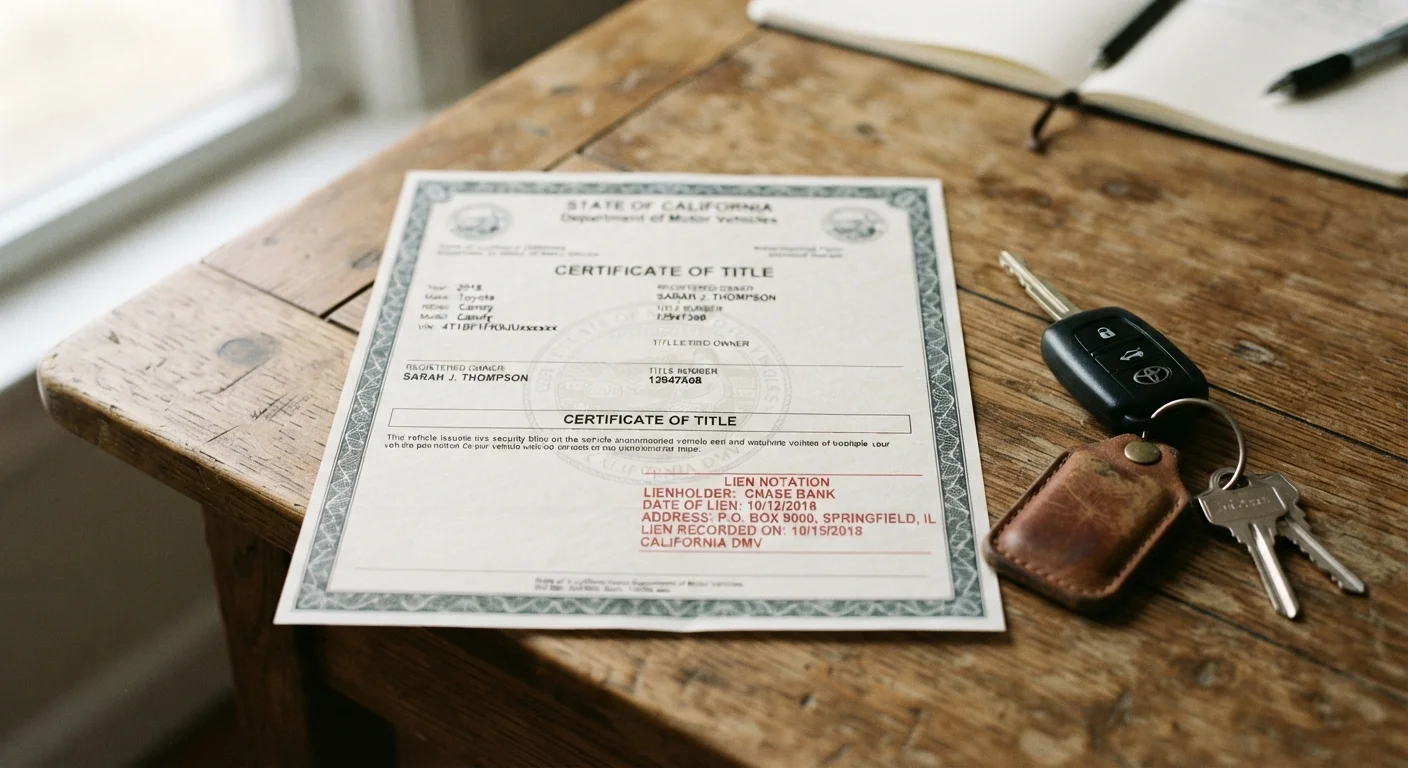
Photo: searchopenrecords editorial
—— In This Article
Key Takeaways
- An open lien means a creditor has a recorded legal claim on the vehicle that has not yet been released.
- Liens are attached to the vehicle itself, not just the borrower — they can follow the car through a private sale.
- A lien release must be formally filed with the state DMV before a clean title can be issued.
- Buyers can verify lien status through a VIN-based title record search before any purchase.
- Selling a vehicle with an open lien without disclosing it can constitute fraud in most states.
What an Open Lien Actually Records
When a lender finances a vehicle purchase, it doesn't simply hand over money and trust the borrower. Instead, the lender records a lien on the vehicle's official title — a legal notation that tells the world the lender has a security interest in that vehicle until the loan is repaid. This process is coordinated through the state DMV, and the lien becomes part of the vehicle's public title record.
An open lien is one that has not yet been discharged. The debt behind it may be current, in default, or even forgotten — but as long as no formal lien release has been filed, the claim remains active on the title. This is distinct from the borrower's credit history; the lien lives with the vehicle, recorded against its title and traceable through its Vehicle Identification Number (VIN).
To understand how a lien first gets attached, see how a lien gets attached to a vehicle title. That foundation explains the mechanics behind what buyers encounter in title searches.
NMVTIS Coverage Is Not Universal
The National Motor Vehicle Title Information System (NMVTIS) aggregates title data from participating states, but not all states report lien data with equal completeness or timeliness. A VIN search that shows no lien does not guarantee none exists — always cross-check with the physical title and a direct DMV inquiry when possible.
Why Open Liens Follow the Vehicle, Not the Seller
One of the most misunderstood aspects of vehicle liens is that they attach to the property — not the person. If a seller transfers a vehicle without resolving an open lien, the lien travels with the car. The new owner receives a title that still reflects the creditor's claim, regardless of whether they knew about the debt.
This creates genuine risk in private-party transactions. A lienholder whose claim has not been satisfied retains legal rights to the vehicle even after ownership changes hands. In serious cases — particularly when the original borrower has defaulted — a lender could pursue repossession of a vehicle now held by an unsuspecting buyer.
This is part of the broader public record trail behind a vehicle title, which connects lien records, ownership history, and registration data through the VIN.
How to Verify Lien Status Before a Purchase
Verifying lien status before buying a used vehicle is a straightforward due-diligence step. There are two primary paths:
- State DMV title search: Most state DMVs allow a title record request by VIN. This reflects the official state record of any recorded lienholder. Availability and fees vary by state.
- VIN-based vehicle history search: These searches draw on data reported to the National Motor Vehicle Title Information System (NMVTIS), a federally authorized database that aggregates title records from participating states. Lien data reported through this system can surface open lien entries, though coverage may not be complete for all states at all times.
For a broader look at what these searches reveal — and where gaps may exist — the Vehicle History Reports hub provides a useful overview. Separately, lien records in vehicle histories explains how to interpret what outstanding finance entries actually signal when they appear in a report.
Always ask the seller to produce the physical title and compare the lienholder field. If a lienholder is listed and the seller claims the loan is paid off, request documented proof of the lien release before proceeding.
What Happens When a Lien Is Released
After a loan is fully repaid, the lienholder is legally obligated in most states to file a lien release — sometimes called a lien satisfaction — with the state DMV within a specified period. Once recorded, the DMV updates the title record and can issue a clean title to the vehicle owner, showing no active liens.
In practice, this process sometimes stalls. Lenders may delay filing, or paperwork may be lost. Vehicle owners who have paid off their loans should proactively confirm that the release has been recorded with the DMV and request a reissued title if one has not been issued. Relying on a lender's verbal confirmation alone is insufficient — only the DMV record matters for title purposes.
It's also worth noting that a clean title does not guarantee a trouble-free vehicle history. As covered in why a clean title doesn't always mean a clean history, other record gaps and complications can still exist. Similarly, factors that can complicate a title record search are worth understanding before relying entirely on any single source.
Frequently Asked Questions

Vin Search Editorial Team
VIN Search Editorial Team is the collective byline for our editorial team and contributor network. Articles published under this byline or an editorial pen name are researched, written, and reviewed according to our editorial standards for clarity, consistency, and independence before publication.
View author profile