
The Public Record Trail Behind a Vehicle Title
Understand how a vehicle title connects to liens, registrations, and ownership history through public records linked to its VIN.
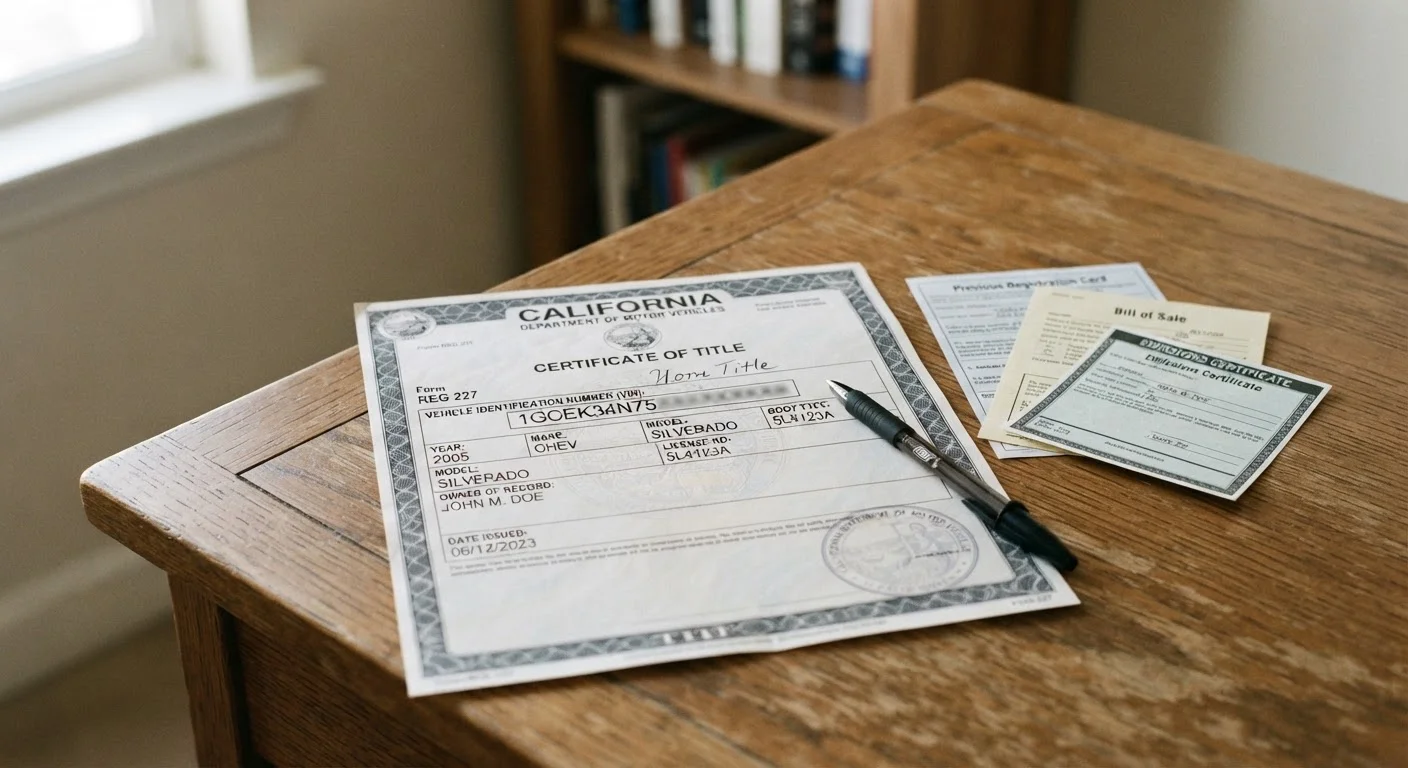
Photo: searchopenrecords editorial
—— In This Article
Key Takeaways
- Every vehicle title transaction — issuance, transfer, or lien — creates a public record tied to the VIN.
- State DMVs maintain title records, but NMVTIS aggregates data across all participating states.
- A clean title does not automatically mean a clean history; gaps between records can obscure past events.
- Lien entries on a title indicate a creditor's legal claim and must be released before a clean transfer occurs.
- Title brands such as 'salvage' or 'rebuilt' are permanent public record designations that follow the VIN.
- Running a VIN search is the most practical way to surface the full public record trail behind any vehicle.
How a Title Record Is Born
Every vehicle sold or registered in the United States receives a certificate of title issued by a state DMV. This happens at the point of first retail sale, when the manufacturer's certificate of origin — a document similar to a title — is surrendered and a state-issued title takes its place. From that moment, the VIN acts as the permanent anchor for every subsequent public record the vehicle generates.
The title document itself captures a snapshot in time: the owner's name, the vehicle's odometer reading, any lienholder, and any title brand (such as "salvage" or "rebuilt"). When that information changes — because the car is sold, a loan is paid off, or damage occurs — the old title is retired and a new one is issued, creating another entry in the public record. Our complete walkthrough of VIN and title records maps every stage of this lifecycle in detail.
What Happens at Each Ownership Transfer
When a vehicle changes hands, a title transfer is the formal mechanism that reassigns legal ownership. The seller signs the back of the title, the buyer submits it to their state DMV with applicable fees, and the DMV issues a new title in the buyer's name. Each step produces a dated public record.
This chain of transfers is what makes ownership history traceable. A vehicle that has had five owners will have five corresponding title issuances on file, each linked to the same VIN. Gaps in that chain — periods where no title record exists — can signal out-of-state registration, title washing, or simply delayed DMV processing. Understanding what those gaps mean is covered in depth in our article on tracing an ownership transfer through public records.
50+
States and territories participating in NMVTIS
NMVTIS, administered by the U.S. Department of Justice, aggregates title records from participating state DMVs across the country to create a nationwide vehicle title database.
17 digits
Standardized VIN length since 1981
The NHTSA standardized the 17-character VIN format in 1981, enabling consistent cross-state and cross-database linking of vehicle records.
1 per transfer
Title records generated at each ownership change
Every time a vehicle legally changes hands, a new title record is issued by the receiving state's DMV, forming one link in the vehicle's public record chain.
Liens, Brands, and Other Title Encumbrances
Two categories of information on a title are especially significant from a public records standpoint: liens and title brands.
A lien is a creditor's legal claim against a vehicle, typically arising from an auto loan. The lienholder's name appears on the title until the debt is satisfied and a lien release is recorded. Purchasing a vehicle with an unresolved lien can expose a buyer to legal complications. Our article on lien records in vehicle histories explains what these entries signal in practice.
A title brand is a permanent designation applied when a vehicle has been declared a total loss, used as a taxi or fleet vehicle, or has had its odometer rolled back. Brands such as "salvage," "rebuilt," or "flood" stay attached to the VIN permanently — even if the vehicle is repaired and re-titled in a different state. Buyers who encounter a branded title should factor that designation into any decision-making about the vehicle.
How to Surface the Full Trail
The most practical way to access the public record trail behind a vehicle title is to run a VIN search. A VIN search queries aggregated databases — including NMVTIS-participating sources — and returns title brand history, reported ownership sequences, lien activity, and registration events in a structured format.
No single source captures every record perfectly. State DMVs hold the authoritative copies, but data submission timelines vary. A VIN search reflects what has been reported to the databases queried; it is not a guarantee of completeness. Readers who need a deeper understanding of what a VIN actually unlocks can start with our guide on what a VIN actually tells you about ownership history.
For anyone evaluating a used vehicle, reviewing the public record trail — title brands, lien status, transfer history — is a foundational due-diligence step. The records themselves don't make a decision for you, but they provide the factual context needed to ask the right questions. If you encounter something unexpected in the record trail, our article on things that can complicate a title record search outlines the most common complications and how to interpret them.
Frequently Asked Questions

Vin Search Editorial Team
VIN Search Editorial Team is the collective byline for our editorial team and contributor network. Articles published under this byline or an editorial pen name are researched, written, and reviewed according to our editorial standards for clarity, consistency, and independence before publication.
View author profile