
Salvage, Rebuilt, and Clean Titles: A Field Guide to Title Brands
Title brands like salvage, rebuilt, and lemon law buyback carry different meanings. This guide explains each designation and its implications.
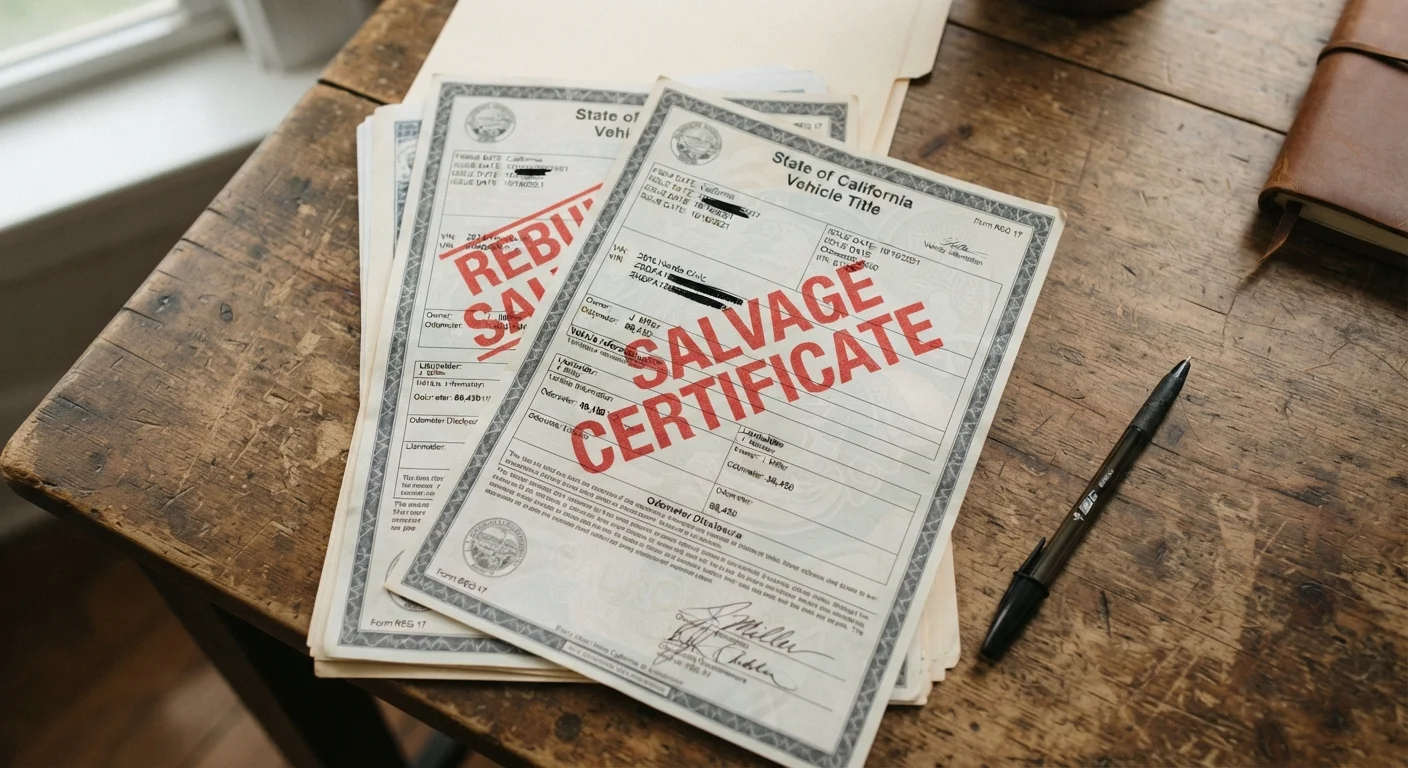
Photo: searchopenrecords editorial
—— In This Article
What a Title Brand Actually Is
A title brand is a permanent designation printed on a vehicle's certificate of title by a state DMV — or its equivalent agency — to flag a significant event in that vehicle's history. Once applied, brands follow the vehicle's VIN through every future title transfer, regardless of state lines. They exist within the broader public record trail explained in our VIN & Title Records walkthrough.
Brands are not uniform across all 50 states. Each state sets its own thresholds and terminology, which means the same physical damage could trigger a salvage brand in one state and a lesser designation in another. Understanding the most common brands — and what each actually signals — is essential for anyone evaluating a used vehicle through public records.
| Governing Federal Database | National Motor Vehicle Title Information System (NMVTIS) (U.S. Department of Justice) |
| Typical Salvage Threshold | 75–100% of actual cash value (varies by state) (State DMV regulations) |
| Can a Salvage Vehicle Be Driven? | Not legally on public roads until rebuilt and inspected (Most U.S. states) |
| Does a Rebuilt Brand Remove the Salvage Brand? | No — both remain on the title record permanently (State title record rules) |
| Federal Odometer Law | Truth in Mileage Act requires disclosure at every title transfer (49 U.S.C. § 32705) |
The Major Title Brands Defined
Clean Title
A clean title means no adverse brand has been applied. The vehicle has not been declared a total loss, has no known odometer fraud flag, and carries no other official designation of concern. Importantly, a clean title reflects only what state DMVs have formally recorded — it does not guarantee the vehicle has no accident or damage history. See why a clean title doesn't always mean a clean history for a fuller picture.
Salvage Title
A salvage title is issued when an insurer declares a vehicle a total loss — typically when repair costs reach or exceed a set percentage of the vehicle's actual cash value, commonly 75–100% depending on the state. The vehicle may or may not be physically destroyed; many salvage-titled vehicles are structurally intact but economically unviable to repair under the insurer's formula. A salvage vehicle cannot legally be driven on public roads in most states until it passes a rebuilt inspection.
Rebuilt (or Reconstructed) Title
A rebuilt title — sometimes labeled reconstructed — is issued after a salvage vehicle has been repaired and passed a state inspection confirming roadworthiness. The rebuilt brand does not erase the salvage history; both designations appear in the title record. Insurance options for rebuilt vehicles are often limited, and resale value is typically lower than a comparable clean-title vehicle.
Flood Title
A flood title is applied when a vehicle sustains water damage — usually declared a total loss after submersion or significant flood exposure. Flood damage can corrode wiring, compromise airbag systems, and promote mold growth in ways that are difficult to detect visually. Not every flooded vehicle receives this brand; if a vehicle crosses state lines before a flood brand is applied, the record may be incomplete.
Lemon Law Buyback
A lemon law buyback brand indicates the manufacturer repurchased the vehicle under a state lemon law after the owner reported a defect the manufacturer could not adequately repair within a required number of attempts. These vehicles are often reconditioned and resold, but the brand must remain on the title permanently. The specific defect history is typically detailed in arbitration or court records, not on the title itself.
Odometer Rollback (Tampered Odometer)
This brand signals that a state agency or court has determined the odometer reading is inaccurate or was intentionally altered. Federal law under the Truth in Mileage Act requires odometer disclosures at each title transfer; a rollback brand reflects a formal finding of tampering in the public record. For a field-by-field breakdown of where this appears on the title document, see Reading a Vehicle Title Document.
Title Brand
A permanent designation added to a vehicle's title by a state DMV to flag a significant event such as total loss, flood damage, or odometer tampering. Brands stay with the VIN through all future title transfers.
Salvage Title
A title issued after an insurer declares a vehicle a total loss, typically when repair costs meet or exceed a state-set percentage of the vehicle's value. The vehicle cannot be driven legally until repaired and re-inspected.
Rebuilt Title
A title issued after a previously salvaged vehicle has been repaired and passed a state roadworthiness inspection. The salvage brand remains visible in the title history.
NMVTIS
The National Motor Vehicle Title Information System — a federally mandated database that aggregates title, brand, and total-loss data from state DMVs and insurers to help prevent title fraud across state lines.
Lemon Law Buyback
A brand applied when a manufacturer repurchases a vehicle under state lemon law due to a defect that could not be adequately repaired. The brand is permanent even if the vehicle is reconditioned and resold.
Title Washing
The practice of re-titling a branded vehicle in a different state to obtain a cleaner-looking title, exploiting gaps in interstate data sharing. NMVTIS is designed to reduce but has not eliminated this practice.
How Brands Move Across State Lines
Title brands are recorded by individual states and shared through systems such as the National Motor Vehicle Title Information System (NMVTIS), a federally mandated database that aggregates title data from participating states and insurers. This system helps prevent title washing — the practice of re-titling a branded vehicle in a state with looser branding rules to obtain a cleaner-looking title. Our article on title washing and the public record trail explains the mechanics and limits of this practice.
Despite NMVTIS, gaps exist. Not all states report to NMVTIS with equal speed or completeness, and some historical records predate the system. This is why a VIN search may return partial brand histories, and why cross-referencing multiple data sources — including insurer total-loss records — provides a more complete picture than any single report.
For a deeper dive into how VINs connect title, lien, and registration records as a unified trail, explore the VIN & Title Records hub.

Vin Search Editorial Team
VIN Search Editorial Team is the collective byline for our editorial team and contributor network. Articles published under this byline or an editorial pen name are researched, written, and reviewed according to our editorial standards for clarity, consistency, and independence before publication.
View author profile