
Why a Clean Title Doesn't Always Mean a Clean History
A title showing no brands or liens can still belong to a vehicle with a troubled past. Here's what the record trail can and can't reveal.
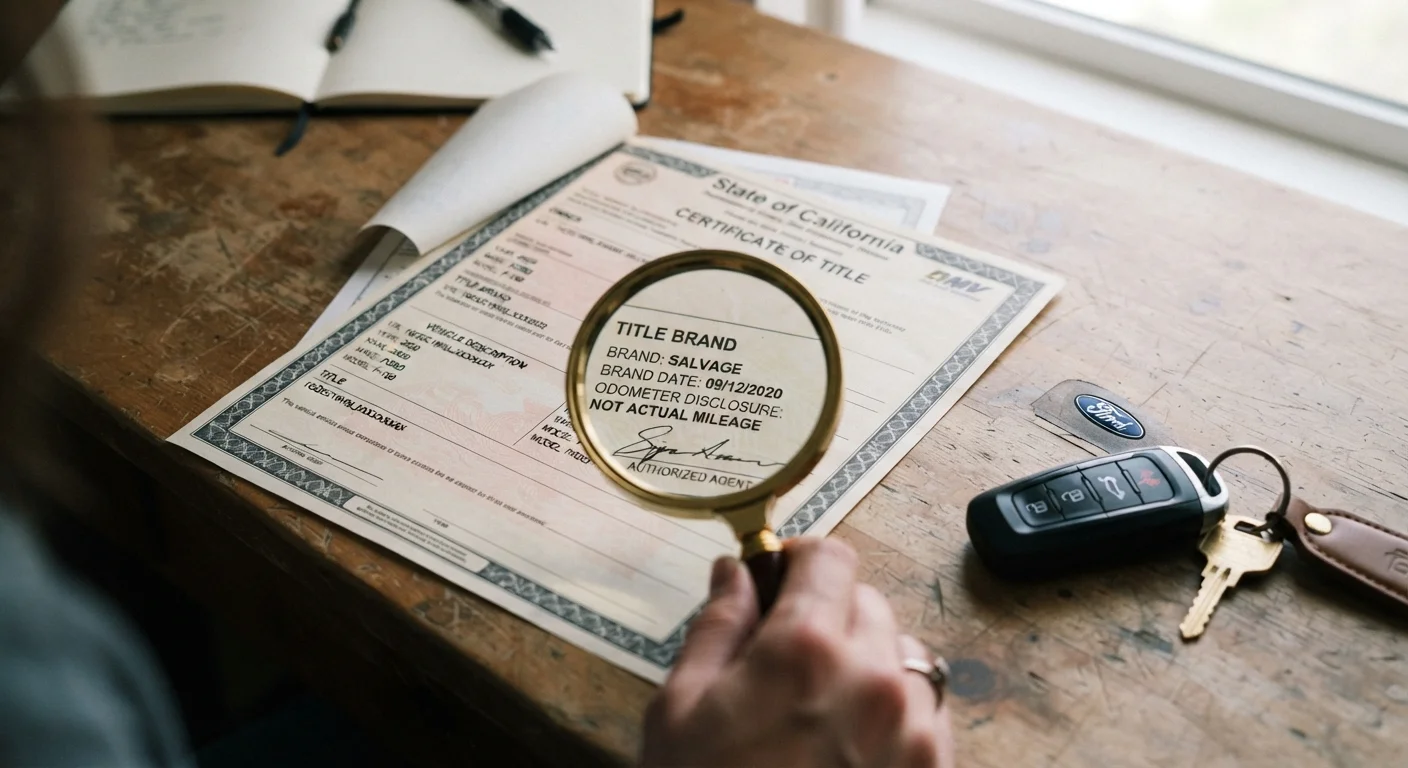
Photo: searchopenrecords editorial
—— In This Article
Key Takeaways
- A 'clean' title means no active brands or liens are recorded — it does not certify a problem-free vehicle history.
- Accident and damage events only enter title records when insurers or courts formally trigger a branding process.
- Cross-state title transfers can create gaps where serious damage history is never carried forward.
- VIN-based history reports aggregate data from multiple sources beyond what a single state title shows.
- Pre-purchase inspections by a qualified mechanic remain essential even when title records appear clear.
What 'Clean Title' Actually Means
When a vehicle carries a clean title, it means that no state agency has formally applied a title brand — a designation such as salvage, rebuilt, flood, or lemon law buyback — and that no active lien appears in the record. That is the complete legal definition. Nothing more is implied.
Title records are maintained by individual state DMVs and linked to a vehicle through its 17-character VIN. A VIN ties together registration, ownership transfers, and any brands that have been formally applied. What it cannot do is self-report events that were never submitted to a state agency. To understand what feeds — and what misses — that record trail, see The Public Record Trail Behind a Vehicle Title.
The practical implication: a clean title status is a snapshot of recorded administrative history, not a mechanical or damage certification.
Common Misconceptions — and What the Record Actually Shows
Several persistent myths surround clean titles. The myth-and-fact pairs below address the most consequential ones a buyer or seller should understand.
Myth
If a title shows no brands, the vehicle has never sustained serious damage.
Fact
Title brands are only applied when an insurer declares a total loss or a court or state agency triggers the branding process — uninsured or unreported damage never enters the record.
A vehicle can sustain significant structural, flood, or fire damage and still carry a clean title if the owner paid for repairs privately, without an insurance claim. Insurers report total-loss events to state DMVs, which then apply the appropriate brand. Damage that never reaches that threshold — or is never reported — simply doesn't appear. This is one of the most consequential gaps in the title record system.
Myth
A clean title means the seller owns the vehicle free and clear.
Fact
A lien can be recorded, released, or even erroneously omitted from a title at different points in time; a title document reflects the record at issuance, not necessarily at the moment of sale.
Liens are attached when a lender finances a vehicle and released when the loan is paid off. However, processing delays, clerical errors, and cross-state transfers can all create situations where a lien that should have been cleared still appears — or one that should appear does not. Independently verifying lien status through state DMV records before completing a purchase is always advisable. Learn more about how a lien gets attached to a vehicle title.
Myth
A rebuilt or salvage title is easy to spot because it always shows up on the current title.
Fact
Title brands can be obscured through cross-state retitling, a practice commonly called title washing, where differing state standards allow a brand to be dropped during transfer.
Not every state applies or carries forward the same title brands. When a salvage-branded vehicle is retitled in a state with a higher total-loss threshold or different brand recognition rules, the new title may issue without the brand. This is why a VIN-based history report — which pulls data across multiple states and data sources — is more reliable for brand detection than reading only the current title document. For a complete breakdown of brand types, see the field guide to title brands.
Myth
A VIN search will reveal everything that has ever happened to a vehicle.
Fact
VIN-based history reports are only as complete as the data submitted to them; events never reported to insurers, courts, or state agencies will not appear in any database.
VIN searches aggregate data from insurance companies, state DMVs, NHTSA recall filings, and auction records — but each source only reports what it knows. A low-speed collision repaired privately, flood exposure in a state that didn't trigger a total-loss designation, or an odometer rollback that was never formally disputed can all remain invisible. History reports are a valuable layer of due diligence, not a guarantee of complete disclosure. Understanding VIN lookup basics helps set accurate expectations for what any search can return.
Why Gaps Form in the Public Record Trail
The US vehicle title system is state-administered, which means records do not automatically synchronize across all 50 states. When a vehicle moves from one state to another, the receiving state issues a new title based largely on what the previous state reported — and reporting is not always complete.
One well-documented consequence of this patchwork is title washing: a vehicle with a salvage or flood brand in one state is retitled in a state with different thresholds, and the brand may not carry forward. Title washing distorts the public record trail in ways that a title document alone cannot expose.
Additional sources of record gaps include:
- Damage repaired entirely out-of-pocket, with no insurance claim filed
- Flood events in areas where total-loss thresholds were not triggered
- Odometer discrepancies that were never formally disputed
- Out-of-state registration periods that predate the current owner
For a broader look at factors that complicate what title searches reveal, see what can complicate a title record search.
What to Check Beyond the Title Document
Because a single title document reflects only formally recorded state events, thorough due diligence involves layering multiple data sources:
- VIN-based history reports aggregate insurance total-loss data, NHTSA recall records, reported odometer readings, and multi-state title events into one view. Explore what vehicle history reports reveal about these aggregated sources.
- Lien verification — even a clean title can carry a recently discharged or unreported lien. Review how open liens on a vehicle title work and why they matter before any transfer.
- Title brand history — understand every designation a VIN may have ever carried, even if the current title shows none. Title brands decoded explains what each designation means and how permanently it attaches to a VIN.
- Independent mechanical inspection by a qualified mechanic — the only method that evaluates physical condition, not just recorded history.
The same principle applies in other public record contexts: a clear result is not always a complete result. A background check with no criminal record doesn't always mean a clean slate — and the same logic holds for vehicle titles.
This article is for general informational purposes only. It does not constitute legal or financial advice. Consult a qualified professional for guidance specific to your situation.

Vin Search Editorial Team
VIN Search Editorial Team is the collective byline for our editorial team and contributor network. Articles published under this byline or an editorial pen name are researched, written, and reviewed according to our editorial standards for clarity, consistency, and independence before publication.
View author profile