
Running a VIN Lookup: Avoiding the Errors That Produce Wrong or Misleading Results
Small mistakes when running a VIN search can produce inaccurate results. Here are the most common errors and how to sidestep them.
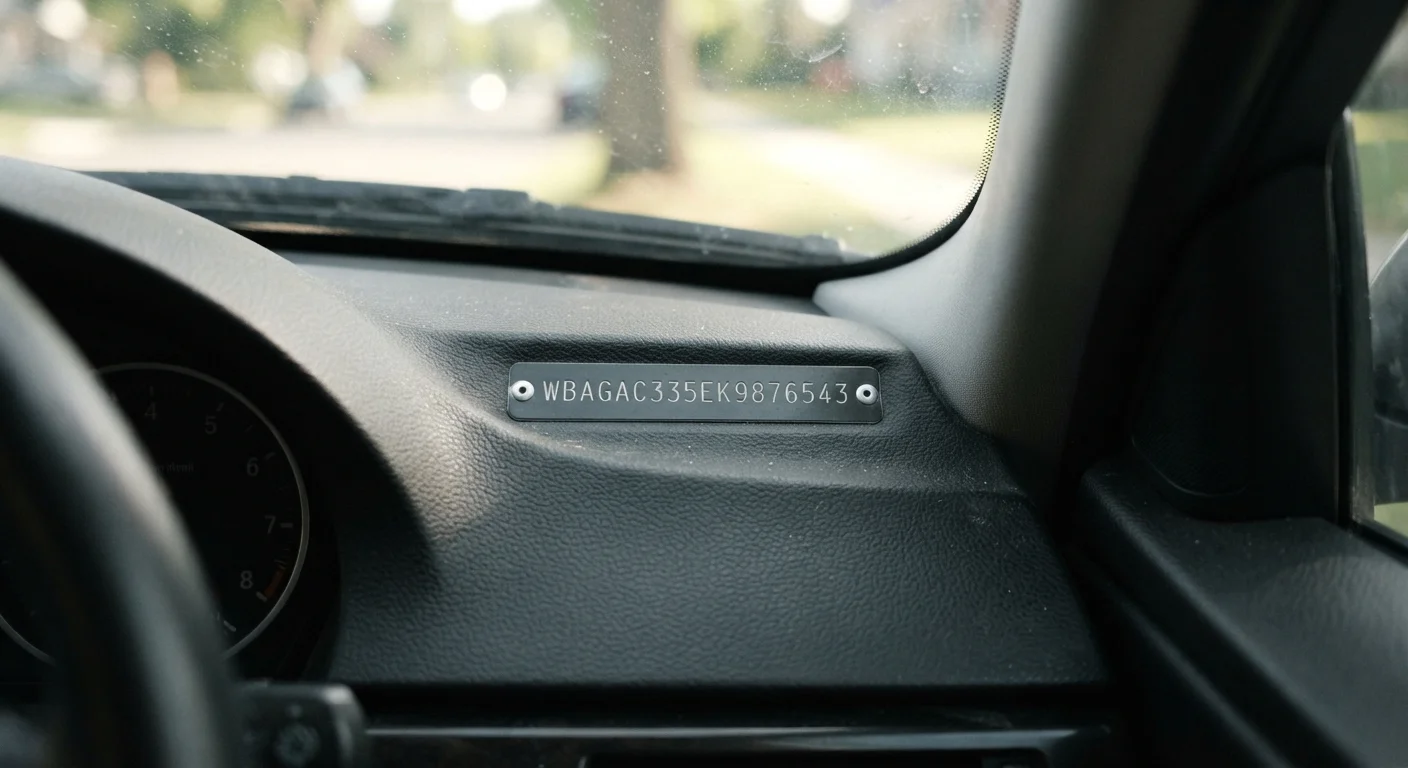
Photo: searchopenrecords editorial
—— In This Article
Key Takeaways
- A single transposed character in a VIN can return results for an entirely different vehicle.
- VINs never include the letters I, O, or Q — confusing them with numbers is a common input error.
- Different lookup sources draw from different databases, so one report may show gaps another fills.
- A clean VIN report does not guarantee a vehicle is free of all problems — unreported incidents exist.
Why Input Errors Derail VIN Lookups Before They Start
A Vehicle Identification Number (VIN) is a standardized 17-character code assigned to every motor vehicle manufactured for sale in the United States since 1981, under NHTSA regulations. Each character encodes specific information — the manufacturer, vehicle attributes, model year, plant of assembly, and a unique serial sequence. Because every position is meaningful, even a single wrong character sends a lookup query to the wrong record entirely.
Most lookup errors are not the fault of the database — they originate at the point of entry. Understanding where these mistakes happen, and why, is the first step to getting results you can actually trust. If you are new to the process, our first-time VIN lookup guide covers how to locate the VIN on your vehicle before you begin.
Transcribing the VIN by hand and introducing character substitution errors.
Why it happens: VINs are long and visually dense. When copied manually from a dashboard plate, windshield sticker, or document, characters like '8' and 'B', or '0' and 'D', are easy to swap.
Entering the letters I, O, or Q into a VIN lookup field.
Why it happens: By NHTSA standard, valid VINs exclude the letters I, O, and Q to prevent confusion with the numerals 1 and 0. Readers unfamiliar with this rule occasionally read a '1' as 'I' or a '0' as 'O' and enter the wrong character.
Using a VIN pulled from an online listing without verifying it against the physical vehicle.
Why it happens: Sellers sometimes list VINs from a different trim year, copy a VIN from a similar vehicle, or inadvertently paste placeholder data. Buyers run the search, get a clean report, and assume it applies to the car being sold.
Treating a 'no accidents reported' result as a guarantee the vehicle has no accident history.
Why it happens: The phrasing sounds absolute. In practice, it means no accident was reported to a source the database accessed — not that no accident occurred. Private repairs and out-of-state incidents are frequently absent.
Searching only one lookup source and assuming the results are complete.
Why it happens: Readers naturally assume that if a source returns a result, that result is comprehensive. In reality, each provider aggregates data from a distinct set of reporting partners, and coverage gaps differ between them.
Overlooking title brand records buried deeper in a report.
Why it happens: Readers often scan for accident or theft flags near the top of a report and stop reading. Title brands — designations such as 'salvage,' 'rebuilt,' 'flood,' or 'lemon law buyback' — are assigned by state DMVs and may appear lower in the document.
Interpreting Results Accurately Once You Have Them
Getting the right characters into the search field is only half the challenge. The other half is reading the results without drawing conclusions the data cannot support.
VIN reports compile records from state DMV title filings, insurance total-loss declarations, salvage auctions, odometer disclosures, and other public or reported sources. Coverage varies by state and by the incident type. A fender-bender repaired privately — with no insurance claim filed — will rarely appear in any report. Our article on the limits of VIN search data explains in detail which categories of events are most likely to be missing.
It is also worth knowing that two legitimate lookup sources can return different results for the same VIN, because they access different data partnerships. Understanding why the same VIN produces different reports can help you reconcile discrepancies rather than dismiss them. When something does appear — such as a mileage inconsistency — treat it as a prompt for further investigation. Our overview of how odometer rollback is recorded in public VIN data explains what those flags typically mean and how they are documented.
A Clean Report Is Not a Clean Bill of Health
VIN reports only reflect what was reported to the data sources a provider accesses. Incidents repaired without an insurance claim, damage that occurred in states with limited reporting infrastructure, or events predating electronic record-keeping may simply not appear. Use a VIN report as one layer of due diligence — not the only one. An independent mechanical inspection remains the most reliable way to assess a vehicle's physical condition.
Finally, remember that the VIN itself can be a target of manipulation. A lookup against a VIN that has been altered — stamped over, swapped from a salvage vehicle, or otherwise tampered with — will return the history of the donor vehicle, not the car in front of you. Learn more about the warning signs in our guide to VIN tampering and how it is detected.

Vin Search Editorial Team
VIN Search Editorial Team is the collective byline for our editorial team and contributor network. Articles published under this byline or an editorial pen name are researched, written, and reviewed according to our editorial standards for clarity, consistency, and independence before publication.
View author profile