
VIN Tampering: How Altered Numbers Are Spotted and Why They're a Red Flag
A tampered VIN is a serious warning sign. Learn how VIN alteration happens, how authorities detect it, and what it means for ownership.
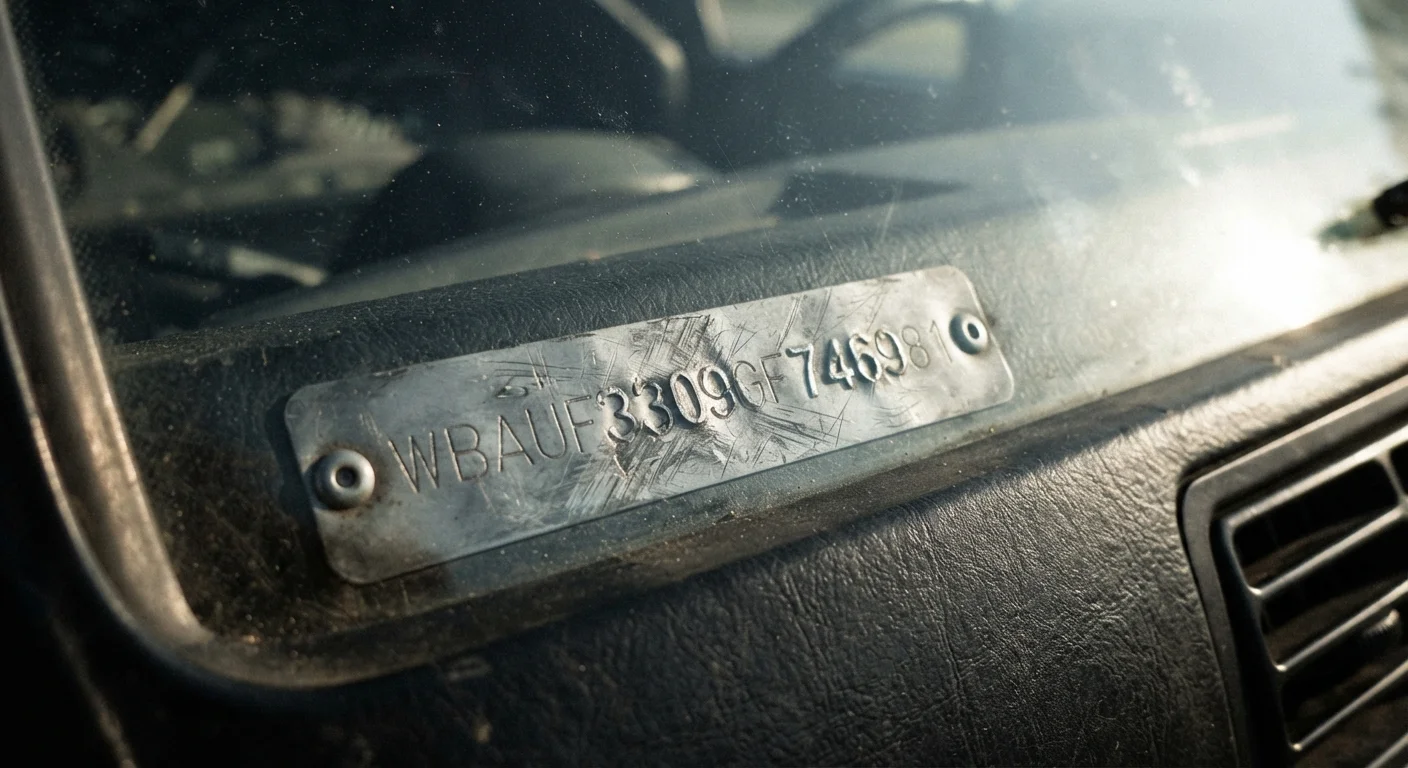
Photo: searchopenrecords editorial
—— In This Article
Key Takeaways
- A tampered VIN is a federal crime and a strong indicator of vehicle theft or title fraud.
- Physical signs of tampering include mismatched fonts, tool marks, and VIN plates that are loose or re-riveted.
- The VIN's built-in check digit at position 9 can mathematically flag a fabricated or inconsistent number.
- Multiple VIN locations on a vehicle — dashboard, door jamb, engine bay — must all match for the vehicle to be legitimate.
- Running a VIN search before purchasing any used vehicle can surface history inconsistencies that suggest fraud.
Why a VIN Is Designed to Be Tamper-Resistant
Every vehicle sold in the United States since 1981 carries a standardized 17-character VIN governed by the National Highway Traffic Safety Administration (NHTSA). As explained in our guide to reading and decoding a VIN, each character segment encodes specific data: the manufacturer, vehicle type, model year, plant of assembly, and a unique serial sequence. This structure is not accidental — it creates a web of cross-referencing data points that make consistent falsification extremely difficult.
NHTSA regulations also require manufacturers to stamp or affix VINs in multiple locations across each vehicle. These secondary placements — often called confidential VINs — are embedded in structural components like the firewall, door pillars, and frame rails. The goal is simple: altering one plate is achievable; altering every hidden location without leaving physical evidence is far harder.
Position 9 within the VIN adds an additional layer of protection. Known as the check digit, it is calculated from all other characters in the number using a defined mathematical formula. A fabricated or carelessly altered VIN will almost always produce a check digit mismatch — a detail covered thoroughly in our article on the VIN check digit and how it catches fraud.
How VIN Tampering Is Done — and How It's Detected
Tampering methods range from crude to sophisticated. The most basic form involves prying off the dashboard VIN plate and replacing it with one removed from a salvage or junked vehicle of the same make and model. More elaborate schemes use VIN cloning — copying the exact VIN from a legitimately registered vehicle and applying it to a stolen one. Because the cloned number appears valid in DMV records, it is significantly harder to detect without physical inspection or multi-source record comparison.
Law enforcement and trained vehicle inspectors use several methods to expose tampering:
- Physical inspection of the VIN plate: Legitimate plates are factory-riveted with uniform fonts and spacing. Tampered plates may show pry marks, re-riveting, inconsistent character depth, or fonts that don't match the manufacturer's standard.
- Comparison across all VIN locations: Inspectors check every location where a VIN appears. A mismatch between the dashboard plate and a confidential VIN stamped into the frame is a definitive red flag.
- Check digit verification: Running the 17-character sequence through the standard formula immediately flags numerically inconsistent numbers.
- Records cross-referencing: State DMV title records, insurance databases, and law enforcement systems track which VIN belongs to which vehicle. A VIN showing two simultaneous registrations in different states signals cloning.
~$8B
Annual estimated cost of vehicle theft in the U.S.
The National Insurance Crime Bureau (NICB) estimates vehicle theft costs American consumers and insurers billions of dollars annually, with VIN fraud enabling many stolen vehicles to be resold.
17
Characters in a standardized VIN
NHTSA has required all vehicles manufactured for U.S. sale to carry a standardized 17-character VIN since model year 1981.
Multiple
Required VIN locations per vehicle
Federal regulations require VINs to be affixed in several locations per vehicle, including confidential placements in structural components, making complete falsification significantly more difficult.
Before any used vehicle transaction, understanding what a VIN can and cannot reveal is essential context — a lookup is a starting point, not a guarantee.
Why a Tampered VIN Is a Serious Red Flag for Buyers
A tampered VIN almost always points to one or more underlying crimes: vehicle theft, title washing, odometer rollback, or insurance fraud. Buying a vehicle with an altered VIN — even unknowingly — carries serious consequences. The vehicle can be seized by law enforcement if it is linked to theft, leaving the buyer with no car and no recovery of purchase funds. Title cannot legally transfer on a vehicle with a falsified identifier, meaning the buyer would be unable to register it.
VIN tampering frequently accompanies other fraud patterns. Odometer rollback, for instance, often goes hand-in-hand with identity fraud on the title — a connection explored in our article on how odometer fraud is recorded in public VIN data. A VIN search that surfaces history gaps, inconsistent model year data, or multiple title states should prompt immediate caution.
Always Inspect All VIN Locations in Person
Before finalizing any used vehicle purchase, physically compare the dashboard VIN against the driver's door jamb sticker and ask a mechanic to check accessible confidential locations. Inconsistencies in font, riveting, or character depth are immediate grounds to walk away. This step costs nothing and can prevent significant financial and legal harm.
It's also worth understanding how misconceptions about VINs can make buyers complacent — our breakdown of common VIN misconceptions addresses the false belief that a "clean" VIN search guarantees a clean vehicle. A lookup reduces risk; it does not eliminate it. Physical inspection by a qualified mechanic and a title check through your state DMV remain essential steps before any purchase.
Frequently Asked Questions

Vin Search Editorial Team
VIN Search Editorial Team is the collective byline for our editorial team and contributor network. Articles published under this byline or an editorial pen name are researched, written, and reviewed according to our editorial standards for clarity, consistency, and independence before publication.
View author profile