
Where to Find Your VIN: Every Location on Your Vehicle and Documents
Your VIN appears in multiple places — dashboard, door jamb, title, and more. Here's where to look and which source to trust.
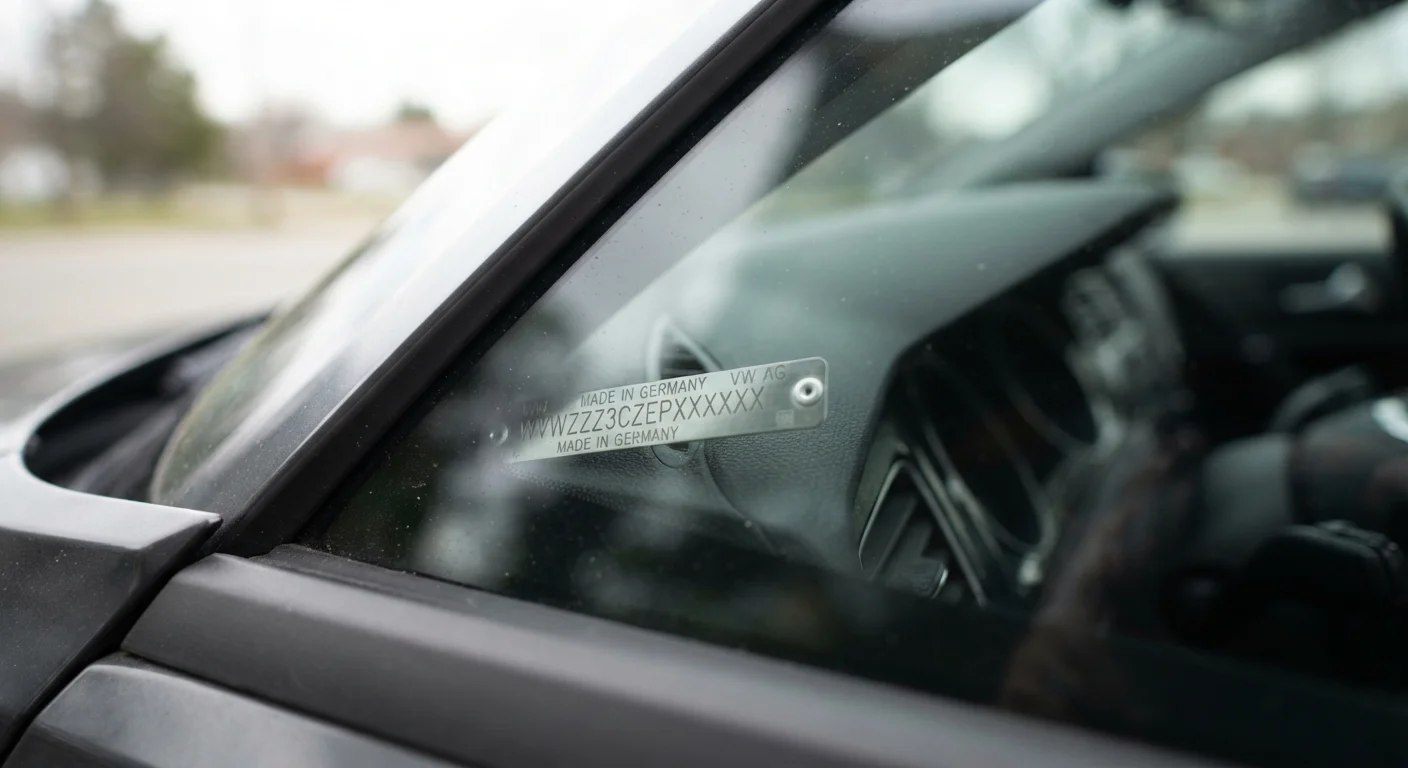
Photo: searchopenrecords editorial
—— In This Article
Key Takeaways
- Every US vehicle manufactured since 1981 carries a standardized 17-character VIN in multiple physical locations.
- The dashboard VIN plate is the primary reference point, but the door jamb sticker and title document are equally authoritative.
- All VIN locations on the same vehicle should display an identical number — any mismatch is a red flag worth investigating.
- Your vehicle title, registration card, and insurance documents all carry the VIN for easy off-vehicle lookup.
- Older vehicles (pre-1981) may have shorter, non-standardized VINs that follow different location conventions.
Why VINs Appear in Multiple Places
A VIN — Vehicle Identification Number — is the unique 17-character identifier assigned to every road vehicle manufactured for sale in the United States since 1981, standardized under NHTSA regulations. Think of it as a vehicle's fingerprint: no two vehicles share the same VIN, and the number follows the car through every stage of its life, from factory floor to final title transfer.
Manufacturers are required to affix the VIN in at least one publicly visible location (typically the dashboard) and in additional locations throughout the vehicle. This redundancy serves two purposes: anti-theft protection (removing every VIN location is far harder than removing one), and verification integrity (a legitimate vehicle's VINs will all agree). For a deeper look at how public records systems track a vehicle by its VIN, see VIN & Title Records: A Complete Walkthrough.
The Title Is the Legally Controlling Document
While physical VIN plates are the most convenient reference, the VIN recorded on your state-issued certificate of title is the legally authoritative record for ownership and transfer purposes. If a physical plate is damaged, replaced, or illegible, the title VIN — along with supporting DMV records — is what governs in a legal or insurance context. Always resolve discrepancies through your state DMV rather than relying solely on physical inspection.
Where to Look: Vehicle and Document Locations
Use the checklist below to systematically locate and record every VIN instance on your vehicle and in your paperwork. Completing all locations — not just the most accessible one — gives you a complete picture useful for insurance claims, private sales, or dispute resolution.
Flashlight or phone torch
Illuminates stamped VINs in low-visibility areas like the firewall, frame rail, or wheel wells.
Magnifying glass or phone camera zoom
Helps read worn or small-font VIN stamps, particularly on older vehicles.
Vehicle title document
Provides the official state-recorded VIN for cross-referencing against physical plates.
NHTSA VIN decoder (vPIC tool at NHTSA.dot.gov)
Free official tool that validates a 17-digit VIN and returns manufacturer-supplied specifications.
Physical Locations on the Vehicle
Official Documents
Verification and Cross-Check Steps
If you plan to run a public records lookup after gathering your VIN, the VIN Lookup from Scratch guide walks through exactly how to use that number to retrieve title and history data.
Reading and Trusting What You Find
Once you have located the VIN, take a moment to confirm its structure before using it in any search or transaction. A valid post-1981 VIN is always exactly 17 characters and never contains the letters I, O, or Q — those are excluded by the NHTSA standard to avoid confusion with the numerals 1 and 0. If a VIN you have recorded contains any of those letters or has fewer or more than 17 characters, re-examine the source for a transcription error.
Mismatched VINs Are a Serious Warning Sign
If the VIN on the dashboard plate differs from the one on the door jamb sticker or the title document, stop and investigate before proceeding with any purchase. A mismatch can indicate a salvaged or rebuilt vehicle with replacement panels, a cloned VIN (a fraud technique), or simple clerical error. Have a qualified mechanic or a licensed title professional verify the vehicle's identity before any money changes hands.
Understanding what each segment of the VIN actually encodes — manufacturer, vehicle type, model year, plant, and production sequence — can help you catch inconsistencies. See Reading a VIN: How a 17-Character Code Unlocks a Car's Past for a character-by-character breakdown. For broader context on how VINs connect to ownership history in public records, What a VIN Actually Tells You About Ownership History explains what the public record trail reveals.
This article is for informational and educational purposes only. For legally binding determinations about vehicle identity, title status, or ownership disputes, consult your state DMV or a licensed title professional.

Vin Search Editorial Team
VIN Search Editorial Team is the collective byline for our editorial team and contributor network. Articles published under this byline or an editorial pen name are researched, written, and reviewed according to our editorial standards for clarity, consistency, and independence before publication.
View author profile