
How a Lien Gets Attached to a Vehicle Title
When a lender finances a vehicle, a lien is recorded on its title. Learn how that process works and what it means for ownership.
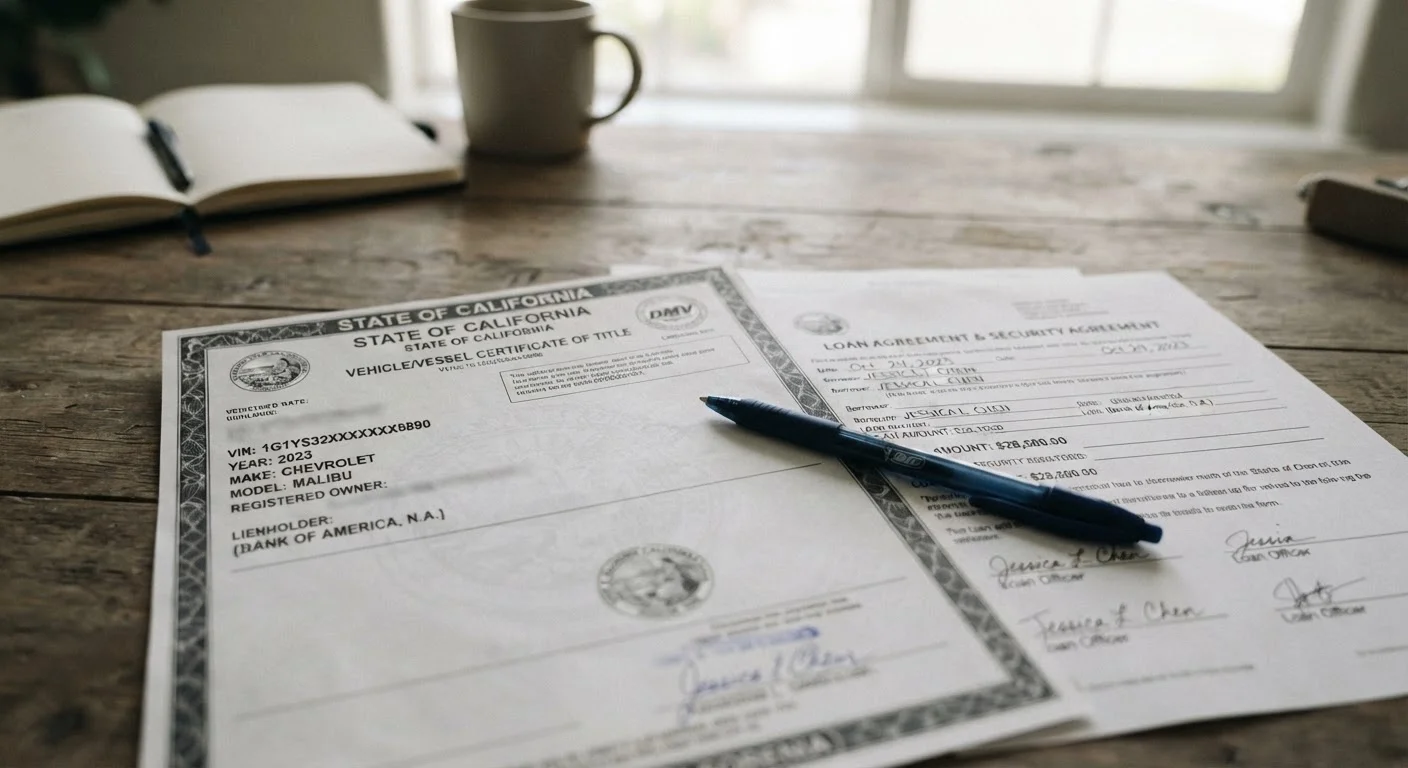
Photo: searchopenrecords editorial
—— In This Article
Key Takeaways
- A lien is attached to a vehicle title when a lender finances a purchase or refinancing and files a claim with the state DMV.
- Most states record the lienholder's name directly on the physical or electronic title document.
- The vehicle cannot be legally sold or transferred with a clean title until the lien is satisfied and formally released.
- Electronic lien systems (ELS) allow lenders to hold titles digitally, which is why many borrowers never see a paper title.
- A VIN search or vehicle history report can reveal whether an active lien exists on a vehicle.
What Triggers a Lien Attachment
A lien is created the moment a lender agrees to finance a vehicle purchase or refinancing and the borrower signs a security agreement. That contract gives the lender a legal interest in the vehicle as collateral — meaning the lender can claim the vehicle if the borrower defaults. But a signed contract alone doesn't make the lien part of the public record. For the lien to be perfected — legally recognized against third parties — it must be recorded with the appropriate state agency.
In the United States, that agency is typically the state Department of Motor Vehicles (DMV) or an equivalent motor vehicle title authority. The lender, dealership, or a title processing agent submits an application for title that includes the lienholder's name and address alongside the borrower's ownership information. The state then issues a title reflecting both the registered owner and the lienholder.
This is part of the broader public record trail behind a vehicle title, which connects ownership, lien status, and registration history through the vehicle's VIN.
How the Title Record Is Updated
Once the state processes the title application, the lienholder's name is added to the title record in one of two ways, depending on the state's system.
- Paper title with printed lien notation: The state issues a physical title certificate showing the lienholder's name in a designated field. The lender typically holds the paper title until the loan is repaid.
- Electronic lien system (ELS): Many states operate digital title platforms where lenders file and hold liens electronically. In these states, no paper title is printed while a loan is active. The borrower's name appears as owner in the state's database, and the lender's lien is recorded alongside it.
Either way, the lien becomes part of the vehicle's title record — a public document that any qualified requester can access. Understanding what fields that document contains is covered in detail in our field-by-field guide to reading a vehicle title.
Lien Information Is Public Record
Because vehicle titles are state-issued public documents, lien data is generally accessible through a DMV title search or a VIN-based vehicle history report. The specific information available — and who can request it — is governed by each state's laws and federal privacy statutes such as the Driver's Privacy Protection Act (DPPA). Lien status is typically disclosed; some personal identifying details are restricted.
What an Active Lien Means for Ownership
Holding a vehicle with an active lien means the registered owner cannot transfer a clean title to a buyer without first satisfying the debt. In practice, lien payoff typically happens at the point of sale: the buyer's funds (or financing) are used to pay off the seller's remaining loan balance, and the lender releases the lien so a clear title can be issued to the new owner.
If a seller attempts to transfer a vehicle without disclosing or clearing an active lien, the buyer may receive a title that still shows the previous lender's claim. This creates a real legal exposure — the lender's security interest in the vehicle doesn't disappear just because ownership changed hands without proper payoff.
For buyers evaluating a used vehicle, a lien entry in a history report is a flag worth investigating before any transaction. Our article on what outstanding lien entries actually signal explains how to interpret those records in context.
Releasing a Lien After Payoff
When a borrower pays off the loan, the lender is obligated under state law to release the lien within a specified period — commonly between 10 and 30 days, though the exact timeframe varies by state. In paper title states, the lender endorses the title and mails it to the borrower or the DMV. In electronic lien states, the lender submits a digital release that updates the state's title database automatically.
The DMV then issues a clear title showing the owner's name with no lienholder. That document is the proof that the vehicle is owned free and clear — and it's what a private-party buyer or dealer should expect to receive when purchasing a vehicle with no outstanding financing.
Request Proof of Lien Release Before Buying
When purchasing a used vehicle from a private seller who claims the loan is paid off, ask for the lien release documentation before completing the transaction. A verbal assurance isn't enough — verify the title record directly with the state DMV or through a VIN history report to confirm the lien has been formally cleared. This step can prevent significant legal complications after the sale.
It's worth noting that a clean title — one showing no active lien — does not by itself guarantee a clean history. As our article on why a clean title doesn't always mean a clean history explains, other issues may not appear on the title at all.
Frequently Asked Questions

Vin Search Editorial Team
VIN Search Editorial Team is the collective byline for our editorial team and contributor network. Articles published under this byline or an editorial pen name are researched, written, and reviewed according to our editorial standards for clarity, consistency, and independence before publication.
View author profile