
Verifying a VIN Before an Ownership Transfer
A step-by-step checklist covering the title, lien status, registration, and brand records to confirm before a vehicle changes hands.
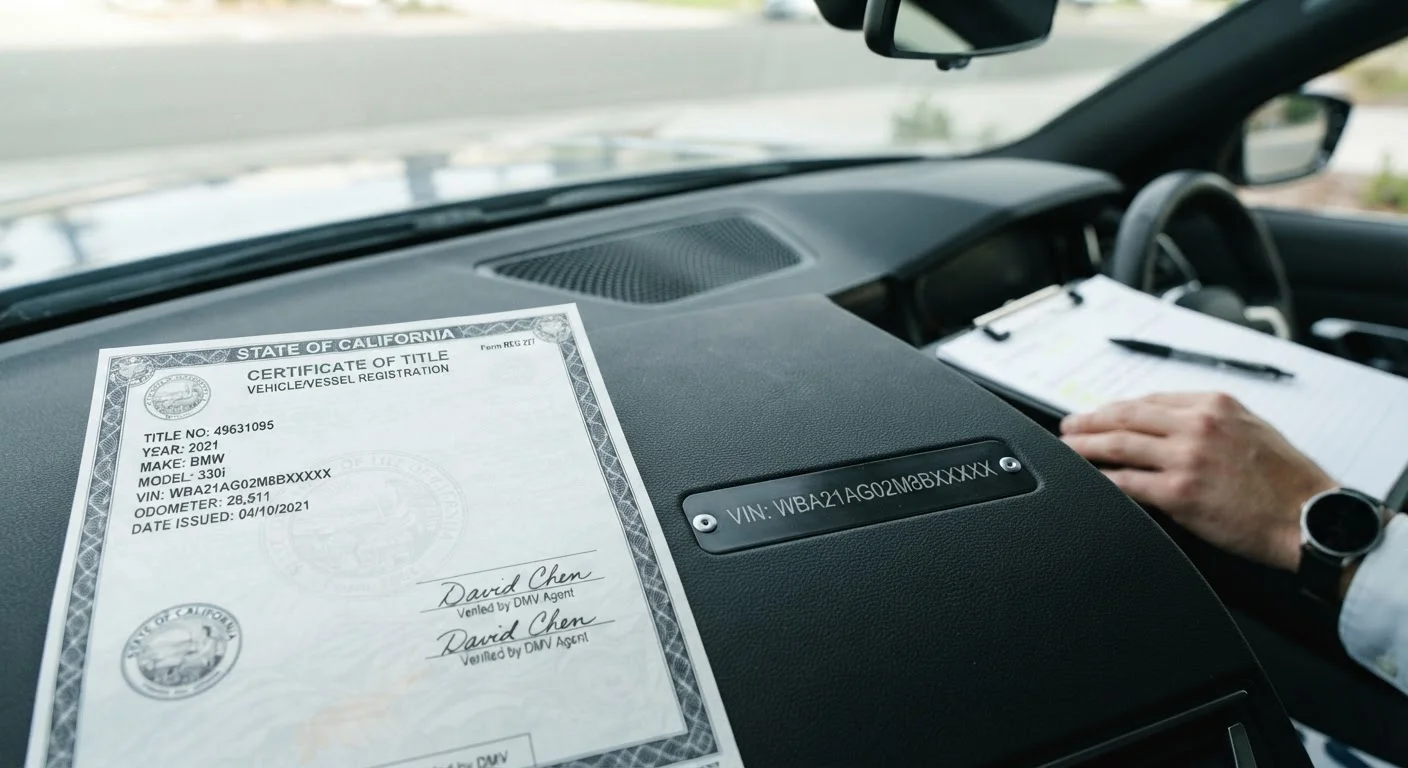
Photo: searchopenrecords editorial
—— In This Article
Key Takeaways
- Always confirm the VIN on the physical vehicle matches every document before completing any transfer.
- A clear title means no outstanding liens, brands, or competing ownership claims on record.
- State DMV records and NHTSA's database are authoritative sources for title and recall verification.
- Odometer disclosures and title brands are permanent public record markers that follow a VIN indefinitely.
- Completing this checklist before signing protects both buyer and seller from post-transfer disputes.
Why the Public Record Trail Matters Before Transfer
Every time a vehicle changes hands in the United States, a chain of public records is created — or should be. Title documents, lien releases, registration filings, and odometer disclosures are all tied to a vehicle's 17-character VIN, which functions as its permanent identifier from manufacture onward. If any link in that chain is missing, forged, or inconsistent, the new owner may inherit legal or financial complications that are difficult and costly to untangle.
Understanding how a vehicle title connects to liens and ownership history is the foundation for this checklist. The goal here is practical: to give buyers, sellers, and their representatives a structured audit to perform before any ownership transfer is finalized.
This checklist draws on the public records systems maintained by state DMVs and the National Highway Traffic Safety Administration (NHTSA). It does not replace legal or professional counsel for complex transactions.
Tools and Sources You Will Need
Before working through the checklist, gather access to the following resources. Most are free or low-cost public record sources.
State DMV Title Status Portal
Used to independently confirm the recorded owner, lien status, and any title brands on file for the VIN in the issuing state.
NHTSA VIN Lookup Tool (nhtsa.gov)
Used to check for open federal safety recalls tied to the specific VIN at no cost.
Original Vehicle Title Document
The primary legal document establishing ownership; required to verify seller identity, lien status, and any recorded brands.
Odometer Disclosure Statement (Form)
Federal law requires this form for most transfers; used to record and verify the mileage at time of sale.
Lien Release Letter
Written confirmation from a lender that a previously recorded lien has been paid in full and released.
Government-Issued Photo ID (Seller's)
Used to verify the seller's identity matches the name recorded on the title document.
The Verification Checklist
Work through each group in order. Items marked must are non-negotiable before signing any transfer paperwork. Items marked should are strongly recommended. Flag any discrepancy and resolve it before proceeding — do not assume errors will self-correct after the transfer is recorded.
For a deeper understanding of what each stage of this process involves, see the complete walkthrough of VIN and title records from first registration through resale.
VIN Confirmation
Title Status and Ownership
Lien and Encumbrance Check
Title Brands and History Flags
Registration and Compliance
Never Accept a Title That Has Already Been Signed Over
A title signed by the seller to an intermediate buyer — sometimes called a 'jumped title' or 'skipped title' — is a red flag and may be illegal to transfer in your state. If you see a name in the buyer section that is not yours, stop the transaction and seek clarification. Accepting a jumped title can leave you unable to register the vehicle and create legal liability.
Out-of-State Titles Require Extra Scrutiny
Title branding standards and terminology vary by state. A vehicle titled as 'Rebuilt' in one state may have been 'Salvage' in a prior state, and that prior brand may not carry forward visibly on the new title. Always check the VIN's history across all states where it was previously registered before completing a cross-state transfer.
After the Checklist: Next Steps
Once every item is confirmed, both parties should retain copies of all documents — including the signed title, odometer disclosure statement, and any lien release letters — before submitting the transfer to the state DMV. Processing times vary by state, but most jurisdictions require the new owner to file within a set window (commonly 10 to 30 days) to avoid late fees or registration lapses.
If a title brand, open recall, or lien surfaces during this process, it does not automatically void a transaction — but it does require resolution or documented acknowledgment before transfer. Consult a licensed attorney or the relevant state DMV for guidance specific to your situation.
To understand what the VIN itself reveals beyond the title record, see what ownership and title data a VIN unlocks. And if you need to trace the full chain of prior transfers after the fact, following ownership transfers through public records explains how each recorded transaction is structured.
This article provides general educational information about public records and vehicle title processes. It is not legal advice. Consult a qualified attorney or your state DMV for guidance specific to your circumstances.

Vin Search Editorial Team
VIN Search Editorial Team is the collective byline for our editorial team and contributor network. Articles published under this byline or an editorial pen name are researched, written, and reviewed according to our editorial standards for clarity, consistency, and independence before publication.
View author profile