
What Happens to the Title Record When a Car Is Sold Privately
Private sales create unique gaps in the title record trail. Learn what records are generated, who files them, and what can go wrong.
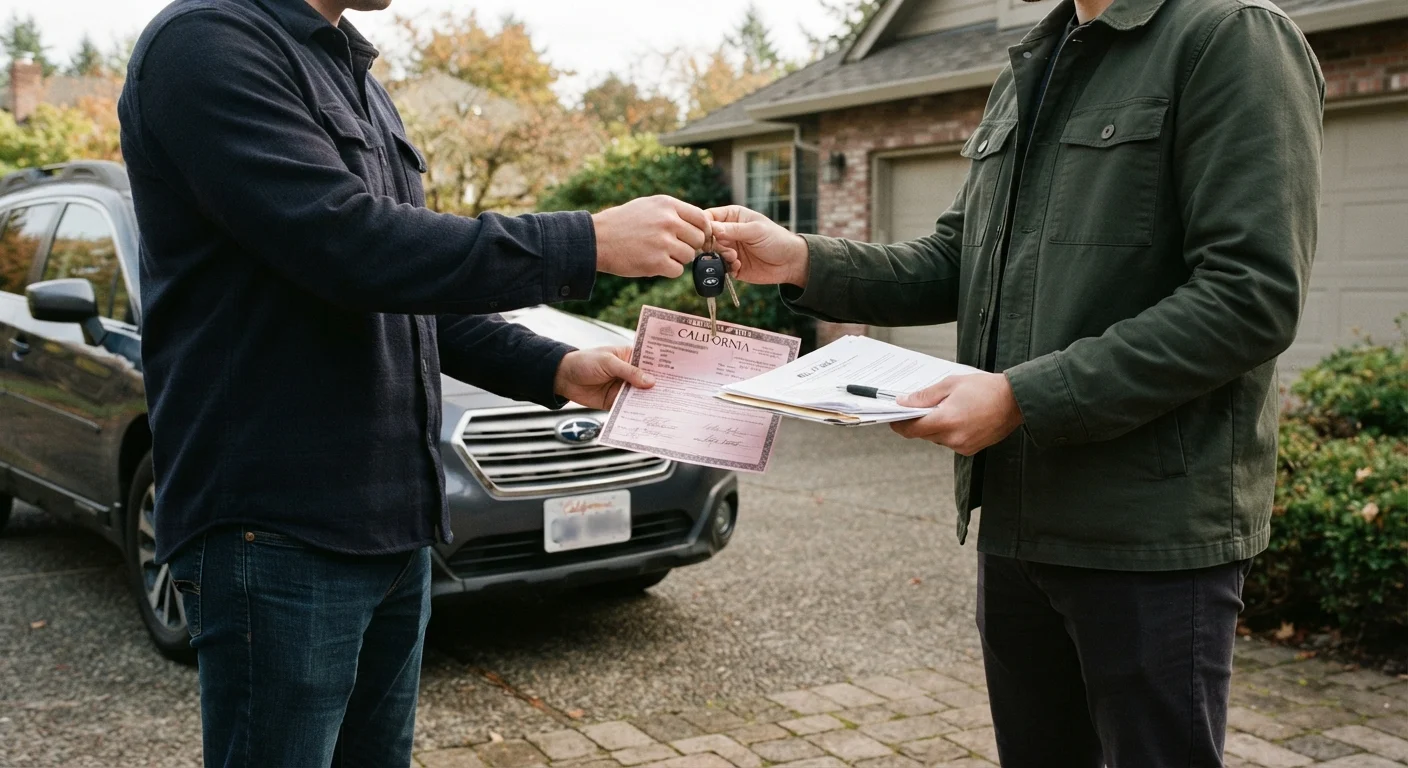
Photo: searchopenrecords editorial
—— In This Article
Key Takeaways
- A private sale does not automatically update the public title record — the buyer must file with the DMV.
- Until the new title is issued, the seller remains the owner of record in state databases.
- Odometer disclosure is federally required for most vehicles under ten years old in private sales.
- Gaps between sale date and DMV filing are a common source of title record complications.
- A VIN-based title search may show the seller as owner even after a legitimate private sale has occurred.
How the Public Record Trail Is Created in a Private Sale
When a vehicle changes hands through a dealership, the dealer typically handles the title paperwork on the buyer's behalf. In a private sale, that intermediary disappears — and the record-keeping burden falls entirely on the two parties involved.
The process begins with the physical title certificate. The seller must sign the title in the designated area, often completing fields for sale price, date, and odometer reading. For most vehicles under ten years old, federal law — specifically the Motor Vehicle Information and Cost Savings Act — requires a written odometer disclosure at the time of sale. Failure to provide one is a federal violation, not just a paperwork oversight.
Once the buyer has the signed title in hand, they must present it to their state's DMV or titling authority along with a title application, proof of insurance in most states, and applicable fees. Only after that filing does the state generate a new title record tied to the buyer's name. Until then, the public record trail behind the vehicle title still names the seller as the legal owner.
This gap — between the physical handoff of keys and the official update in state records — is where most complications in private sale title histories originate.
Seller Liability Doesn't End at the Handshake
In many states, a seller's name remains in the DMV's ownership database until the buyer completes the title transfer. This means parking tickets, toll violations, or even certain legal notices tied to the vehicle's license plate can still reach the seller. Filing a notice of sale with your state DMV is the most reliable way to create an official record of when your ownership ended.
What Can Go Wrong With the Title Record
Private sales create several predictable vulnerabilities in the title record chain. Understanding them helps both buyers and sellers protect themselves.
The Buyer Delays or Fails to File
Some buyers postpone filing for weeks or months, either due to cost, oversight, or intent to resell quickly. During this window, the seller remains the owner of record. If the vehicle is involved in an accident, accrues toll violations, or is used in a crime, that liability can trail back to the seller's name in public records.
Errors on the Signed Title
A single error on the seller's signature block — a crossed-out name, incorrect odometer reading, or mismatched date — can render the title non-transferable. The buyer may then need a court-ordered title or a bonded title process, both of which are time-consuming and create unusual notations in the record. These complications are covered in more depth in things that can complicate a title record search.
Missing Lien Releases
If the seller had an outstanding auto loan, the lender holds a lien that must be released before the title can transfer cleanly. A private buyer who accepts a title without confirming the lien is satisfied may find themselves unable to get a clean title — or discover the lender can reclaim the vehicle.
30 days
Typical state deadline to transfer a vehicle title after purchase
Most U.S. states require buyers to apply for a new title within 10 to 30 days of a vehicle purchase; deadlines and penalties vary by state DMV.
~40%
Share of used vehicle sales that occur between private parties
Industry estimates suggest a significant portion of used vehicle transactions happen privately, bypassing dealer title-handling processes entirely.
What Sellers Should Do to Protect Their Record
Sellers in private transactions have fewer post-sale protections than they might assume. Once the keys are handed over, the title paperwork becomes the buyer's responsibility — but the consequences of inaction can still affect the seller.
Most states allow sellers to file a notice of sale or release of liability form directly with the DMV, often available online. This creates a timestamped record showing that ownership was transferred on a specific date, limiting the seller's exposure to future violations tied to the vehicle.
Sellers should also retain a copy of the signed title and any bill of sale for their records. While neither document updates the official title record on its own, they provide evidence if a dispute arises.
For context on how title and registration records relate to each other — and why updating one doesn't automatically update the other — see Title vs. Registration: Two Records, One Vehicle.
What Buyers Should Verify Before and After the Sale
Before handing over payment, a buyer in a private sale should run a VIN-based title check to confirm the seller is actually the owner of record and that no active liens appear. This step surfaces title brands — designations like salvage, rebuilt, or flood — that the seller may not disclose. For a broader view of what that record search can reveal, the vehicle history reports hub explains what these reports typically include and where their data originates.
After the sale, buyers should file for a new title promptly — most states set a deadline, commonly ranging from 10 to 30 days. Filing late can result in penalties and, in some states, the buyer may also need to pay back registration fees that accrued in the seller's name.
Private sales are also a documented vector for title fraud, including cases where sellers attempt to pass off vehicles with washed or altered titles. Understanding how title washing distorts the public record trail can help buyers recognize warning signs before a sale is finalized.
Once a clean title is issued in the buyer's name, the public record chain is restored — and that VIN's ownership history now accurately reflects the transaction.
Frequently Asked Questions

Vin Search Editorial Team
VIN Search Editorial Team is the collective byline for our editorial team and contributor network. Articles published under this byline or an editorial pen name are researched, written, and reviewed according to our editorial standards for clarity, consistency, and independence before publication.
View author profile