
Census Records vs. Vital Records: Choosing the Right Source for Your Research
Census and vital records each fill different gaps in a family tree. Here's how they differ and when to rely on each one.
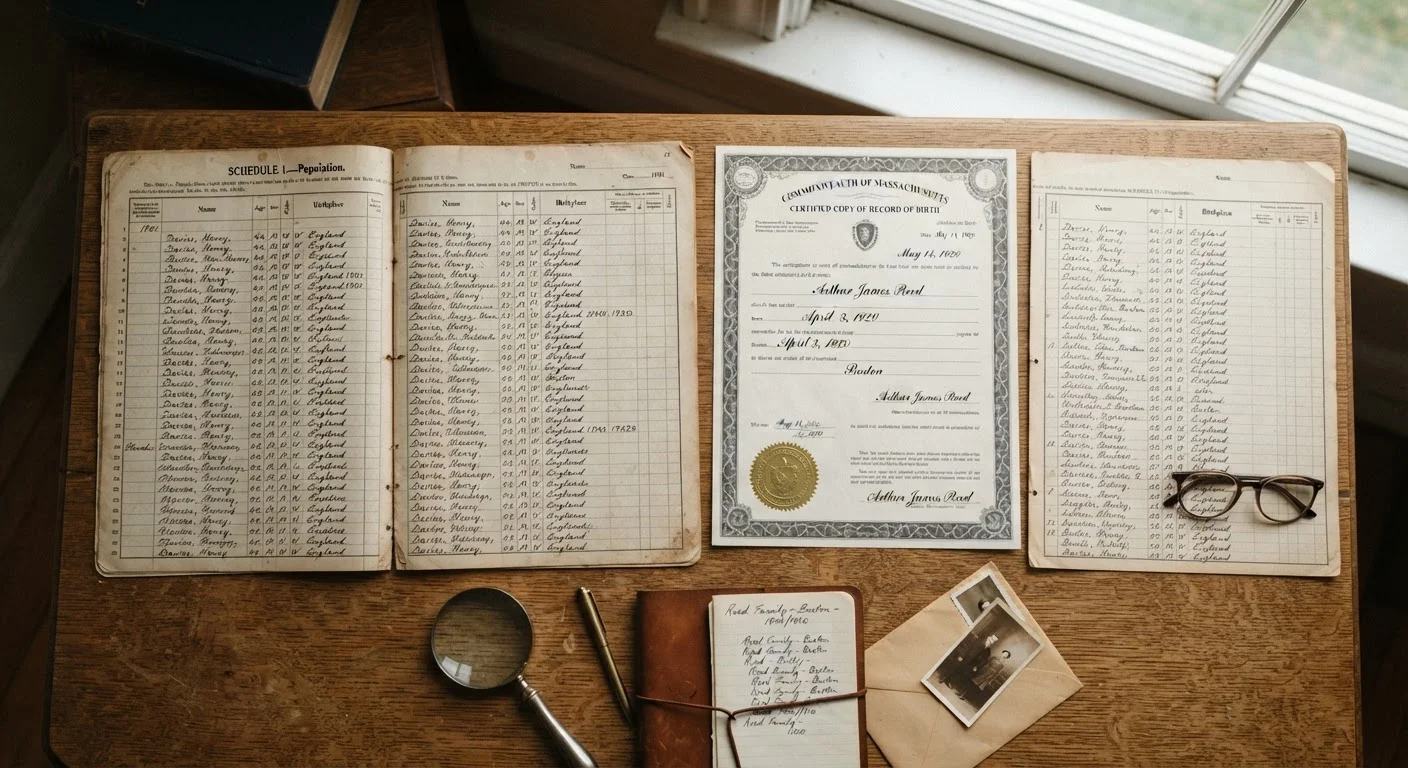
Photo: searchopenrecords editorial
—— In This Article
Key Takeaways
- Census records reveal household composition, neighbors, and migration patterns at roughly ten-year intervals.
- Vital records provide event-specific detail — names, dates, and relationships — with varying legal authority depending on the era.
- Neither source is complete alone; cross-referencing both produces more accurate family trees.
- The 72-year privacy rule limits access to recent U.S. federal census data; vital records access varies by state.
- Errors are common in both record types due to informant knowledge gaps and transcription issues.
What Each Record Type Actually Contains
Understanding the structure of each record type prevents wasted research time and misplaced confidence in the data you find.
Census records are population snapshots collected by federal or state governments at scheduled intervals — in the U.S., federally every ten years since 1790. Each household entry typically lists the head of household by name, with other members recorded by relationship, age, sex, birthplace, and occupation. Later censuses added details such as parents' birthplaces, years of immigration, literacy, and home ownership. Because every household was theoretically counted, these records can surface ancestors who left few other traces. Learn more about what each enumeration captured in our era-by-era census roadmap.
Vital records — birth, marriage, and death certificates — document individual life events at the moment they occurred. In the U.S., state-level civil registration began at different times: Massachusetts started in 1842, while many Southern states did not establish reliable systems until the early twentieth century. A birth certificate typically records the child's full name, date and place of birth, and the parents' names and sometimes occupations. Death certificates add a cause of death and, in later records, the informant's name — a critical detail for assessing reliability. For a deeper look at how these documents work together, see Birth, Marriage, and Death Records: The Backbone of Genealogy Research.
| Criterion | Census Records | Vital Records |
|---|---|---|
| Record type | Periodic household enumeration | Individual life-event certificate |
| U.S. availability | Federal records from 1790 | Varies by state; some from 1840s |
| Information captured | Household members, ages, birthplaces, occupation | Names, dates, locations, relationships |
| Legal authority | Low — informant may be a neighbor | Higher — officially filed at time of event |
| Access restrictions | 72-year federal privacy rule | Varies by state (25–100 years) |
| Common errors | Age discrepancies, name misspellings | Informant knowledge gaps, delayed registration |
| Best use case | Locating ancestors, identifying family units | Verifying specific life events and dates |
Key Differences in Coverage and Reliability
Both record types carry inherent limitations that shape how much you can trust any single entry.
Census data is only as accurate as the person who answered the enumerator's questions — often a neighbor, a landlord, or a child rather than the subject. Ages shift by several years between censuses, names are anglicized or misspelled, and relationships are occasionally misrecorded. Researchers should expect discrepancies and treat census entries as approximate rather than authoritative for specific dates.
Vital records carry more legal weight but are not immune to error. A birth certificate relies on what parents reported; a death certificate relies on a surviving informant who may not have known the deceased's exact birthdate or birthplace. Pre-registration events — births before a state established civil registration — simply have no corresponding certificate, leaving a gap that census or church records must fill. For that parallel archive, see Vital Records vs. Church Records: Navigating Two Parallel Archives.
Access also differs. The U.S. federal government applies a 72-year privacy rule to census records, meaning the most recent publicly available full census is from 1950. State vital records are governed individually: many states restrict birth and death certificates to direct descendants or legal representatives for periods ranging from 25 to 100 years after the event.
Building a Research Strategy That Uses Both
Experienced genealogists rarely rely on one record type alone. A practical workflow uses each source to corroborate and extend the other.
- Start with what you know. Collect any vital records already in family possession — birth certificates, marriage licenses, death notices — and use them to anchor names, dates, and locations.
- Step back through the censuses. Once you have a confirmed location and approximate age, work backward through available census years to trace the household. This reveals siblings, parents' ages, and migration patterns that vital records do not capture.
- Fill gaps with the opposite source. If a census lists an ancestor in a county but no birth record exists there, check the state's vital registration start date. If it post-dates the census, look for church records or delayed birth registration filings instead.
- Cross-check every key fact. An age in a census entry should roughly match a birth year on a death certificate. When they conflict, note the discrepancy rather than dismissing either record — both may contain partial truth.
This iterative process — anchoring with vital records, extending with census, returning to vital records for confirmation — is the standard framework described in guides like The Public Records That Matter Most in Genealogy Research. For an overview of public record types useful across multiple research scenarios, The Public Records Every Family Tree Researcher Should Know About provides a useful orientation. If your research turns up a death and you want to locate additional family context, obituary records can bridge the gap between official certificates and narrative family detail.
Neither census records nor vital records will give you a complete picture on its own. Used together — with clear awareness of each source's limitations — they form the most reliable foundation a family tree can have.

Genealogy Search Editorial Team
Genealogy Search Editorial Team is the collective byline for our editorial team and contributor network. Articles published under this byline or an editorial pen name are researched, written, and reviewed according to our editorial standards for clarity, consistency, and independence before publication.
View author profile